


KEY POINTS
- Trump is considering military strikes on Iran as nuclear talks continue.
- US military planning to strike Iran has reached an advanced stage.
- White House official said there is no unified support within administration for launching attack.
- Trump gave Iran 10–15 days to reach a nuclear deal or face “really bad things”.
- Iran’s Foreign Minister said a draft counterproposal could be ready within days and that a deal is possible soon.
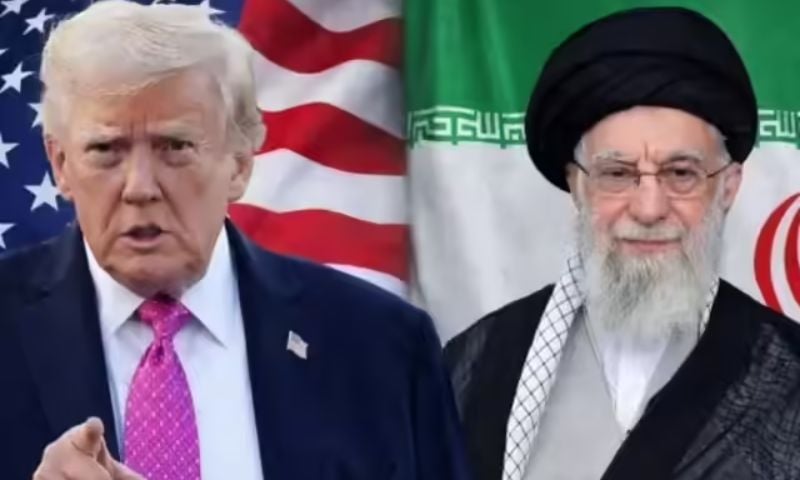
WASHINGTON: US President Donald Trump is weighing possible military strikes against Iran as nuclear talks continue, even as advisors urge him to focus on domestic economic concerns ahead of November’s midterm elections.
Trump has ordered a significant US military build-up in the Middle East and is considering options that could include limited or sustained air operations, according to US officials.
However, there is no unified support within his administration for launching an attack, a senior White House official told Reuters.
The debate underscores growing tensions between Washington and Tehran, as well as political divisions in the United States over the prospect of another conflict in the region.
Military options under consideration
Two US officials said military planning had reached an advanced stage, Reuters reported.
Options under review include targeting specific individuals and potentially pursuing leadership change in Tehran, if authorised by Trump.
On Thursday, Trump gave Iran a deadline of 10 to 15 days to reach a deal on its nuclear programme or face what he called “really bad things”.
Asked on Friday whether he was considering a limited strike, Trump said at the White House: “I guess I can say I am considering it.”
“They better negotiate a fair deal,” he added.
The White House later said the president had been clear that Iran “cannot have nuclear weapons or the capacity to build them, and that they cannot enrich uranium”.
A second White House official said Trump’s foreign policy agenda had delivered “wins for the American people” and insisted that all actions put “America First”.
Nuclear talks continue
Iran’s Foreign Minister Abbas Araqchi said after indirect talks in Geneva with Trump’s Special Envoy Steve Witkoff and senior adviser Jared Kushner that both sides had reached an understanding on “guiding principles”.
However, he cautioned that a final deal was not imminent.
Araqchi said a draft Iranian counterproposal could be ready within two or three days for review by senior officials, with further talks possible within a week.
He said a diplomatic agreement could be achieved “in a very short period of time”.
He added that military action would complicate efforts to reach a deal.
During the Geneva discussions, the United States did not demand zero uranium enrichment and Iran did not offer to suspend enrichment, Araqchi told US broadcaster MS NOW.
“What we are now talking about is how to make sure that Iran’s nuclear programme, including enrichment, is peaceful and would remain peaceful forever,” he said.
United Nations spokesperson Stephane Dujarric urged both sides to continue diplomatic engagement, warning against heightened rhetoric and military activity.
Iran seeks evidence after Trump’s allegations
Tensions have also been fuelled by Trump’s comments on Iran’s alleged crackdown on mass protests.
Trump said on Friday that “32,000 people were killed over a relatively short period of time”, though that figure could not be independently verified.
“It’s a very, very, very sad situation,” he said.
Iranian officials rejected those claims. Araqchi said the government had published a “comprehensive list” of 3,117 people killed during the unrest, including around 200 security personnel.
“If anyone doubts the accuracy of our data, please speak with evidence,” he wrote on X.
Iranian authorities have repeatedly blamed “terrorists” for the violence.
Araqchi said 690 of those on the official list were “terrorists” allegedly armed and funded by the United States and Israel.
Political risks at home
Trump’s focus on Iran has drawn concern from advisers who want him to prioritise economic issues that opinion polls show matter more to voters.
A senior White House official said aides were mindful of avoiding a “distracted message” to undecided voters focused on the cost of living.
White House advisers and Republican campaign officials stressed the economy as the top issue during a private briefing this week with cabinet secretaries, according to a person who attended. Trump was not present.
Republican strategist Rob Godfrey warned that a prolonged conflict with Iran could pose significant political risks.
“The president has to keep in mind the political base that propelled him to the Republican nomination — three consecutive times — and that continues to stick by him is sceptical of foreign engagement and foreign entanglements,” he said, referring to Trump’s campaign pledge to end “forever wars”.
November’s elections will determine whether Republicans retain control of both chambers of Congress.
Losing either chamber to Democrats would complicate Trump’s final years in office.
Republicans plan to campaign on tax cuts passed last year and measures to lower housing and prescription drug costs.
Congress weighs war powers
Meanwhile, lawmakers in Congress are also seeking to limit Trump’s authority to launch military action without explicit approval.
Under the US Constitution, Congress has the power to declare war.
However, presidents have historically ordered limited strikes without formal declarations.
Democratic Senator Tim Kaine and Republican Senator Rand Paul last month introduced a resolution that would prohibit hostilities against Iran unless authorised by Congress.
“If some of my colleagues support war, then they should have the guts to vote for the war,” Kaine said in a statement.
In the House of Representatives, Republican Thomas Massie and Democrat Ro Khanna said they would seek a vote next week on similar legislation.
“Trump officials say there’s a 90 percent chance of strikes on Iran. He can’t without Congress,” Khanna wrote on X.
Republican leadership in both chambers has so far blocked such efforts, arguing that Congress should not constrain the president’s national security powers during heightened tensions.
The United States and Israel bombed Iranian nuclear facilities and military sites in June, after which Trump renewed threats of further strikes.
US military assets have reportedly been repositioned in the region in preparation for potential sustained operations lasting weeks, if diplomacy fails.