


Key Points
- Five-day pause linked to progress in ongoing diplomatic discussions.
- US military buildup observed, including aircraft at Lajes Air Base.
- Oil prices fall sharply on signs of de-escalation.
- Brent crude drops over 14% to $96 per barrel.
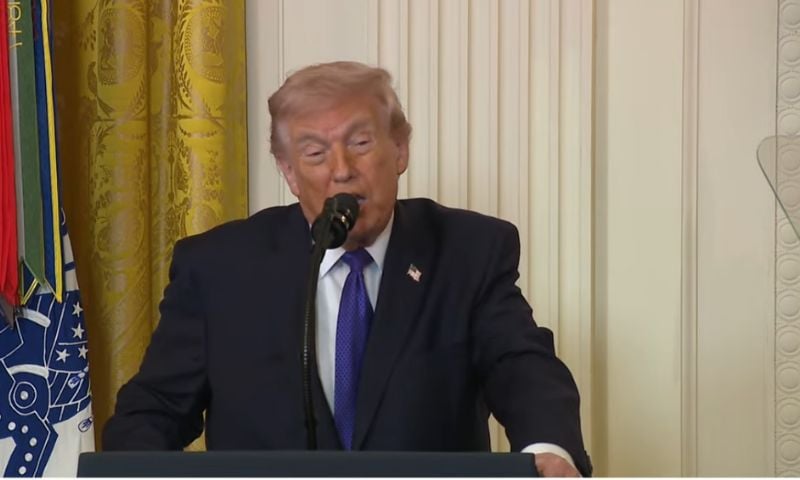
ISLAMABAD: US President Donald Trump has announced a temporary halt to planned military strikes against Iran, citing “very good and productive conversations” between the two sides, in a move that signals a potential easing of tensions after weeks of escalation.
In a post on his Truth Social platform, Trump said he had directed the US administration to postpone any attacks on Iranian power plants and energy infrastructure for five days. He said the decision was based on the “tenor and tone” of ongoing discussions, which are expected to continue throughout the week.
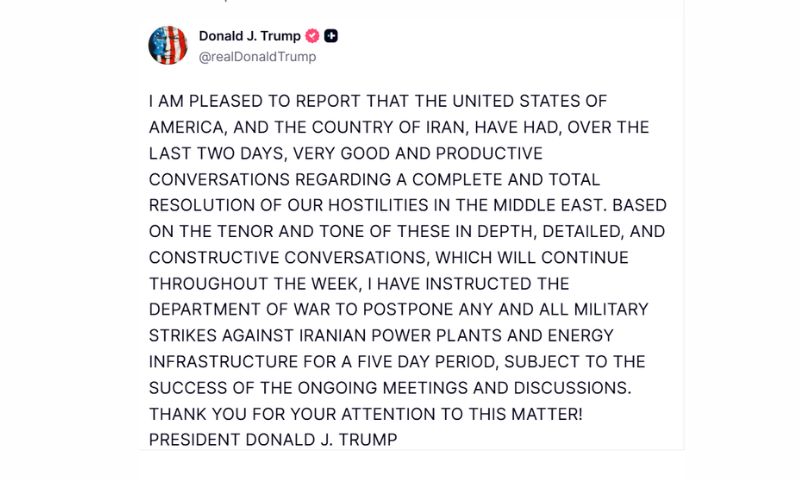
The pause effectively creates a narrow diplomatic window following a period of heightened brinkmanship that had raised fears of a wider regional conflict.
Escalation and standoff
The development comes at the end of a 48-hour ultimatum issued by Trump, demanding Tehran ensure safe passage for vessels through the strategically critical Strait of Hormuz or face military strikes on its energy infrastructure.
Iranian political and military officials had responded with warnings of retaliation, threatening to target energy facilities across the region, including in Israel. The waterway carries roughly one-fifth of global oil shipments, making it one of the world’s most vital energy chokepoints.
Amid the standoff, US military activity also appeared to intensify. Media reports, including footage cited by Fox News, showed American aircraft at Lajes Air Base in Portugal, part of a broader force buildup. Trump had earlier indicated that a limited strike could precede a larger operation if diplomacy failed.
Oil markets react
Global oil markets responded sharply to signs of de-escalation. Oil futures declined after Trump’s remarks raised hopes of a potential resolution to the crisis, according to Bloomberg.
The global benchmark dropped more than 14 per cent to $96 a barrel, before paring some of that loss.
Energy markets have been under severe strain since hostilities intensified in late February, with disruptions around the Strait of Hormuz contributing to what the International Energy Agency described as one of the largest oil supply shocks on record. Fuel prices surged rapidly, outpacing gains in crude oil.
Bloomberg reported that while easing tensions could allow some supply to return, the pace of recovery will depend largely on how quickly shipping companies are willing to resume transit through the waterway.
What comes next
Talks between Washington and Tehran are expected to continue over the coming days, with the five-day pause effectively serving as a high-stakes deadline for progress. Analysts caution that while the latest development offers a diplomatic opening, the situation remains fragile and could escalate again if negotiations fail.