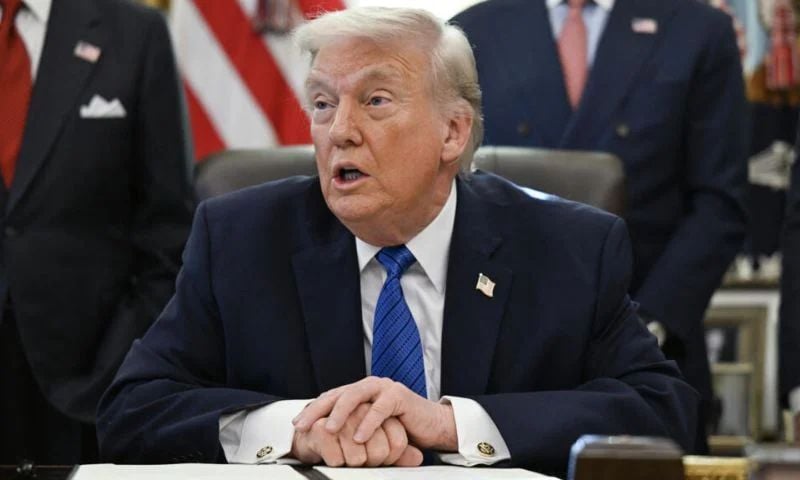
WASHINGTON: US President Donald Trump has instructed the American military not to launch any new strikes against Iran, bringing to an end nearly two weeks of daily military operations, according to a report by Axios.
The decision, reportedly issued on Friday, signals a temporary shift in Washington’s approach as the White House explores diplomatic options amid heightened tensions in the Middle East.
Trump ordered military not to conduct strikes in Iran Friday https://t.co/M8RByi5E82
— Axios (@axios) July 25, 2026
Two sources familiar with the matter told Axios that Trump believes the current phase of US military action has achieved as much as it reasonably could, prompting him to pause further offensive operations.
According to the report, the move reflects both the administration’s desire to provide greater space for diplomacy and an assessment that continued strikes are unlikely to produce significantly better military outcomes at this stage.
Despite the pause, the US military remains on alert and is continuing to prepare contingency plans should the situation deteriorate. However, the report noted that President Trump has not authorised a return to large-scale combat operations against Iran.
The temporary halt does not indicate that military options have been ruled out altogether, with defence planners reportedly maintaining readiness for any future escalation if required. The White House did not immediately respond to requests for comment on the report.
Iran Reports Progress in Oman Talks on Hormuz Strait Management
Iran has announced progress in negotiations with Oman on the future management of the Strait of Hormuz, signalling continued diplomatic engagement over one of the world’s most strategically significant maritime routes.
Foreign Ministry spokesman Esmaeil Baqaei said several rounds of talks were held in Tehran on Friday and Saturday between senior Iranian and Omani officials, led by the two countries’ deputy foreign ministers.
The discussions centred on developing shared principles and practical mechanisms to ensure the safe passage of commercial shipping while safeguarding the sovereign rights of both nations.
Baqaei described the negotiations as “useful” and said the two sides had achieved positive progress. He added that technical and political consultations would continue as both countries work towards a mutually acceptable framework for managing the vital waterway.
The Strait of Hormuz, bordered by Iran and Oman, serves as one of the world’s busiest energy transit corridors, carrying a substantial share of global oil and liquefied natural gas exports.
The latest diplomatic engagement comes amid heightened regional tensions. The United States recently resumed military strikes against Iran following a brief reduction in hostilities that had followed a Pakistan-mediated memorandum of understanding reached in June.
Washington has sought to curb Tehran’s influence over the strategic passage, which remains central to regional security and global energy markets.
Earlier in June, Tehran and Muscat said they would discuss the introduction of transit service fees for vessels using the strait, a proposal opposed by the United States.
Oman also stated that ships could use its territorial waters to transit the waterway, a position that drew criticism from Iran and contributed to renewed tensions between the neighbouring countries.
On Saturday, Iranian officials said they had not recorded any new US attacks after nearly two weeks of military strikes.
Meanwhile, Axios reported that the Pentagon had presented US President Donald Trump with plans for a 14th consecutive night of strikes against Iran.
According to the report, Trump chose not to approve the operation, opting instead to give diplomacy another opportunity after an Omani delegation arrived in Tehran for discussions on a possible new arrangement concerning the reopening and management of the Strait of Hormuz.
Responding to questions about maritime activity, Baqaei said there had been no changes to shipping traffic through the Strait of Hormuz, indicating that commercial navigation continues despite the ongoing diplomatic and security developments.