


Key Points
- Trump expected to seek Japan’s support in Iran conflict
- Focus on securing Strait of Hormuz shipping routes
- Japan cautious due to pacifist constitution
- No formal US request made yet, says Tokyo
- Talks also include defense, trade and regional security
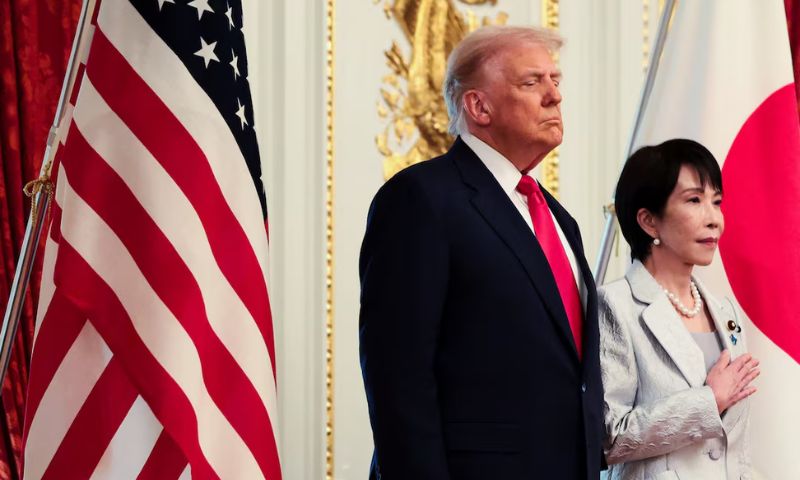
WASHINGTON: US President Donald Trump is expected to press Japan for support in the ongoing conflict with Iran during a high-stakes White House meeting with Japanese Prime Minister Sanae Takaichi on Thursday, potentially placing Tokyo in a politically sensitive position.
The meeting, originally planned to strengthen long-standing economic and security ties between the two allies, has taken on added urgency as tensions escalate in the Middle East.
Washington is reportedly seeking assistance in securing maritime routes, particularly the Strait of Hormuz, where Iranian actions have disrupted global shipping.
While Trump has publicly criticized allies for offering limited support in the conflict, he is pushing for greater involvement, including naval assistance to clear mines and escort oil tankers. However, Japan has so far refrained from committing to such operations.
Prime Minister Takaichi told Japan’s parliament earlier this week that no formal request has been made by the United States, though Tokyo is assessing potential contributions within the constraints of its pacifist constitution. Public opinion in Japan remains cautious, with limited appetite for direct involvement in the conflict.
According to Reuters, analysts say the visit presents a diplomatic challenge for Takaichi, who may face pressure to align more closely with Washington while balancing domestic legal restrictions and political sensitivities.
Beyond naval support, the US may also seek Japan’s cooperation in boosting defense production, including the development or supply of missiles to replenish American stockpiles strained by ongoing conflicts in the Middle East and Ukraine. Japanese officials are reportedly evaluating how to respond to such requests.
The meeting is also expected to cover broader strategic issues, including energy security, supply chain resilience, and regional tensions in East Asia. Takaichi is likely to highlight concerns over China’s growing assertiveness, particularly regarding Taiwan, while reaffirming Japan’s commitment to regional stability.
Despite the pressure, Japan maintains diplomatic ties with Iran, positioning itself as a potential intermediary in de-escalation efforts, although past mediation attempts have had limited success.
In addition, Tokyo is expected to announce further investment in US-based projects, building on previous commitments aimed at strengthening bilateral economic cooperation.
As both sides prepare for discussions, the outcome of the meeting could shape not only US-Japan relations but also the broader international response to the escalating Iran conflict.