


KEY POINTS
- Trump said he hopes to reach a deal with Iran despite rising tensions.
- Khamenei warned a US attack would trigger a regional war.
- US has increased its naval presence in the Middle East.
- Trump said Iran is “seriously talking” with Washington.
- Iran says it does not seek war but will respond to any attack.
- CENTCOM warned Iran over naval exercises in the Strait of Hormuz.
- Qatar, Turkiye and the UAE are pushing diplomacy to prevent conflict.
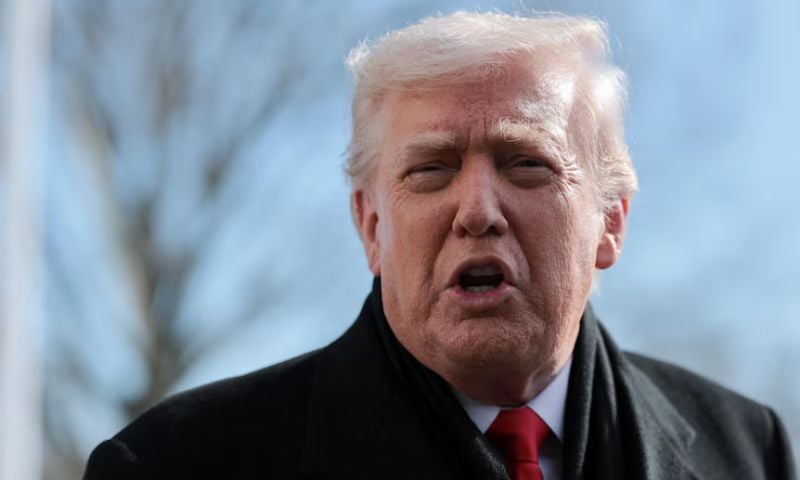
WASHINGTON/TEHRAN: US President Donald Trump said on Sunday he hoped to reach a deal with Iran, hours after Iran’s Supreme Leader Ayatollah Ali Khamenei warned that any US attack would trigger a regional war.
Asked about Khamenei’s remarks, Trump told reporters in Washington: “Of course he is going to say that. Hopefully we’ll make a deal. If we don’t make a deal, then we’ll find out whether or not he was right.”
The comments came amid heightened tensions between Washington and Tehran, following a US military buildup in the Middle East and weeks of sharp rhetoric over Iran’s nuclear programme and crackdown against protesters.
The United States has ramped up its naval presence in the Middle East after Trump repeatedly threatened Iran with intervention if it did not agree to a nuclear deal.
Khamenei warns against US attack
Earlier on Sunday, Khamenei warned that a US strike on Iran would have far-reaching consequences.
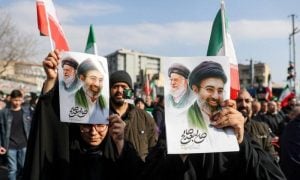
“If the US initiates a war this time, it would spill over across the entire region,” he said while addressing a gathering in Tehran ahead of the 47th anniversary of Iran’s 1979 Islamic Revolution.
Khamenei dismissed US naval deployments to the region as routine, saying similar threats had been made before.
The US Navy currently has six destroyers, one aircraft carrier, and three littoral combat ships in the region, raising the risk of war with Iran, according to CNBC.
Khamenei also rejected what he described as repeated American claims that “all options are on the table”.
Referring to Trump, he said Iranians should not be intimidated by such warnings.
“The Iranian nation should not be frightened by these things,” he said.
Khamenei stressed that Iran did not seek war but would respond forcefully to any attack.
US military buildup in Middle East
Trump has in recent days highlighted the deployment of US naval forces, including a carrier strike group led by the USS Abraham Lincoln, to waters near Iran.
ALSO READ: Iran’s Khamenei Warns of ‘Regional War’ if US Attacks
In a social media post last week, Trump said a “big fleet” was heading towards the region and urged Tehran to negotiate.
He later told Fox News that Iran was “talking to us”, but added that Washington was prepared for all outcomes.
“We have a big fleet heading out there,” Trump said, adding that US allies were not being briefed on potential military plans for security reasons.
The US Central Command (CENTCOM) on Friday also warned Iran’s Islamic Revolutionary Guard Corps (IRGC) over planned naval exercises in the Strait of Hormuz, a key global shipping route.
Diplomatic engagement
Despite the escalation in rhetoric, both sides signalled that channels of communication remain open.
Trump said Iran was “seriously talking” with Washington and expressed hope for an agreement that would ensure Tehran had no nuclear weapons.
“I hope they negotiate something that’s acceptable,” he said.
Iran’s top national security official, Ali Larijani, said on Saturday that a framework for negotiations was “taking shape and moving forward”, dismissing what he called excessive media speculation.
Regional diplomacy
Regional powers have intensified diplomatic efforts to prevent a military confrontation.
Qatar’s Prime Minister Sheikh Mohammed bin Abdulrahman bin Jassim Al Thani met Larijani in Tehran on Saturday to discuss de-escalation, Qatar’s foreign ministry said.
The statement said Doha supported peaceful solutions to enhance regional security.
Turkiye and the United Arab Emirates have also been engaging with both Washington and Tehran.
Ankara, which borders Iran and is a NATO member, has called for dialogue and warned against foreign intervention.