


WASHINGTON: US President Donald Trump said on Tuesday he expects to travel to China in “about five or six weeks”, after postponing a planned visit at the end of March due to the ongoing war with Iran.
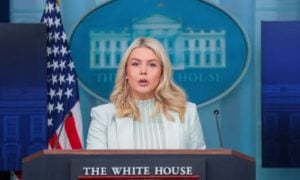
Speaking to reporters at the White House, Trump downplayed the significance of the delay and stressed that relations with Beijing remain stable.
“We have a very good working relationship with China, so we’re making it in about five or six weeks,” he said.
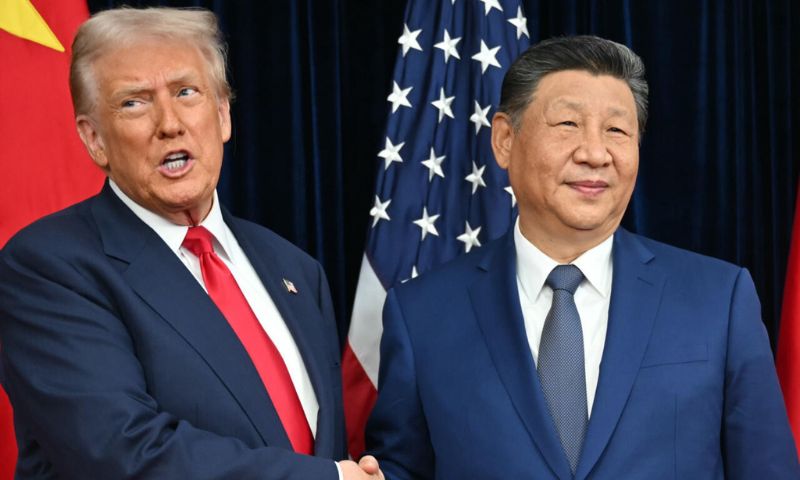
The US president added that he looked forward to meeting Chinese President Xi Jinping, signalling continuity in high-level engagement between the world’s two largest economies.
“I look forward to seeing President Xi; he looks forward to seeing me, I think,” Trump said.
Delay linked to Iran war
Trump said the decision to postpone the visit was driven by the need to remain in Washington to oversee the war effort.
The trip had initially been scheduled for March 31 to April 2.
“We’ve requested that we delay it a month or so,” he said earlier, adding: “We’ve got a war going on. I think it’s important that I be here.”
The United States launched military action against Iran on February 28 alongside Israel.
The conflict has since disrupted global oil supplies and dominated Washington’s foreign policy agenda.
US Treasury Secretary Scott Bessent said the delay was intended to allow Trump to coordinate the war effort effectively.
“Travelling abroad at a time like this may not be optimal,” Bessent said.
No link to Strait of Hormuz
Trump had earlier suggested the trip’s timing could depend on China’s role in helping reopen the Strait of Hormuz, a critical shipping route that has been affected after Iran moved to block it in response to US and Israeli strikes.
However, both Washington and Beijing later dismissed any such linkage.
In Beijing, Chinese foreign ministry spokesman Lin Jian said the visit “has nothing to do with the issue of the open navigation of the Strait of Hormuz”.
“We have noted that the US side has publicly clarified these false reports,” he said, adding that discussions were ongoing regarding “the timing and related matters” of the visit.
Mixed signals on US-China ties
Trump’s latest remarks mark a softer tone towards China compared with his earlier rhetoric before returning to office, when he frequently described Beijing as a strategic rival.
On Tuesday, he described China as having become “economically… very good” for the United States and reiterated that improved relations could benefit both sides.
Trade frictions have also resurfaced. Washington recently announced plans to investigate trade practices of several countries, including China, after Trump’s tariff policy was struck down by the US Supreme Court in February.
Economic negotiations
Despite geopolitical strains, officials from both countries have continued engagement on economic issues.
Representatives from Washington and Beijing held talks in Paris in recent days, covering investments, tariffs and sanctions.
China’s trade representative Li Chenggang said the two sides had reached consensus on some issues and would continue negotiations.
He added that US officials briefed their Chinese counterparts on changes to tariff measures, while Chinese negotiators expressed “serious concern” over planned US investigations into trade practices.