


WASHINGTON: US President Donald Trump again urged China and allied countries to help reopen the Strait of Hormuz, calling on countries heavily dependent on Gulf oil to deploy naval assets to secure the strategic waterway amid the ongoing conflict with Iran.
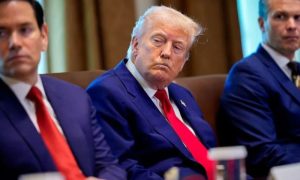
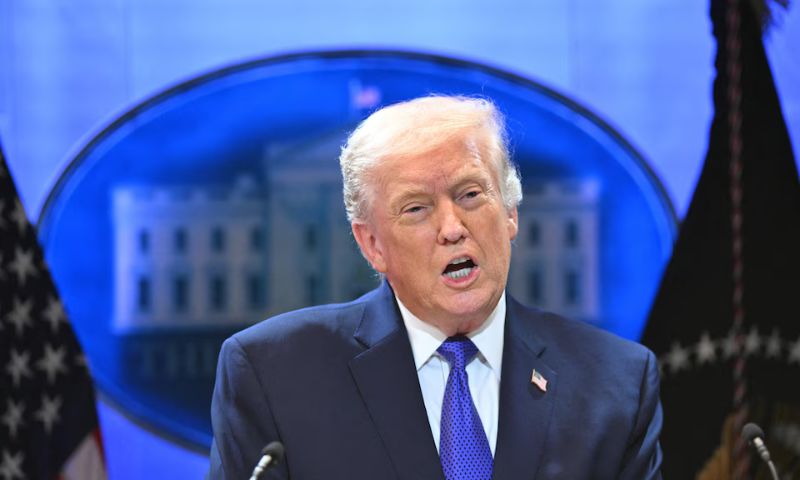
Speaking during remarks and to reporters, Trump said nations that rely heavily on oil shipments through the strait should assist efforts to restore maritime traffic.
“We get less than one percent of our oil from the Strait. Some countries get much more — Japan gets 95 percent, China gets 90 percent, many Europeans get quite a bit, South Korea gets 35 percent — so we want them to come and help us with the Strait,” Trump said.
“Numerous countries have told me they’re on the way. Some are very enthusiastic about it and some aren’t,” he added.
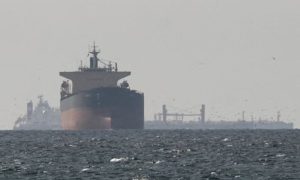
The narrow waterway between Iran and Oman normally carries about one-fifth of the world’s oil supply.
Shipping through the strait has largely halted since the outbreak of the war between the United States, Israel and Iran.
Extensive strikes on Iran
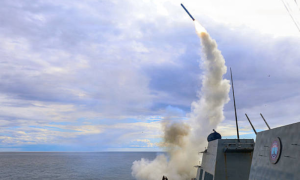
Trump said the United States had carried out widespread strikes against Iranian targets since the conflict began.
“Since the beginning of the war we have struck more than 7,000 targets across Iran,” he said. “These have been mostly commercial and military targets.”
According to the US president, the campaign had sharply reduced Iran’s offensive capabilities.
“We have achieved a 90 percent reduction in their ballistic missile launches and a 95 percent reduction in drone attacks,” he said.
Trump added that Iranian missile and drone manufacturing facilities were also being targeted.
“That’s going on today. We just hit three today,” he said.
The president further claimed that more than 100 Iranian naval vessels had been destroyed in recent days.
“More than 100 Iranian naval vessels have been sunk or destroyed over the last week and a half,” he said.
He also said US forces had destroyed at least 30 Iranian mine-laying vessels in the Strait of Hormuz.
“We’re hammering their capacity to threaten commercial shipping in the Strait of Hormuz with more than 30 mine-laying ships destroyed,” Trump said, adding he was unsure whether Iran had already deployed mines in the waterway.
Trump described Iran’s military forces as having been “literally obliterated”.
“The air force is gone, the navy is gone, many ships have been sunk and their radar and anti-aircraft systems have been destroyed,” he said.
China, US allies react cautiously to Trump’s call
Despite the US calls for assistance, several countries have reacted cautiously and stopped short of committing naval forces to the region.
China said it was alarmed by the escalating conflict but did not mention sending ships to the strait.
Foreign ministry spokesperson Lin Jian urged all parties to de-escalate tensions.
“China once again calls on all parties to immediately cease military actions, avoid further escalation of tensions, and prevent regional turbulence from inflicting greater impacts on global economic development,” Lin said.
He added that Beijing remained in communication with Washington regarding a potential summit between Trump and Chinese President Xi Jinping.
Japan also said it had not yet decided whether to deploy naval assets.
Prime Minister Sanae Takaichi told parliament that Tokyo was examining its options.
“We have not yet made any decisions regarding the dispatch of naval vessels. We are currently examining what Japan can do independently within our legal framework,” she said.
Australia ruled out sending ships to the region. Transport Minister Catherine King said Canberra had not been asked to contribute naval assets.
“We know how incredibly important that is, but that’s not something that we’ve been asked or that we’re contributing to,” she said.
South Korea said it would review Washington’s request before making a decision.
According to a statement from the presidential office cited by Reuters, Seoul would “communicate closely with the US regarding this matter and make a decision after careful review”.
Europe considers options
European leaders have also been discussing possible responses.
The European Union’s foreign policy chief Kaja Kallas said it was in Europe’s interest to keep the Strait of Hormuz open.
“It is in our interest to keep the Strait of Hormuz open, and that’s why we are also discussing what we can do in this regard,” Kallas told reporters ahead of a meeting of EU foreign ministers in Brussels.
She added that European officials were in contact with their US counterparts but stressed that the situation remained volatile.
Kallas also said the issue did not fall under NATO’s formal mandate.
“It is out of NATO’s area of action,” she said, noting that there were no NATO countries stationed directly in the strait.
Britain has said it is examining potential contributions to securing maritime traffic.
UK Energy Secretary Ed Miliband said London was exploring “any options” with allies to help protect the waterway, although he did not provide further details.
Washington sees positive signals
Trump said the United States had received “some positive response” from countries contacted about contributing to security operations in the strait.
“They were contacted today and last night, but we’ve had some positive response,” he told reporters aboard Air Force One.
“We had a few that would rather not get involved,” he added.
The White House also defended the US push for international participation.
White House Press Secretary Karoline Leavitt said Trump was “absolutely right” to ask other nations to do more.
“These countries are absolutely benefiting from ensuring that Iran can never obtain a nuclear weapon,” she said. “The president is absolutely right to call on these countries to do more.”
.@PressSec: "These countries are absolutely benefitting from ensuring that Iran can never obtain a nuclear weapon… The President is absolutely right to call on these countries to do more." https://t.co/MWNsx0crDd pic.twitter.com/5280rqeylw
— Rapid Response 47 (@RapidResponse47) March 16, 2026