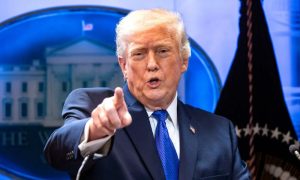
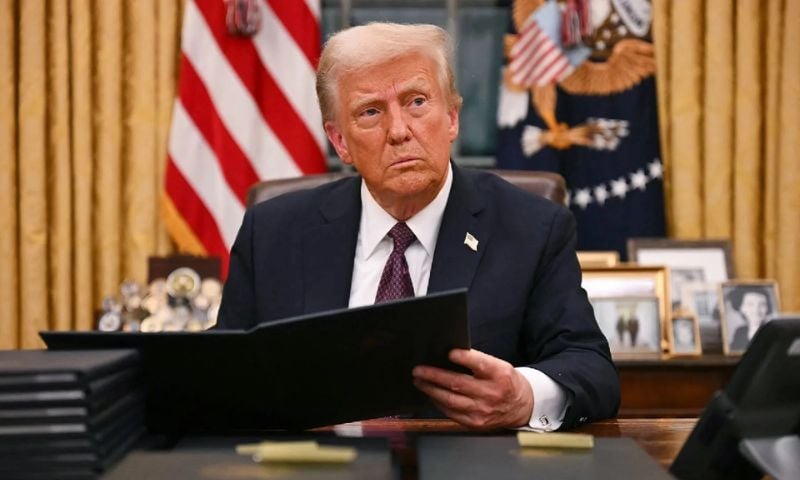



TEHRAN: Imposition of a 25 percent tariff on Iran has sparked global economic concerns, with President Donald Trump’s latest move putting Tehran’s trading partners in a difficult position.
Countries that continue to do business with Iran now face the risk of U.S. penalties, potentially disrupting billions of dollars in trade and intensifying uncertainty in international markets. Major partners such as China, Turkey, the UAE, and Iraq are likely to feel the immediate economic and diplomatic impact of the new levies.
The announcement, made on social media and described as effective immediately, has raised alarm across global markets, particularly in nations that maintain significant commercial ties with Iran.
The sweeping measure targets foreign governments and companies that continue to engage in trade with Iran.
While Washington has yet to provide formal enforcement details, analysts warn that the tariffs could disrupt billions of dollars in international commerce and force countries to choose between economic ties with Iran or continued access to the U.S. market.
Iran’s Top Trading Partners
Despite longstanding sanctions and geopolitical tensions, several countries remain deeply integrated with Iran’s economy. The top ten trading partners, along with approximate trade volumes, are:
China
By far Iran’s largest partner — mainly for oil exports and imports of machinery and goods.
Estimated total trade around ~$37+ billion (exports ~$22 b; imports ~$15 b in 2022 data) — ongoing 2025 ties remain robust though sources vary.
United Arab Emirates (UAE)
Major import partner and transit hub for Iranian goods.
Imports from UAE in the World Bank dataset ~$18 b; exports also significant.
Turkiye
Strong bilateral exchanges of energy, industrial and consumer goods.
Combined trade estimated $11–12 b+ in recent periods.
Iraq
Key regional partner (especially for Iranian exports).
Exports and imports together around $7–8 b+ in recent datasets.
India
Important for petroleum product exports and imports of agricultural and pharma goods.
Recent reported bilateral trade ~$1.3 b (partial 2025 data).
Pakistan
Border trade in cement, steel, food and energy.
Reported estimates around $1–2 b (2025).
Russia
Growing ties including a free‑trade pact (EEU) and energy cooperation.
Trade likely $4–6 b+ (2025 trend).
Afghanistan
Regional partner with expanding overland trade via Iran.
Part of Iran’s top‑10 list with broad trade volumes, though specific figures vary.
Germany
European partner with ~$1.9 b imports from Iran and modest exports.
Oman (or sometimes other GCC/Near Asia partners)
Often appears as part of Iran’s top‑10 group in customs reports.
World Bank Summary
The World Bank summary shows Iran traded with 147 partners in 2022 but highlights China, Turkey, Iraq, UAE and other East Asian economies as major ones.
Different definitions exist: some rankings focus on total bilateral trade, others on exports only or imports only.
Sanctions and unofficial trade (e.g., oil shipped via intermediaries) mean official figures understate real volumes, especially with China.
Regional partners (Afghanistan, Pakistan, Iraq) play a disproportionate role in overland and energy trade, even if their dollar totals are smaller than China/UAE.
Potential Impact of the Tariff
On Iran’s Trading Partners:
The new tariff places countries in a difficult position: either continue trading with Iran and face added costs on U.S. exports and imports, or reduce commerce with Tehran to safeguard access to the U.S. market.
China: Likely to face higher barriers for goods entering the U.S., potentially slowing exports, increasing prices for American consumers, and straining diplomatic ties.
India: Could see additional pressure on its currency and exports to the U.S., complicating energy procurement from Iran.
UAE: Disruption in re-export business and logistics could affect finance, trade, and service sectors reliant on Iran.
Turkey and Iraq: May experience tighter trade margins and logistical challenges, while Turkey’s U.S. exports could become less competitive if commerce with Iran continues.
Some countries may attempt workarounds, such as barter arrangements or regional trading blocs, but these carry legal and operational risks.
On Iran’s Economy:
The tariffs aim to isolate Tehran financially amid domestic unrest. Key effects may include:
Energy exports: Reduced Chinese and regional demand could cut critical revenue from oil and petrochemicals.
Trade flows: Broader exports and imports of goods and machinery could slow as partners avoid U.S. penalties.
Domestic pressure: Limited access to global markets may further stifle economic growth and intensify internal unrest.