


WASHINGTON: A fresh tariff threat from US President Donald Trump has prompted a swift and unusually unified response from European allies, underscoring the resilience of transatlantic institutions even amid rising geopolitical tensions.
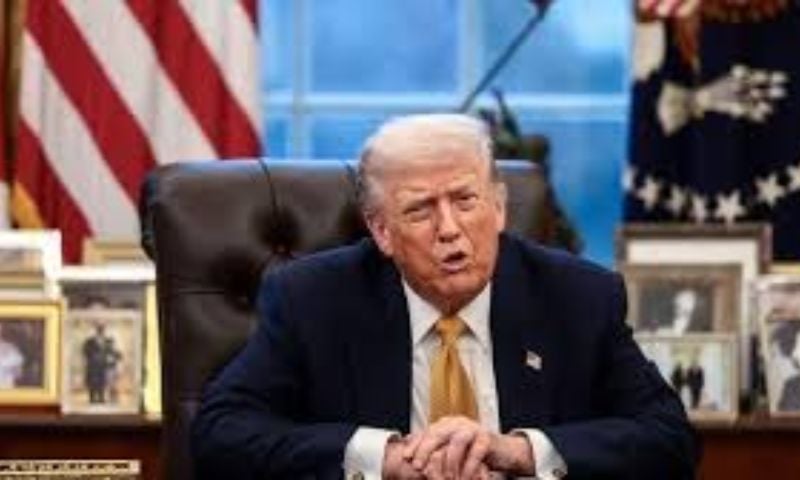
On Saturday, Trump announced plans to impose an additional 10 per cent import tariff on goods from eight European countries — Denmark, Norway, Sweden, France, Germany, the Netherlands, Finland and Great Britain — beginning February 1.
He said the tariffs would rise to 25 per cent by June 1, remaining in place until the United States is allowed to purchase Greenland, the autonomous Danish territory.
The proposal immediately triggered coordinated diplomatic engagement across Europe, with leaders emphasizing dialogue, sovereignty, and NATO solidarity over escalation, according to Reuters.
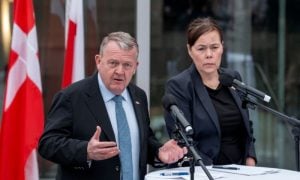
Denmark and Greenland have reiterated that the island is not for sale and that its future lies with its people. Demonstrations in both Denmark and Greenland on Saturday reinforced public support for self-determination and peaceful resolution.
While Trump has framed Greenland as vital to US security due to its Arctic location and mineral resources, European officials have highlighted that the territory is already protected under NATO’s collective security framework, and that the US maintains a long-standing military presence at Pituffik Space Base under a 1951 agreement.
European leaders responded firmly but diplomatically. British Prime Minister Keir Starmer said the UK would raise the issue directly with Washington, stressing that tariffs against allies undermine collective security.
His comments marked one of the strongest public responses from a close US partner, reflecting confidence in diplomatic engagement rather than confrontation.
European Commission President Ursula von der Leyen and European Council President Antonio Costa issued statements affirming the EU’s “full solidarity” with Denmark and Greenland, warning that tariffs risk harming transatlantic trade and cooperation.
Officials across Norway, Sweden, France and Germany echoed that view, emphasizing that economic measures should not be used in territorial or security discussions.
Cyprus, which currently holds the rotating presidency of the European Union, called an emergency meeting of EU ambassadors, signaling the bloc’s intent to manage the issue through institutional channels.
Trade experts noted that while the tariff threat could complicate existing trade understandings — including prior agreements setting baseline levies of 15 per cent on EU goods and 10 per cent on most British imports — the response so far reflects a preference for stability over retaliation.
“The biggest risk is fragmenting EU unity,” said William Reinsch of the Centre for Strategic and International Studies, adding that Europe’s coordinated response may help preserve long-term trade cooperation.
Legal and constitutional processes in the United States also act as guardrails. The US Supreme Court has already heard arguments on the scope of presidential tariff powers, and any ruling could shape the future of unilateral trade actions — a development closely watched by global markets.
European officials have also pointed out that Greenland’s strategic role is already embedded in NATO planning, and that expanding US territorial claims could weaken alliance cohesion — something adversaries such as China and Russia could exploit.
That concern was echoed by EU foreign policy chief Kaja Kallas, who warned that divisions among allies only benefit strategic competitors.
Notably, bipartisan voices in the US Senate urged restraint, calling continued escalation “bad for America, American businesses and America’s allies.” Analysts say such cross-party signals improve the chances of a negotiated outcome.
Some economists advised patience. “Europe has shown it won’t accept everything,” said ING’s Carsten Brzeski, adding that diplomatic engagement remains preferable to conflict.
Taken together, the episode has highlighted not only tensions within the transatlantic relationship, but also its capacity for coordination, institutional response, and peaceful dispute management — even under pressure.