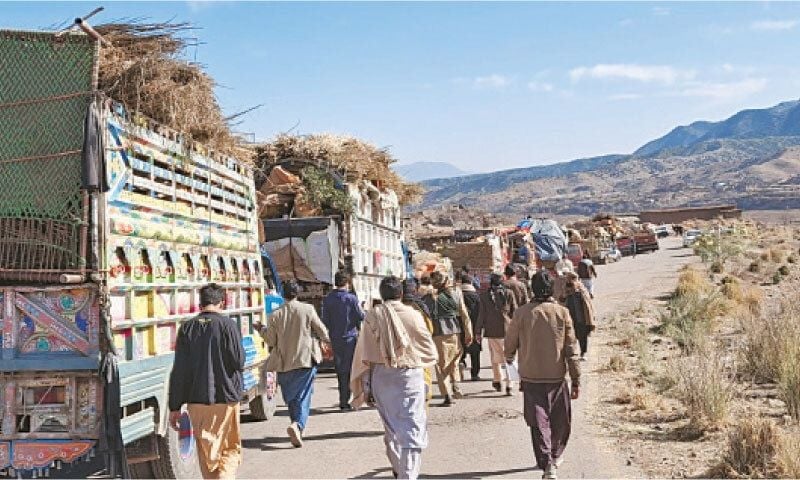



PESHAWAR, Pakistan: The displacement of residents from the Tirah Valley in Pakistan’s northwestern Khyber Pakhtunkhwa province has raised questions over the provincial government’s planning and transparency, amid reported delays and irregularities in the registration and disbursement of Rs4 billion allocated for affected families.
Tirah Valley of Orakzai district lies in a mountainous region near Pakistan’s border with Afghanistan. Security officials say the terrain allows terrorists to infiltrate easily and blend into the local population.
According to Pakistani security officials, terrorist groups have used Afghan soil as a base to carry out attacks inside Pakistan.
Pakistan’s security forces are conducting intelligence-based operations against terrorists and have killed hundreds of terrorists in recent months.
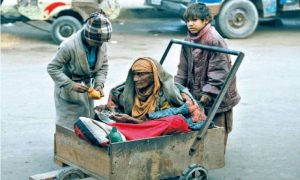
Security officials say the displacement followed months of consultations with Tirah’s local elders amid ongoing intelligence-based operations against terrorists in the area, but concerns persist over the provincial government’s mismanagement, transparency, and political misuse of relief funds.
They say that the elders of the area were informed that the Security Forces are conducting IBOs against terrorists taking refuge in compounds.
The security forces also want the operations to come to an end; however, this requires cooperation from the local population.
Security officials say that the residents must either clear their compounds and villages of Indian backed terrorist elements who are hiding among civilians, or, if that is not possible, facilitate intelligence‑based operations (IBOs) to help eliminate terrorists from the area.
If neither of these options is viable, the local population should temporarily leave the area so that security forces can carry out IBOs to eliminate the terrorists while preventing collateral damage.
According to security officials, in September 2025, local tribal elders of Tirah met then Chief Minister Khyber Pakhtunkhwa Ali Amin Gandapur in the presence of the present CM. The issue of evicting terrorists or possible displacement was discussed even in this meeting as well.
They noted on 28 October 2025, Deputy Commissioner Khyber wrote the first letter to Provincial Disaster Management Authority (PDMA) about the impending displacement and making necessary preparations for the displacement in the presence of the current CM KP.
Meanwhile, on 14 November 2025 Provincial Cabinet principally approved a sum of Rs. 4 billion to settle the displaced people of Tirah.
After taking 3 months (On 11 December 2025), local tribal elders, also called ‘Mashrans’ of Tirah, approached the District administration of Khyber and informed that their efforts to convince terrorists to vacate the area have failed, and they are ready to undertake voluntary and temporary displacement to vacate the area, according to security officials.
Security officials say on 17 December 2025, a Jirga consisting of 26 members/ notables of the area met the District administration of Khyber and placed their demands for displacement. Similar meetings of the Jirgah continued on 18th and 19th December 2025.
On 26 December 2025 Chief Secretary sanctioned Rs 4 billion for the resettlement of displaced people of Tirah.
According to security officials, on 31 December 2025, Jirgah met with the Chief Secretary, and the modalities of displacement were finalised, and the demands of the Jirgah were agreed upon.
Displacement was to be completed by 14th January 2026, after the registration process was to be performed by the Provincial Government, which was extended to 26 January 2026.
They say a total of 19000 families (90000 people) were to be displaced from the Bagh Maidan of Tirah. So far, only 60-65% families have been shifted.
Security officials ask how the Pakistan Tehreek Insaf (PTI) government can claim that they were not taken on board while the provincial cabinet principally approved Rs 4 billion well before issuing the notification and decision of displacement by the local people?
They further ask why only two registration points were established at Bagh and Dawatoi for 90000 people? Is it not an intentional mismanagement of the KP government to create distress for the people and then create a human story out of it?
Security officials say big differences are being reported on the disbursement mechanism of Rs 4 billion between the provincial government and the Jirga.
They ask whether the PTI responds to the reservations of 24 member Jirga on the efficacy of registration points and the transparent disbursement of Rs 4 billion?
They further ask whether the PTI will justify reported irregularities in the registration process, where registration slips have been provided to 14000 families, out of which 6000 have been issued to non-residents of Tirah (PTI party workers)?
They said if the provincial approval was given on 14 November 2025 for the resettlement of displaced people, then why was the process delayed till the end of January 2026?
The controversial disbursement among non-residents of Tirah reinforces that PTI is trying to utilise this money for gathering people for their 8 February protests, the security officials said.
Pakistan’s Defence Minister Khawaja Asif on Tuesday rejected reports of a military operation in northwestern Khyber Pakhtunkhwa’s Tirah Valley, adding that the ongoing migration was a routine seasonal practice linked to harsh weather conditions in the valley.
“There has been no operation in Tirah Valley for many years. These are all assumptions,” the minister said while addressing a press conference in Islamabad.
Pakistan Army is also providing basic necessities, including food and medical assistance to the rescued people and tourists.
Likewise, in Tirah Valley, the soldiers of the Pakistan Army are actively engaged in relief efforts amid heavy snowfall, without caring for their own safety.
The Pakistan Army remains steadfast in its commitment to protecting the lives and property of the public and providing immediate assistance during natural disasters and emergencies.