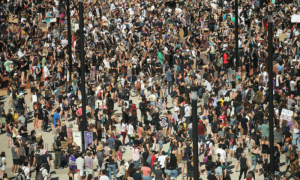
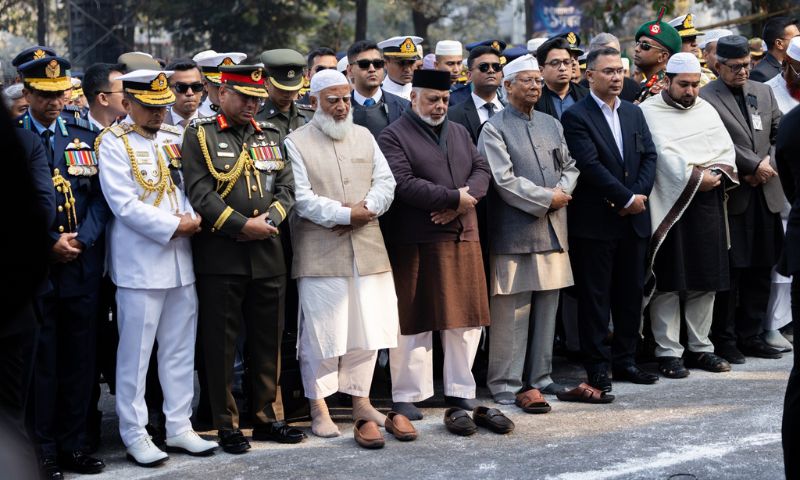



DHAKA, Bangladesh: Thousands of people gathered in Bangladesh’s capital on Wednesday to attend the state funeral of former prime minister Khaleda Zia, as the country bid farewell to one of the most influential figures in its political history.
Khaleda Zia, the first woman to serve as prime minister of Bangladesh and a three-time head of government, died on Tuesday at the age of 80 while undergoing treatment at Evercare Hospital in Dhaka.
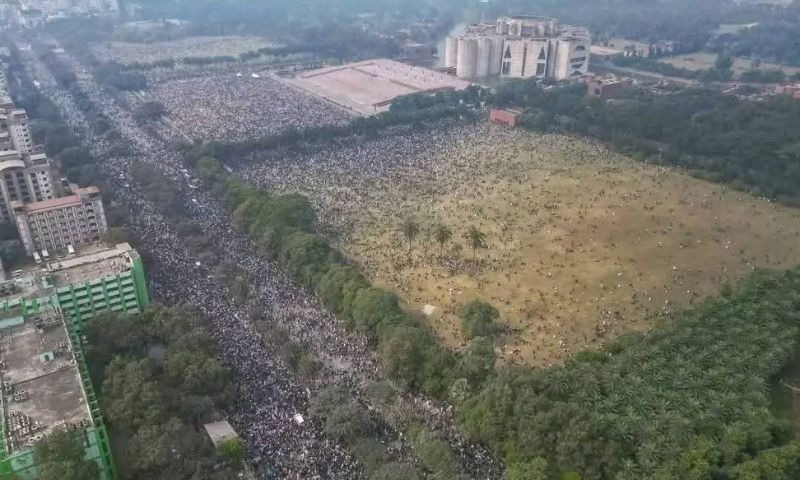
Hundreds of thousands of mourners offered prayers as her funeral prayer was held at Manik Mia Avenue, near the national parliament complex.
The funeral prayer was led by Mufti Mohammad Abdul Malek, khatib of the Baitul Mukarram National Mosque.
Many in the crowd were seen in tears as they recalled Zia’s long political career and personal resilience.
“I never voted for her, but I came to honour a veteran politician whose contributions will always be remembered,” said Minhaz Uddin, a 70-year-old retired government official, who attended with his grandson.
Sharmina Siraj, 40, that Khaleda Zia had been “an inspiration”, particularly for women. She said education stipends introduced during Zia’s tenure had “a huge impact on the lives of our girls”.
Burial with state honours
Following the funeral prayers, Khaleda Zia was buried with full state honours beside the grave of her late husband, former president Ziaur Rahman, at Sher-e-Bangla Nagar in Dhaka.
Senior figures attended the ceremony, including Chief Adviser of the interim government Professor Muhammad Yunus, government advisers, BNP leaders, heads of other political parties, and the chiefs of Bangladesh’s three armed services.
Foreign dignitaries and diplomats from India, Pakistan and other South and Southeast Asian countries were also present.
Pakistan’s National Assembly Speaker Ayaz Sadiq also attended the funeral prayer of the former Bangladeshi prime minister.
Sardar Ayaz Sadiq, Honorable Speaker National Assembly of Pakistan reached Dhaka to attend funeral prayer of H.E. Begum Khaleda Zia, former Prime Minister and Chairperson BNP. pic.twitter.com/quEa2uyPLC
— Pakistan High Commission Bangladesh (@PakinBangladesh) December 31, 2025
The interim government declared three days of national mourning. Flags were flown at half-mast across the country, while thousands of security personnel from the army, police, Rapid Action Battalion (RAB) and Border Guard Bangladesh (BGB) were deployed to maintain order during the funeral.
Towering political figure
Khaleda Zia led the BNP for 41 years and was widely known as an “uncompromising leader”, particularly during the anti-autocracy movement of the 1990s.
She served as a member of parliament five times, prime minister three times and leader of the opposition twice.
She began her political life as a homemaker after the assassination of her husband in 1981. Over the next four decades, she emerged as a dominant figure in Bangladesh’s politics, leading street movements, enduring repeated arrests and imprisonment, and remaining in the country throughout periods of political turmoil.
According to party accounts, she never lost an election she contested.
Ill health and political turmoil
Zia had suffered from multiple chronic illnesses, including liver and kidney complications, heart disease, diabetes, high blood pressure, arthritis and recurring infections. She was hospitalised in late November, and her condition gradually deteriorated despite treatment.
بنگلہ دیش کی سابق وزیراعظم بیگم خالدہ ضیاء کے جنازے میں لاکھوں لوگ شریک ہیں pic.twitter.com/iCbUmeDXH1
— Bangla Urdu | بنگلہ اردو (@BanglaUrdu_) December 31, 2025
She was jailed on corruption charges in 2018 under the government of her long-time political rival, Sheikh Hasina.
The authorities also barred her from travelling abroad for medical treatment. Zia was released last year, shortly after Hasina was forced from power following a mass uprising.
Despite her fragile health, BNP workers submitted nomination papers on her behalf just hours before her death for three constituencies ahead of elections scheduled for February 12.
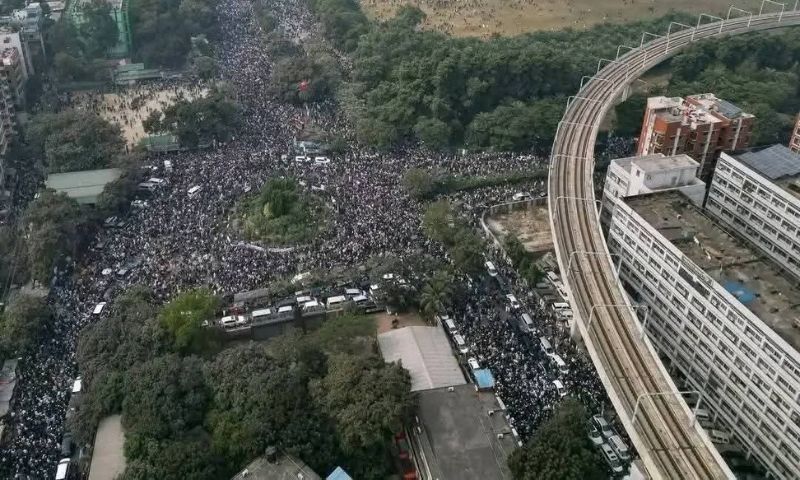
Chief Adviser Muhammad Yunus said Bangladesh had “lost a great guardian”. BNP supporters described the massive turnout as a sign of her enduring influence.
“She is no more, but her legacy lives on — and so does the BNP,” said Jenny Parvez, who travelled several hours with her family to witness the funeral procession.
In a statement, her son Tarique Rahman said the country was mourning “a guiding presence that shaped its democratic aspirations”.
He said his mother had endured “repeated arrests, denial of medical care and relentless persecution”, adding that “her resilience was unbreakable”.