


Key points
- India execute plans with calm clarity
- Middle overs remain Pakistan’s biggest weakness
- World Cup history repeats same Pakistan errors
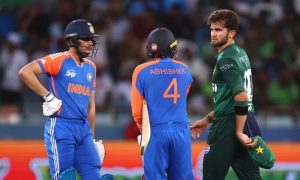
ISLAMABAD: Pakistan’s latest defeat to India at the T20 World Cup — a 61-run loss in Colombo on 15 February 2026 — has reopened a familiar debate: why do these matches so often slip away when the stakes are highest? India made 175/7 and then bowled Pakistan out for 114 in 18 overs, with Ishan Kishan’s 77 off 40 setting the tone.
It was not an isolated collapse. Across multiple T20 World Cups, Pakistan’s losses to India have followed a recognisable pattern — pressure moments, stalled chases, and India’s ability to execute plans longer and more calmly.
Small margins — and repeated mistakes
Go back to the first World T20 in 2007 and the themes are already visible. In Durban, the group match ended tied and India won the bowl-out. Days later, Pakistan came within one big hit of winning the final in Johannesburg, only to lose by five runs after Misbah-ul-Haq’s late scoop attempt found a fielder off the final over.
That narrow defeat became a psychological reference point: Pakistan close enough to believe, but not composed enough to finish.
Chases that freeze in the middle overs
A repeated trend in Pakistan’s World Cup losses has been batting that swings between extremes — long stretches of dot balls followed by forced boundary-hunting. That was evident again in Colombo, where Pakistan’s innings featured an unusually high dot-ball share, signalling a side stuck between caution and panic rather than controlling phases.
The same story played out in 2012 at Colombo’s R Premadasa Stadium. Pakistan were dismissed for 128 and India chased it down comfortably, with Virat Kohli’s unbeaten 78 ensuring there was no late pressure. In 2016 at Eden Gardens, Pakistan made 118/5 and India chased it with time to spare, again anchored by Kohli.
In these matches, Pakistan’s totals were not catastrophes — they were simply underpowered because the innings lacked continuous scoring options. India’s bowling plans tend to target Pakistan’s biggest weakness in big games: the inability to keep the scoreboard moving when boundaries dry up.
Clarity under pressure
If Pakistan’s issue is often emotional and structural, India’s strength has been tactical calm. Consider 2024 in New York, a low-scoring match where India were bowled out for 119, yet still won by six runs. Pakistan finished 113/7 in a chase of 120, with Jasprit Bumrah’s 3/14 decisive.
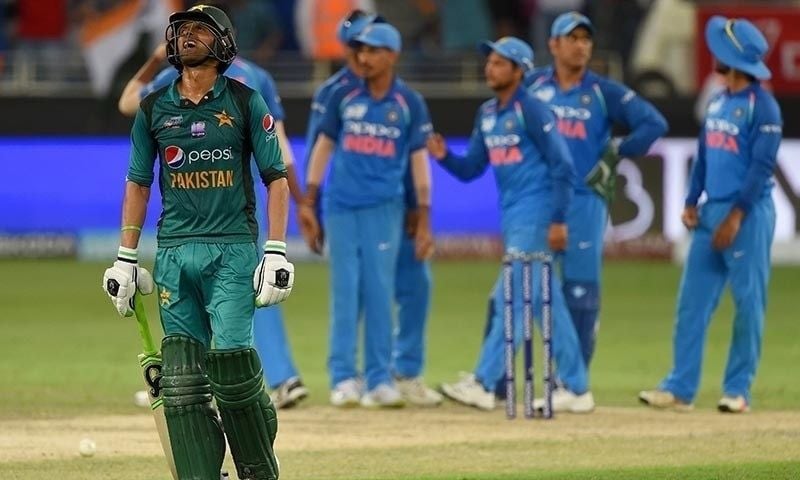
That match was the clearest example of the difference in temperament: India defended a small total through discipline and belief, while Pakistan’s chase tightened as the finish line approached.
Then came 2022 at the MCG, where Pakistan had India under stress before Kohli produced a stunning chase in a match India won off the last ball. Once again, Pakistan let the match drift into a situation where India’s best players could seize the defining moments.
Selection, match-ups and execution gaps
Pakistan’s latest loss also raised familiar selection and form questions. Shaheen Afridi remains a marquee name, but Pakistan have not consistently received the early new-ball impact that once made him a game-changer. When that strike power fades, Pakistan’s entire plan — early wickets, controlled middle overs, then pressure at the death — becomes harder to sustain.
There are also match-up concerns. If a bowler’s record against India is poor, the margin for error in a World Cup fixture is tiny; India’s top order typically arrives with pre-planned intent, particularly against spin, and can neutralise a threat quickly if lengths miss by inches.
The recurring conclusion
Pakistan’s T20 World Cup losses to India — from 2007, 2012, 2016, 2022, 2024 and now 2026 — are not all the same. Some were heartbreakingly close, others one-sided. But the common thread is control: India more often sustain their plans longer, while Pakistan more often lose shape when pressure peaks.
Until Pakistan consistently solve the middle-over stall, build partnerships in chases, and play the moment rather than the occasion, this rivalry at World Cups is likely to keep producing the same outcome — even when Pakistan’s talent suggests it should not.