


KEY POINTS:
- BYD sold 2.26 million EVs, surpassing Tesla’s 1.64 million.
- Tesla’s fourth-quarter deliveries fell below analyst expectations at 418,227 units.
- New stripped-down Model Y under $40,000, Model 3 under $37,000.
- Analysts forecast 3% sales drop, nearly 40% earnings decline.
- Investors focus on Musk’s robotaxis, energy storage, and home robots.
- BYD’s vertical integration, pricing, and battery tech fuel global expansion.
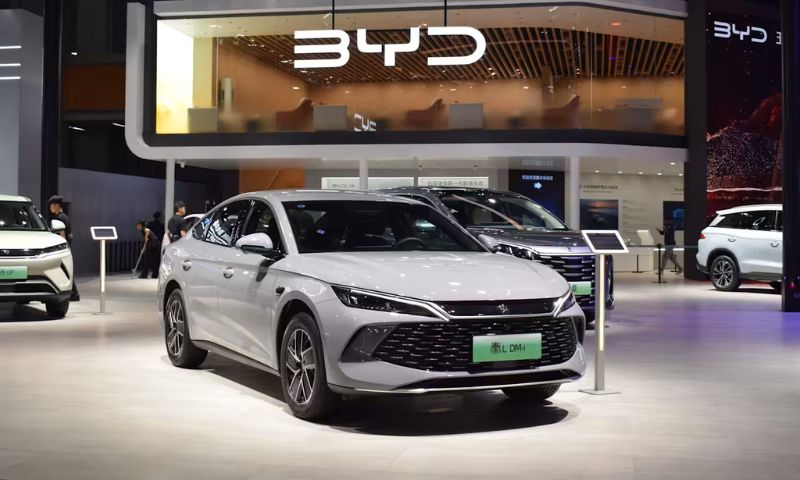
ISLAMABAD: Tesla, the American electric vehicle (EV) giant led by Elon Musk, has lost its position as the world’s top EV seller, as Chinese automaker BYD surged ahead in 2025.
The California-based company reported 418,227 deliveries in the fourth quarter, bringing its total annual sales to around 1.64 million electric vehicles. Analysts had expected Tesla to deliver about 449,000 EVs in the final three months, according to FactSet estimates.
In contrast, BYD, headquartered in Shenzhen, China, announced it sold 2.26 million EVs last year, overtaking Tesla to become the world’s largest EV manufacturer by annual sales. The Chinese company also produces hybrid vehicles and recently reported record-breaking sales figures.
It’s a stunning reversal for Musk, who once dismissed BYD as a threat as Tesla’s rise seemed unstoppable, crushing traditional automakers with far more resources and helping make him the world’s richest man.
Factors behind Tesla slowdown
Industry experts say Tesla’s slowdown in the United States is partly due to the end of a $7,500 federal tax credit for EV buyers in September 2025, which affected consumer demand. Additionally, Tesla has faced mounting competition from Chinese rivals like BYD and European automakers.
Market analysts also point to Tesla Chief Executive Officer Elon Musk’s political endorsements, including support for US President Donald Trump and other far-right figures, which may have impacted sales in key markets.
Sales revival efforts
The latest quarter was the first with sales of stripped-down versions of the Model Y and Model 3 that Musk unveiled in early October as part of an effort to revive sales. The new Model Y costs just under $40,000, while customers can buy the cheaper Model 3 for under $37,000. Those versions are expected to help Tesla compete with Chinese models in Europe and Asia.
For fourth-quarter earnings coming out in late January, analysts are expecting the company to post a 3 per cent drop in sales and a nearly 40 per cent drop in earnings per share, according to FactSet. Analysts expect the downward trend in sales and profits to eventually reverse itself as 2026 rolls along.
Investors, however, have largely shrugged off the falling numbers, choosing to focus on Musk’s pivot to different parts of the business. He has been saying that plunging car sales don’t matter as much now because the future of the company lies more with his new driverless robotaxis service, the company’s energy storage business and building robots for the home and factory. To make his task worthwhile, Tesla’s directors awarded Musk a potentially enormous new pay package that shareholders backed at the annual meeting in November.
Musk’s personal windfall
Musk scored another huge windfall two weeks ago when the Delaware Supreme Court reversed a decision that deprived him of a $55 billion pay package that Tesla doled out in 2018. Musk could become the world’s first trillionaire later this year when he sells shares of his rocket company SpaceX to the public for the first time in what analysts expect would be a blockbuster initial public offering.
Pricing strategy
The competitive pricing of Chinese EVs like BYD has been a significant factor in their rapid market expansion. While Tesla’s average selling price remains higher—often starting above $35,000 for entry models—BYD offers a wide range of fully electric and plug‑in hybrid vehicles at more accessible price points.
In key markets, BYD’s electric models frequently start between $20,000 and $30,000, undercutting Tesla and many European rivals. This aggressive pricing, combined with improving technology and features, has strengthened BYD’s appeal to cost‑conscious consumers worldwide and contributed directly to its surge in sales, enabling it to capture a broader segment of the global EV market.
Tesla’s Key Models (2025):
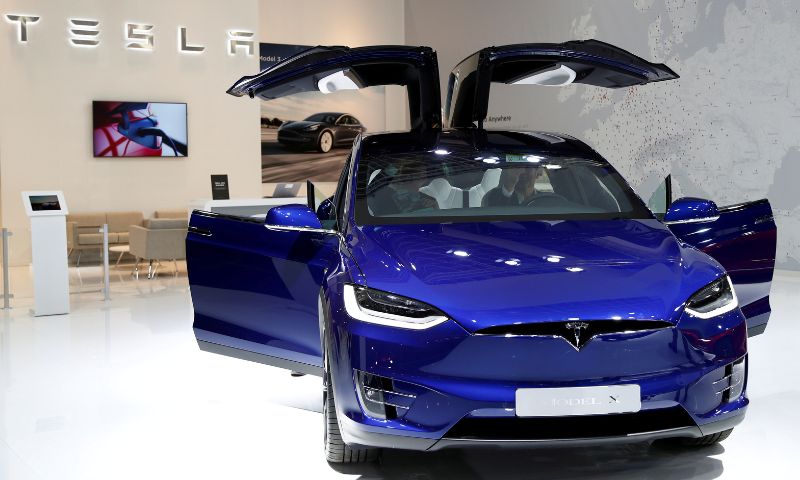
Model Y & Model 3: Remain Tesla’s volume drivers globally. The Model Y is consistently the world’s best-selling car in any category. Recent updates focus on interior refinements, longer range, and the continued evolution of its Full Self-Driving (FSD) software.
Cybertruck: The stainless-steel pickup entered full-scale production in 2025. Its polarising design and novel features have generated intense interest, but production ramp-up constraints limited its contribution to 2025 annual sales volumes.
Future Focus: Tesla’s strategy emphasises advancements in autonomous driving technology, its Supercharger network, and cost reduction through manufacturing innovations like gigacasting. The anticipated “Model 2” or next-generation affordable platform is seen as critical to recapturing mass-market growth.
BYD’s key models (2025):
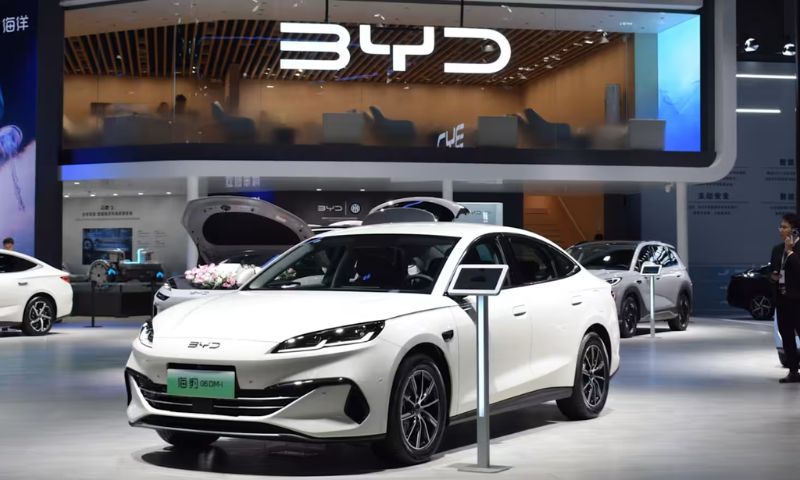
Seal & Dolphin: These models are core to BYD’s success in the sedan and small hatchback segments, respectively. Known for competitive pricing, strong battery efficiency from the Blade Battery, and feature-rich offerings.
Atto 3 (Yuan Plus): A compact SUV that has been a major global export success, particularly in Southeast Asia, Europe, and Australia.
Han & Tang: Positioned in the premium midsize sedan and SUV segments in China, showcasing BYD’s technological capabilities and competing directly with Tesla’s Model 3 and Model Y.
Competitive Edge: BYD’s vertical integration, controlling its own battery production, semiconductors, and motors, provides significant cost and supply chain advantages. Its expansive lineup includes plug-in hybrids (DM-i technology), which act as a bridge for consumers in markets with less charging infrastructure.