
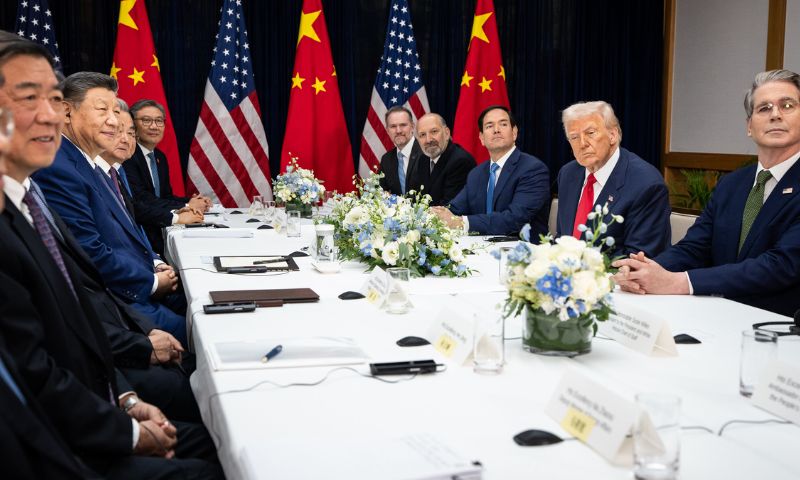
WASHINGTON: Leaders from some of the world’s biggest technology companies are expected to attend a White House state dinner for Chinese President Xi Jinping next week, as artificial intelligence becomes a key issue in discussions between the United States and China.
Nvidia CEO Jensen Huang and OpenAI chief executive Sam Altman are among the technology figures set to attend the event, according to a US official. Amazon founder Jeff Bezos, Tesla and SpaceX chief Elon Musk, Apple CEO Tim Cook and Google CEO Sundar Pichai are also expected to be present.
AI competition shapes US-China talks
The gathering comes as Washington and Beijing continue to compete for dominance in artificial intelligence, with both countries seeking leadership in a technology sector considered strategically important.
ALSO READ: King Charles Raises Alarm Over AI Risks as Tech Leaders Debate Safety
China, once viewed as behind the United States in advanced AI development, has narrowed the gap through progress by companies including DeepSeek and other domestic firms.
The United States has attempted to restrict China’s access to advanced semiconductor technology through export controls, particularly high-end chips used to develop powerful AI systems.
Debate over AI safety
The dinner follows renewed global debate over the risks and pace of artificial intelligence development.
Some technology leaders, including Anthropic CEO Dario Amodei, have called for greater caution and coordinated efforts to understand potential risks.
OpenAI’s Altman, Musk and Google DeepMind chief Demis Hassabis have also expressed support for stronger AI safeguards.
Former Anthropic researcher Jacob Coxon recently raised concerns about the rapid development of advanced AI systems, while critics argue that excessive restrictions could slow innovation.
US President Donald Trump has dismissed some warnings over AI risks and has encouraged American companies to continue advancing to maintain an advantage over China.
Call for continued progress
Nvidia CEO Jensen Huang has argued that the United States should continue developing AI quickly while ensuring products are safe before release.
“We’re going to go as fast as we can, but we would never, ever ship products before they’re ready,” Huang said in a recent interview.
While cooperation between Washington and Beijing on AI safeguards remains uncertain, the technology is expected to be a major topic as the two countries discuss their future relationship.