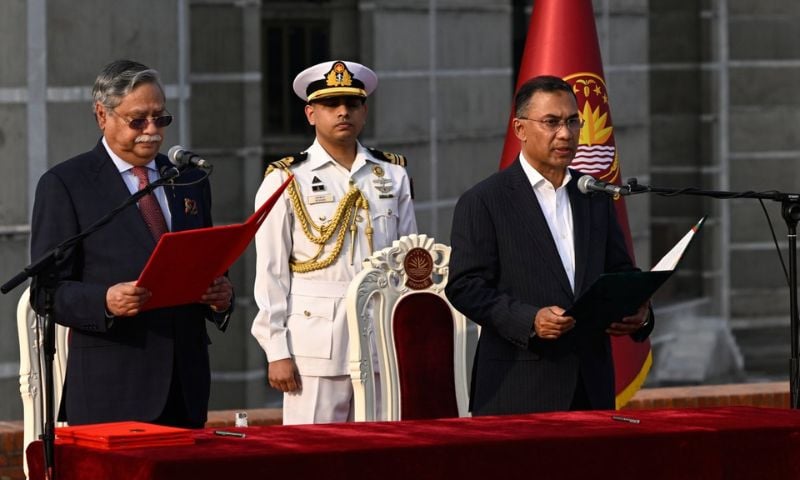



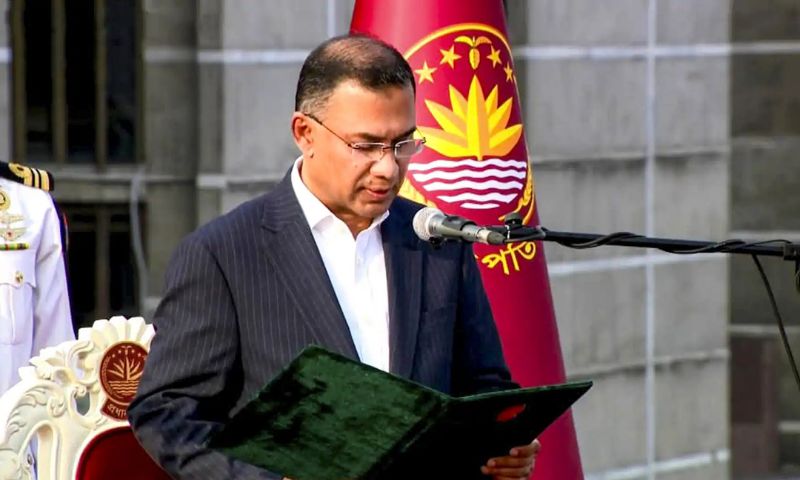
DHAKA, Bangladesh: Bangladesh Nationalist Party (BNP) leader Tarique Rahman was sworn in as Bangladesh’s Prime Minister on Tuesday after his party secured a sweeping victory in parliamentary elections.
Rahman, 60, the son of former prime minister Khaleda Zia, took office facing pressing challenges.
These include restoring political stability, rebuilding investor confidence and reviving key industries such as the garment sector after months of turmoil that followed the 2024 popular uprising which toppled former premier Sheikh Hasina.
Breaking with tradition, the swearing-in ceremony was held under the open sky at the South Plaza of the Jatiya Sangsad Bhaban, the national parliament building, instead of Bangabhaban, the president’s official residence where such events are usually organised.
President Mohammed Shahabuddin administered the oath to Rahman and members of his cabinet.
The ceremony was attended by senior political leaders, diplomats, civil and military officials and representatives from invited countries, including China, India and Pakistan.
Rahman’s BNP secured a two-thirds majority in the February 12 elections, returning to power after nearly two decades.
According to official results, the BNP-led coalition won 212 seats. The Jamaat-e-Islami-led alliance secured 77 seats.
Jamaat-e-Islami chief has pledged to act as a “vigilant, principled, and peaceful opposition”.
Hasina’s Awami League was barred from contesting the vote after the Election Commission revoked its registration.
First elected parliament since uprising
Earlier in the day, Rahman and newly elected lawmakers were sworn in as members of parliament.
The oath was administered by Chief Election Commissioner AMM Nasir Uddin. Members pledged allegiance to the constitution and the people of Bangladesh.
The sitting marked the first elected legislature since the 2024 popular uprising that removed Hasina from office.
An interim administration led by Nobel laureate Muhammad Yunus governed the country during the transitional period leading up to the election.
Jamaat-e-Islami, contesting its first election since a 2013 ban was lifted following Hasina’s ouster, won a record 68 seats.
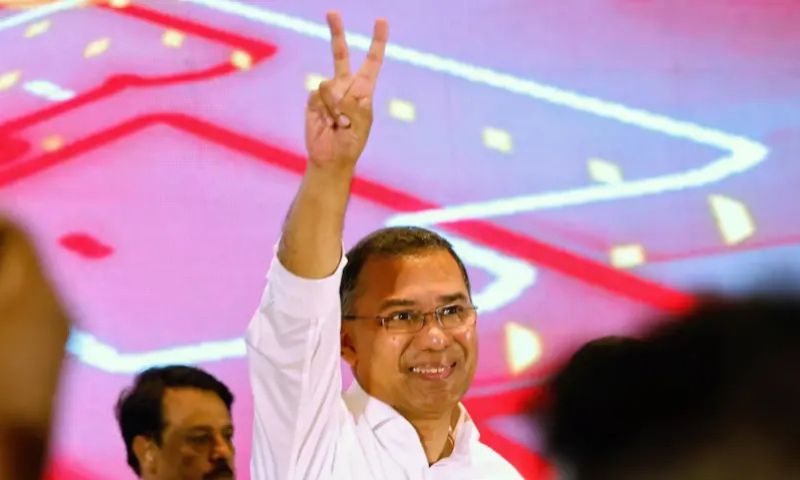
It is expected to sit in opposition along with its allies, including the National Citizen Party led by youth activists who played a prominent role in the movement that toppled Hasina.
Triumph for democracy
In his victory speech, Rahman described the result as a triumph for democracy.
“This victory belongs to Bangladesh, belongs to democracy,” he said. “This victory belongs to people who aspire to and have sacrificed for democracy.”
He warned that his government would inherit a fragile economy and weakened institutions.
“We are about to begin our journey in a situation marked by a fragile economy left behind by the authoritarian regime, weakened constitutional and statutory institutions, and a deteriorating law and order situation,” he said.
Bangladesh, a nation of around 170 million people and the world’s second-largest garment exporter, has faced months of political unrest that unsettled investors and strained public finances.
Rahman pledged to restore economic stability and strengthen institutions.
In remarks after the election, he urged calm and restraint.
“Peace, law and order must be maintained at any cost,” he said, calling on supporters to avoid retaliation. “We will not tolerate any kind of chaos.”
Rahman’s elevation caps a long and turbulent political journey. He returned to Bangladesh in December after 17 years of self-imposed exile in Britain. He arrived shortly before his mother’s death.
His return energised BNP supporters and reshaped the party’s campaign.