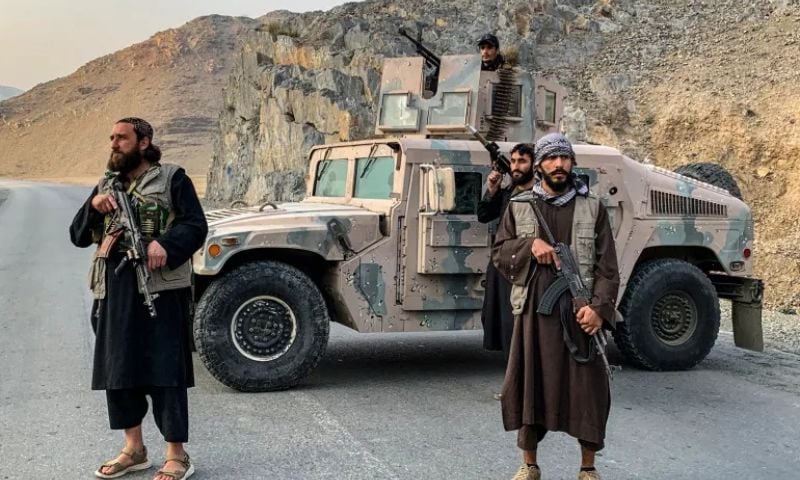



ISLAMABAD: Recent reports have indicated that the Afghan Taliban are harbouring designated terrorists in the diplomatic area of Kabul, particularly in the area of Wazir Akbar Khan.
Analysts and security officials have pointed out that the major terrorists of Tehreek-e-Taliban Pakistan and others are operating from locations that are considered too sensitive for the international community to target, and this has given rise to the possibility of a new security threat in the region.
Analysts have pointed out that the new strategy of the terrorists is similar to the tactics employed by the terrorists during the 1990s when the Taliban were fighting against the Afghan government, and they were placed in locations where attacking them would result in civilian casualties.
Intelligence claims suggest the presence of TTP leaders, including Noor Wali Mehsud and Hafiz Gul Bahadur, alongside Baloch militant figure Bashir Zeb, as well as militants originating from Central Asian states.
Pakistani and regional security analysts argue that sheltering terrorists in such locations complicates any targeted operations by neighbouring states.
The Wazir Akbar Khan district, which houses embassies, international organisations, and residences of UN staff, is the area of particular concern.
Reports indicate that UN personnel and NGOs in Kabul have expressed security concerns and may consider relocating if the situation deteriorates further.
While the Taliban leadership continues to deny hosting terrorists, acting defence minister Mullah Mohammad Yaqoob described TTP members as “refugees,” framing their presence as humanitarian rather than militant.
Internationally, the TTP is declared a terrorist organisation by the UN Security Council, the United States, and other governments, responsible for numerous attacks in Pakistan, including assaults on civilians, security forces, and schools.
Multiple reports confirm that Afghanistan has continued to serve as a safe haven for over 20 militant groups with different agendas, including al-Qaeda, ISIS-K, the Islamic Movement of Uzbekistan, the East Turkestan Islamic Movement, Katibat Imam al-Bukhari, the Islamic Jihad Group, and Tajik militant group Jamaat Ansarullah.
The Central Asian countries, as well as Russia and China, have continued to urge the Taliban to take action against these groups, citing threats to regional security.
The US and UN assessments highlight that foreign fighters continue to operate training networks in Afghanistan under Taliban protection.
A 2023 US congressional report warned that, despite ISIS-K being the most visible threat, al-Qaeda affiliates and other regional organisations remain active.
The US Treasury Department has similarly noted that al-Qaeda leaders maintain operational networks within the country.
Security analysts warn that Afghanistan’s role as a safe haven for multiple terrorist groups could destabilise the region, impacting Pakistan and Central Asia.
Unlike the period following the 9/11 attacks, there is currently no multinational military presence capable of enforcing counter-terrorism operations in Afghanistan.
Analysts argue that coordinated regional and international engagement will be critical to prevent Afghanistan from becoming a hub for militancy once again.