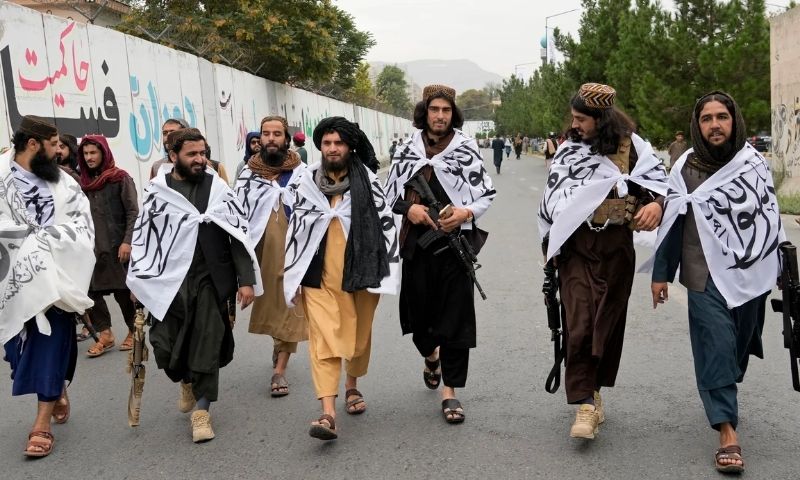



WASHINGTON: Former US National Security Advisor John Bolton has warned that Taliban rule has turned Afghanistan into a safe haven for terrorist groups, creating a “serious and growing threat” beyond its borders.
Speaking to Asia One News, Bolton said negotiations with the Taliban and the 2020 Doha agreement were a “grave mistake” that legitimised the group without securing meaningful commitments.
Bolton said the Taliban have absorbed former fighters from various terrorist groups into their ranks, including al-Qaeda and ISIS-K (Daesh), raising concerns about infiltration and ideological alignment.
“The threat is there. It has not materialised in the US so far, but we know the capability is there. It’s just a question of time before we face it again,” he said.
The latest UN Analytical Support and Sanctions Monitoring Team report, covering developments through December 8, 2025, confirms the presence of over 20 international and regional terrorist groups in Afghanistan.
These include al-Qaeda, Islamic State Khorasan (ISIS-K), Tehrik-e-Taliban Pakistan (TTP), Eastern Turkistan Islamic Movement (ETIM/TIP), and Islamic Movement of Uzbekistan. Several groups are expanding regionally or using Afghanistan to plan external attacks, the report claimed.
The banned TTP has intensified attacks against Pakistani military, civilian and state targets. The UN report noted Taliban facilitation of TTP operations from Afghan soil, escalating tensions between Pakistan and Afghanistan.
UN report confirms terrorist groups operating from Afghanistan
Al-Qaeda continues to operate in Kabul under Taliban oversight, providing training and logistical support to other groups.
Pakistan’s Ministry of Foreign Affairs issued a strong demarche on December 19, 2025, condemning a terrorist attack by the Gul Bahadur Group on a military camp in North Waziristan, which killed four Pakistani soldiers.
The ministry summoned the Afghan Deputy Head of Mission to convey Pakistan’s “grave concern” over Taliban support for groups like TTP operating from Afghan soil.
Pakistan demanded a full investigation and immediate, verifiable measures against all terror groups in Afghanistan.
Officials warned that continued Taliban facilitation of attacks would force Pakistan to defend its sovereignty and take necessary measures to protect its citizens.
The UN report noted ongoing challenges of terrorist financing, cross-border attacks, and drone proliferation. Terrorist groups such as ISIL-K and TTP remain active threats both inside Afghanistan and regionally.
The US report warned that inadequate coordination with neighbouring countries risks displacement or spillover of terrorist activity.
US-Pakistan cooperation
Bolton also praised Pakistan’s efforts to rebuild trust with the Trump administration through “smart political and military engagement,” citing Chief of Defence Forces Field Marshal Syed Asim Munir for strengthening bilateral ties.
He said cooperation with Pakistan on matters such as the Taliban regime in Afghanistan was possible and mutually beneficial.
Bolton reiterated that the Doha agreement, which led to US withdrawal from Bagram Air Base, was a strategic failure.
“We got nothing for it. The Taliban never intended to keep their commitments, especially on human rights and women’s rights,” he said.
“You cannot negotiate with terrorists. Their ideology is more important than truth, and they’ve proven it yet again.”