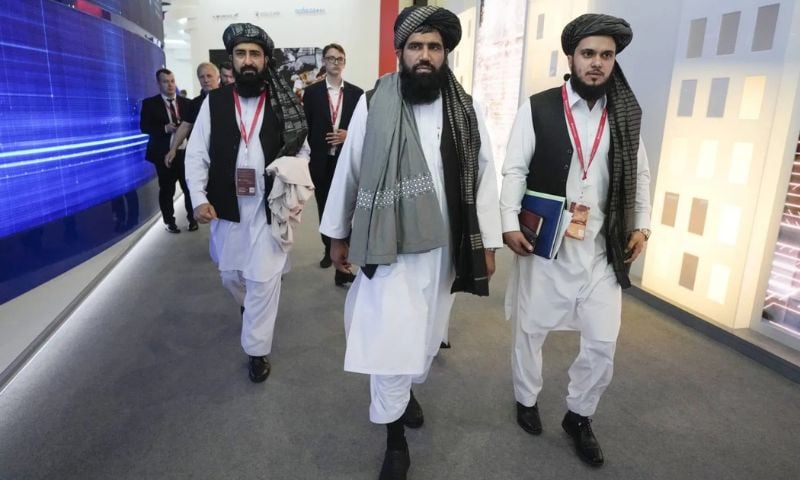



KABUL, Afghanistan: Afghanistan’s Taliban authorities have declined to attend a regional meeting on Afghanistan scheduled to be held in Tehran next week, despite receiving a formal invitation, the Taliban’s foreign ministry said on Saturday.
Zia Ahmad Takal, deputy spokesperson for the Taliban Ministry of Foreign Affairs, said the decision was based on Kabul’s assessment that Afghanistan already maintains active engagement with regional countries through existing cooperation frameworks. He said Kabul believes it has made “significant progress” in regional relations, Afghanistan International reported.
Iran is due to host the meeting on “developments related to Afghanistan” on December 16 and 17.
One of the central items on the agenda is reducing tensions between Afghanistan’s Taliban regime and Pakistan, according to Afghanistan International.
The meeting will bring together special representatives on Afghan affairs from Pakistan, Iran, China, Russia, Tajikistan, Uzbekistan and Turkmenistan.
Iran’s Foreign Ministry spokesperson, Esmail Baghaei, said on Thursday that Tehran places “fundamental importance” on security and stability in its neighbourhood.
“In this context, Iran will spare no effort to reduce tensions among regional countries and strengthen mutual understanding,” he said.
Referring to tensions between Pakistan and the Taliban authorities, Baghaei expressed hope that the meeting would play “an effective role in promoting convergence and easing tensions”.
Pakistan–Taliban relations
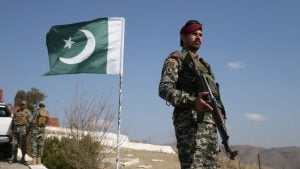
The meeting comes amid a sharp deterioration in relations between Pakistan and Afghanistan’s Taliban regime, following cross-border clashes and a surge in terrorist attacks inside Pakistan.
Iran has repeatedly offered to mediate and called for de-escalation.
On Friday, Iran’s representative to the United Nations warned that the expansion of terrorist groups in Afghanistan posed a direct threat to neighbouring states.
He said Iran is “directly and immediately” affected by developments in Afghanistan and cautioned that without an inclusive national government, conflict in the country would intensify.
Regional summit without Kabul
According to diplomatic sources, Iran will host a high-level regional summit early next week involving Afghanistan’s six neighbouring countries—Pakistan, Iran, China, Uzbekistan, Tajikistan and Turkmenistan—along with Russia.
Sources said Tehran had also invited Afghanistan’s interim Taliban government, marking the first time Kabul was included in this format since the group seized power in 2021.
The regional grouping was formed after the Taliban takeover in August 2021 at Pakistan’s initiative.
The first meeting was held in Islamabad, followed by a virtual session hosted by Iran and subsequent rotating meetings.
A gathering had earlier been planned in Turkmenistan, but Tehran moved to convene the summit amid worsening security conditions.
Militancy and regional stakes
Pakistan continues to face near-daily terrorist attacks, many of which it says are carried out by terrorist groups operating from Afghan territory.
Islamabad has repeatedly urged the Taliban to take decisive action against terrorist groups.
Diplomatic sources said Russia and China, both of which maintain working relations with the Taliban authorities, have expressed willingness to help reduce tensions between Pakistan and Afghanistan.
China is particularly concerned that prolonged instability could undermine broader regional connectivity plans, including extending the Belt and Road Initiative through Afghanistan.
Major projects, such as the planned Uzbekistan–Afghanistan–Pakistan railway and the CASA-1000 energy transmission line, remain stalled due to insecurity.
International pressure
The Taliban’s decision comes as international pressure mounts over its counterterrorism commitments.
During a United Nations Security Council meeting on Friday, several countries warned that Afghanistan has again become a hub for terrorist organisations.
China’s UN Ambassador Fu Cong said groups such as the banned Tehreek-e-Taliban Pakistan (TTP) remain active on Afghan soil and continue to carry out cross-border attacks in Pakistan.
Denmark’s UN representative called on the Taliban to dismantle terrorist networks, including Al-Qaeda and the TTP, and ensure Afghan territory is not used to threaten other states.
Pakistan’s UN Ambassador, Asim Iftikhar, told the council that attacks against Pakistan are being planned, facilitated and financed from Afghan territory. He said Islamabad had provided “irrefutable evidence” of such activity.
The United States and several other council members also urged accountability, warning that peace in the region would remain elusive unless militant sanctuaries inside Afghanistan are dismantled.