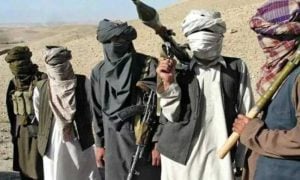
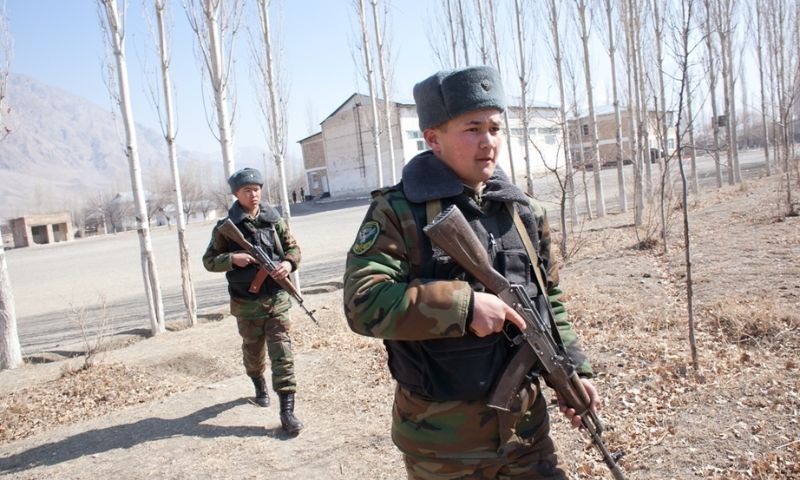



DUSHANBE, Tajikistan: Tajikistan officials on Sunday said that security forces “neutralised” four “terrorists” who crossed into the country from neighbouring Afghanistan in an area where cross-border terrorist attacks have been on the rise in recent weeks, state media reported.
Tajikistan, in Central Asia, shares a mountainous border with Afghanistan and has had tense relations with Kabul’s Taliban authorities.
According to Tajik security services cited by the state-owned Khovar news agency, “four terrorists were neutralised” after they refused to put down arms in the southern Khatlon region.
Tajik authorities have reported at least five deadly incidents on the mountainous border, which is some 1,350 (840 miles) long, since November.
At least 16 people have been killed in total in cross-border terrorist infiltration attempts from Afghanistan, according to official data.
These include Tajik border guards, Chinese workers and what Dushanbe calls “smugglers” and “terrorists”.
After attacks on Chinese nationals in November, Tajik authorities urged the Taliban regime to take measures to prevent destabilisation of the volatile border region, where drug traffickers and terrorist groups are active.
Tajik President Emomali Rakhmon openly strongly criticised Afghanistan’s Taliban authorities for their support for terrorist groups.
He has urged the Taliban regime to respect the rights of ethnic Tajiks, estimated to represent around a quarter of Afghanistan’s population.
In December 2025, Tajikistan’s State Committee for National Security said the repeated attacks from Afghanistan demonstrate the Taliban regime’s serious and repeated irresponsibility in fulfilling its international commitments and its assurances to ensure security and stability along the Tajik–Afghan border and to combat terrorist organisations.
Tajik border forces said they hope the Taliban leadership will apologise to the people of Tajikistan and take effective measures to ensure security along the shared border.
In November, the press office of the president of Tajikistan confirmed that five people were killed and five others wounded in two attacks launched from Afghanistan.
Following those incidents, President Emomali Rahmon ordered security agencies to assess the situation and explore ways to strengthen border security.
Since the Taliban’s return to power in Kabul, Afghanistan has become a safe haven for terrorist groups.
According to a United Nations sanctions monitoring report, released in December 2025, the Taliban have absorbed former fighters from various terrorist groups into their local security forces to draw on their combat experience. The report warned that the practice raises concerns about infiltration and ideological alignment within their ranks.
The Analytical Support and Sanctions Monitoring Team, in its report, said more than 20 international and regional terrorist organizations remain active in Afghanistan, despite Taliban assertions that no such groups operate in or from Afghan territory.