KEY POINTS
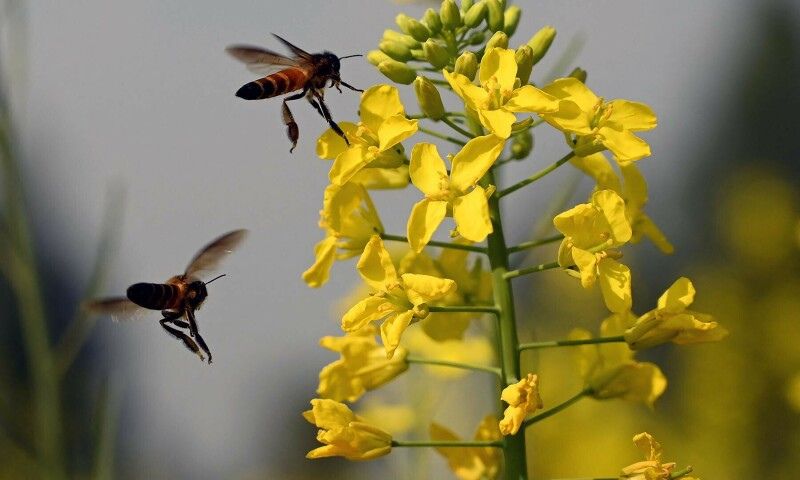
- Jujube (beri) flowers in Punjab attract Afghan beekeepers every autumn.
- Afghan beekeepers hold the lion’s share of Pakistan’s honey industry.
- Bees die due to cold weather and road exposure.
- Afghan refugees helped Pakistan transition from honey importer to exporter.
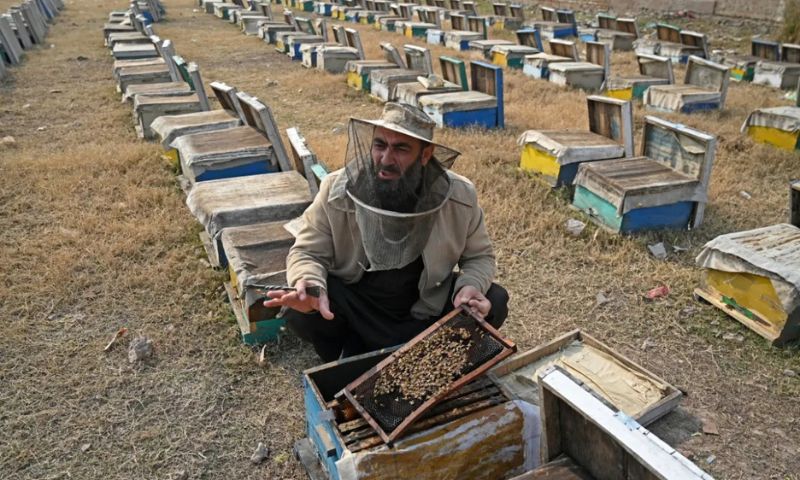
MARDAN, Pakistan: For nearly three decades, Khalilur Rahman, 38, an Afghan beekeeper from a family of honey producers, has made the same seasonal journey across the border.
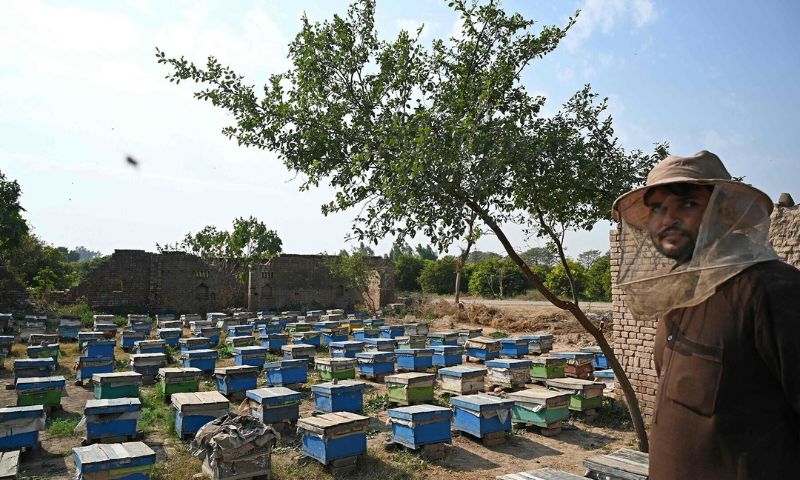
Each year, as September arrives, he loads his truck with scores of wooden hive boxes — living colonies buzzing with thousands of bees and their queen — and heads to Pakistan.
By mid-November, once the prized jujube (locally called beri) flowers have bloomed and the honey has been harvested, he returns home.
An abrupt disruption
Warmer temperatures in Punjab, coupled with the region’s abundance of Jujube flowers — essential for producing the prized jujube honey — make it a honey pot for Rahman’s bees.
He travels to Pakistan ahead of winter to take advantage of the jujube flowering season. But this year, his routine journey turned into an ordeal and an unexpected crisis.
Rahman arrived in Pakistan in mid-September through the Torkham border crossing, bringing 100 boxes of bees from Kunar, Afghanistan, as he had done for years. He was accompanied by two other men — all travelling legally on three-month visas.
Unfortunately, shortly after their arrival, Pakistan announced that all undocumented Afghan refugees and citizens must leave the country and return to Afghanistan.
“We came legally. We have a three-month visa. But because the border was closed, our visa expired while we were still here,” Rahman says.
We came legally. We have a three-month visa. But because the border was closed, our visa expired while we were still here.” – Khalilur Rahman, Afghan beekeeper
His situation underscores how recent policy shifts are affecting communities who have long contributed to Pakistan’s economy.
Pakistan has played host to millions of Afghan refugees over the years; many of whom turned to self-employment and private business to make ends meet. One sector where they have truly hit the nail on the head is apiculture.
Today, Afghan beekeepers hold the lion’s share in Pakistan’s honey industry — from production and marketing to trade and exports.
Stranded with hives
On October 11, heavy clashes erupted near the Pakistan-Afghanistan border in Balochistan and Khyber Pakhtunkhwa, involving Pakistani forces and Afghan Taliban fighters, with casualties reported on both sides.
Following the clashes, all border crossings, including Chaman in Balochistan and Torkham in Khyber Pakhtunkhwa, were closed on October 12. The closures brought movement and trade to a grinding halt.
With no clear way to return and no alternative shelter, Rahman and several other Afghan beekeepers are now living along the roadside in Peshawar with their hives.
Many of his bees have died due to harsh winter temperatures and the constant flow of traffic on nearby roads.
When the honey season comes, we usually get 10 to 12 kilograms of honey per box, but those unfamiliar with this work will barely manage three to four kilograms, which could spell disaster for the business.” – Khalilur Rahman
“The vehicles passing by and the cold weather have killed a lot of our bees. We don’t know what to do,” he adds.
Although winters in Afghanistan are even colder, his bees normally survive there because their hives remain stationary and undisturbed.
In Pakistan, they come chasing the jujube bloom, which requires moving the hives across long distances.
This continual transport, combined with exposure to open roads and fluctuating temperatures, has made the bees far more vulnerable this year.
Honey industry on tenterhooks
For beekeepers like Rahman, the losses are not limited to dying bees — they also translate into steep financial setbacks.
“If we make an empty bee hive, it costs Rs 6,000 to Rs 7,000 but if we sell it in Pakistan, we are paid Rs 2,000 to Rs 2,500 for each hive, including the bees.”
Rahman remarks that those who sell their hives also lack the necessary know-how, which would wreak havoc on the entire operation.
“When the honey season comes, we usually get 10 to 12 kilograms of honey per box, but those unfamiliar with this work will barely manage three to four kilograms, which could spell disaster for the business.”
Our competition in the Gulf is with China and India. When these expert people leave and inexperienced people are left with the bees, I estimate that 50 per cent of the bee colonies will die due to winter.” – Sher Zaman, President of All Honey Bee and Exporters Organisation
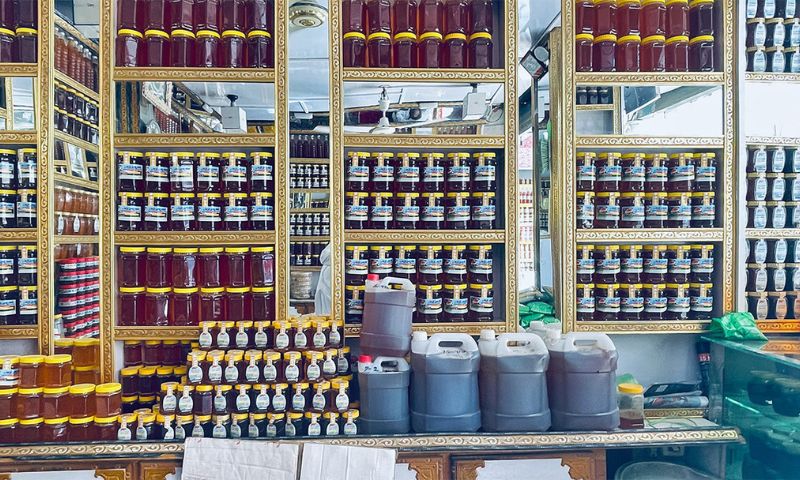
Data obtained from Pakistan’s Honey Beekeepers Association estimates that around 1.6 million people in the country are linked to the honey business. Nearly 60 per cent of them are Afghan refugees who played a pivotal role in the trade.
Honey traders in Pakistan are facing a highly uncertain situation. According to them, the departure of Afghan refugees and their inability to return to Pakistan has put the honey business in jeopardy.
They say that the border closure has also halted both imports and exports, which previously involved thousands of containers.
Sher Zaman, president of the All Honey Bee and Exporters Organisation, says the departure of Afghan beekeepers has thrown a spanner in the works for Pakistan’s honey industry.
Refugees sparked honey boom
Sher Zaman says that the foundation of Pakistan’s modern honey sector was built by Afghan refugees who arrived in 1979.
“When Afghan refugees came to Pakistan, UNHCR [United Nations High Commissioner for Refugees] gave each family two to four boxes of bees. At that time, Pakistan was importing honey from all over the world,” Zaman says.
He adds that currently, Pakistan exports around 6,000 to 7,000 containers of honey — each containing an average of 18,000 kilograms — per year.
Within five to six years, he adds, because of Afghans’ hard work and expertise, Pakistan moved from importing honey to exporting it. He describes the current vacuum left by their sudden return to Afghanistan as “beyond description.”
Zaman warns that Pakistan’s international honey exports, currently holding a 6.5 per cent market share mainly in Gulf countries, are hanging by a thread.
“Our competition in the Gulf is with China and India. When these expert people leave and inexperienced people are left with the bees, I estimate that 50 per cent of the bee colonies will die due to winter.”
He adds that such heavy losses will directly reduce Pakistan’s export volume. “If our production drops, buyers will not wait for us. They will turn to India and China instead.”
If we had our local experts, this problem could have been solved. But right now, these Afghan professionals are essential for the survival of this industry.” – Sher Zaman
Zaman estimates that 70 per cent of Pakistan’s honey exports will be adversely affected if Afghan experts continue to leave the country.
He urges the Ministry of Industry to grant Afghan beekeepers three-year work visas to keep the wheels turning.
“If we had our local experts, this problem could have been solved. But right now, these Afghan professionals are essential for the survival of this industry,” he said.
Border closure hits livelihoods
For Afghan beekeepers, Pakistan’s seasonal warmth has long been essential for keeping their colonies alive.
This year’s sudden restrictions have left many stranded, struggling to keep their heads above water as winter sets in.
Abdul Wahab, 44, another Afghan beekeeper based in Peshawar, was stranded at the border when it closed during his return this year.
He urges Pakistan to reopen the border for Afghan beekeepers, warning that without it, their bees will perish and precious honey will be lost.
Earlier, the Pakistani government had ordered all Afghan refugees to return to Afghanistan before August 31.
Following the deadline, authorities began detaining and deporting those who remained in the country without valid documents.
As a result, hundreds of Afghan beekeepers who rely on Pakistan’s warmer climate to sustain their bees during winter now find themselves stuck, facing economic loss and uncertainty.