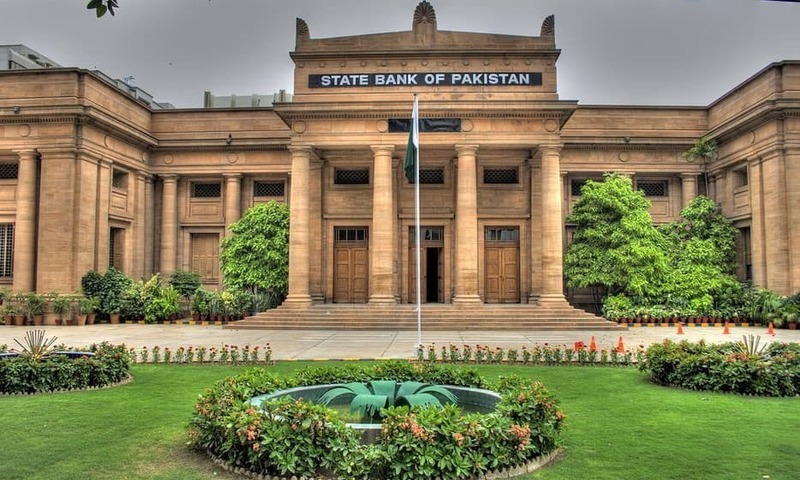
ISLAMABAD: The Monetary Policy Committee (MPC) of the State Bank of Pakistan (SBP), in its first meeting of fiscal year 2026–27, has decided to keep the policy rate unchanged at 11.5 percent.
This marked the committee’s fifth meeting of the year, with the decision broadly matching market expectations.
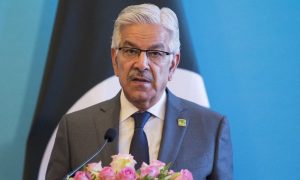
Speaking at a press briefing, SBP Governor Jameel Ahmad said that consumer price inflation (CPI) is expected to ease in July. He added that the central bank anticipates inflation will remain within the upper end of its target range of 5 percent to 7 percent by the close of the current fiscal year.
The Governor said inflation had been on a downward trajectory during the first half of the previous fiscal year, but noted that the spillover effects of the Middle East conflict had affected Pakistan’s domestic economy.
“From July to February, average inflation stood at 5.5 percent, which remained within the government’s target range of 5 percent to 7 percent,” he said.
The central bank’s decision was widely anticipated by analysts, who argued that maintaining the current policy rate was necessary to preserve macroeconomic stability amid subdued economic growth.
The Monetary Policy Committee unanimously decided to keep the policy rate unchanged at 11.5 percent in its meeting held on July 27, 2026.
For details: https://t.co/7bQXQaJE5x pic.twitter.com/EyU267x0bL— SBP (@StateBank_Pak) July 27, 2026
Surveys conducted by brokerage firms indicated that more than 90 percent of market participants expected the SBP to keep the policy rate unchanged, while only a small minority anticipated a modest increase.
Improved outlook but external risks persist
In its official statement, the SBP said the committee believes the country’s macroeconomic outlook has improved since its previous meeting. However, it said that the outlook remains vulnerable to heightened external risks, particularly due to the renewed conflict in the Middle East.
“Meanwhile, the Committee observed that the earlier de-escalation had led to a decline in global oil prices and a relative ease in supply chain disruptions, which resulted in some improvement in recent economic indicators,” the statement said.
“Headline and core inflation moderated in June, though both remained at elevated levels. At the same time, incoming high-frequency indicators pointed to some pickup in economic activity, whereas external account pressures remained moderate.
“Taking into account these developments and evolving risks, the MPC assessed that the current monetary policy stance remains appropriate to guide inflation towards the target range of 5-7% over the medium term,” it said.
Topline Monetary Policy Alert
Jul 27, 2026The State Bank of Pakistan (SBP) has kept the policy rate unchanged at 11.5% in today’s Monetary Policy Committee (MPC) meeting, in line with our expectations.
Regards,
Topline Research— Topline Securities Ltd (@toplinesec) July 27, 2026
The SBP noted the following key developments since its last meeting. “First, SBP’s FX reserves surpassed the end-June 2026 target of $18 billion, largely due to continued FX purchases amidst a small current account deficit in FY26, and realisation of planned official inflows.
“Second, Pakistan’s sovereign credit rating was upgraded to “B” by Standard & Poor’s.
“Third, inflation expectations eased for both consumers and businesses in the latest sentiment surveys, while confidence indicators showed a mixed picture.
“Fourth, FBR met its revised tax revenue target for FY26.
“Lastly, the IMF increased its global inflation forecast for both CY26 and CY27 in the latest World Economic Outlook amidst an increase in global commodity prices,” the MPC said.
Growth, external account and inflation outlook
The MPC expected real GDP growth to be in the range of 3.5–4.5 percent during FY27. “However, the risks emanating from volatile global commodity prices amidst re-escalation of tension in the Middle East and uncertain weather conditions, including from the evolving El Niño effects, may weigh on the growth prospects,” it said.
Meanwhile, the SBP noted the current account deficit to widen in line with the pickup in economic activity, though it is assessed to remain in the range of 0 to 1 percent of GDP in FY27.
“Workers’ remittances are likely to grow as compared to last year and continue financing a large part of the higher projected trade deficit. With the realisation of planned official inflows and some likely improvement in private flows, SBP’s FX reserves are targeted to increase to $20.20 billion by end-December 2026,” it said.
The MPC added that the recent increase in global commodity prices, higher input costs and domestic food price pressures are likely to keep inflation above the target range over the next few months.
“Inflation is subsequently projected to ease gradually and stabilize near the upper bound of the 5-7% target range by June 2027.
“This outlook is subject to multiple risks, including volatility in global energy prices, unanticipated adjustments in administered energy prices, unfavourable climate conditions and potential fiscal slippages,” the MPC said.
Topline Economy Alert
Jul 27, 2026SBP Governor Press Conference Takeaways
On debt servicing side, SBP mentioned that External Debt Servicing for FY27 will come down to US$21.5bn vs. US$26.5bn in FY26.
Out of US$21.5bn debt servicing, US$3.5bn will be interest component which…
— Topline Securities Ltd (@toplinesec) July 27, 2026
Previous policy decision
At its previous meeting on June 15, 2026, the State Bank of Pakistan’s Monetary Policy Committee (MPC) also opted to keep the policy rate unchanged at 11.5 percent, stating that the existing monetary policy stance remained appropriate to guide inflation towards its medium-term target range of 5 percent to 7 percent.
Also Read: Pakistan’s Inflation Declines to Single Digit
Ahead of the latest policy announcement, most analysts had expected the central bank to maintain the benchmark interest rate, arguing that heightened geopolitical tensions in the Middle East and the risk of higher global oil prices outweighed the case for monetary easing, despite improving domestic inflation trends.
A survey conducted by Topline Securities found that 97 percent of respondents anticipated the SBP would leave the policy rate unchanged at the July 27, 2026 MPC meeting, while only 3 percent expected a 100-basis-point reduction.
AKD Securities also projected no change in the policy rate, citing Pakistan’s stable external account position, supported by a tight monetary policy stance, prudent fiscal management, an improving sovereign credit rating, and continued progress on structural reforms as key indicators of strengthening macroeconomic fundamentals.
Topline sees scope for future rate cuts
Topline Securities shared a similar outlook, noting that the signing of the US-Iran Memorandum of Understanding (MoU) on June 18, 2026, helped ease geopolitical tensions and contributed to a decline in international oil prices. As a result, market expectations shifted towards monetary easing, with investors increasingly pricing in cumulative policy rate cuts of 100 to 150 basis points over the next two to three MPC meetings.