


Key points
- Meetings held with Xi and Li
- Deals include whisky tariffs and sanctions
- UK pursues a pragmatic multi-directional foreign policy
SHANGHAI: Prime Minister Keir Starmer’s visit to China this week has highlighted a new phase in Britain’s foreign policy, as the government seeks closer engagement with Beijing while balancing security concerns and pressure from allies.
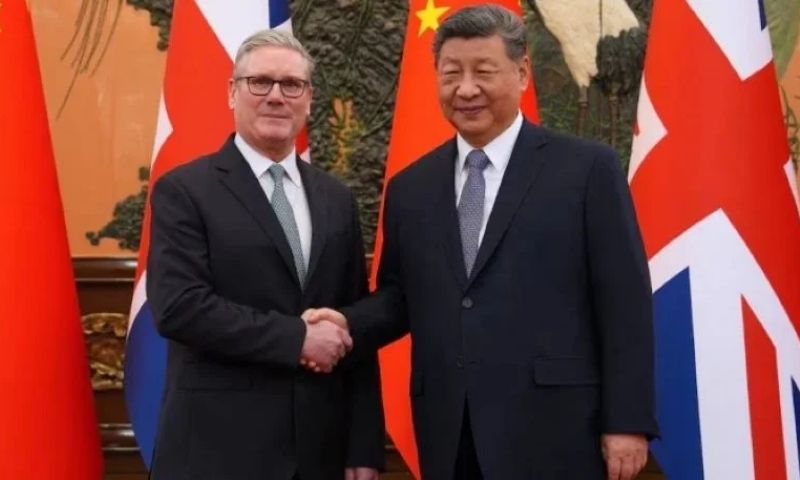
According to the BBC, Starmer’s three-day trip included meetings with President Xi Jinping and Premier Li Qiang in Beijing, followed by talks in Shanghai aimed at strengthening economic and cultural ties.
Downing Street hopes the visit will open new opportunities for British businesses and institutions, marking a significant reset after an eight-year gap since the last UK prime ministerial trip.
Starmer secured agreements, including a reduction in tariffs on British whisky exports and the lifting of Chinese sanctions imposed on some UK parliamentarians in 2021.
The prime minister also said China would remove visa requirements for short-term British visitors, though Beijing has only confirmed it is “actively considering” the change.
Geopolitical tensions
The trip comes amid heightened geopolitical tensions, with critics warning that closer ties with China raise concerns over human rights abuses, cybersecurity threats, and alleged interference in Western politics. Officials and delegates accompanying Starmer reportedly took extra electronic security precautions during the visit.
Starmer has defended his approach as pragmatic, arguing that engagement with China is essential in a volatile world where international developments directly affect domestic issues such as living costs.
The prime minister is also attempting to maintain stable relations with the United States under President Donald Trump, while rebuilding links with the European Union and expanding trade partnerships globally.
Analysts say Starmer’s China outreach reflects a broader strategy of pursuing multiple diplomatic directions, though it carries risks of backlash if Britain is perceived as moving too close to Beijing.