KEY POINTS
- The sisters hail from Hushe village in Baltistan’s Ghanche district.
- They are granddaughters of legendary Pakistani mountaineer “Little Karim.”
- Climbed as part of an international all-women expedition led by Danika Gilbert.
- They proudly hoisted Pakistan’s flag, calling it a lifelong dream realised.
- Rigorous training included ice climbing, endurance runs, and rope work.
- Cultural resistance couldn’t deter their father’s unwavering encouragement.
- Their success inspires young women across Gilgit-Baltistan to pursue mountaineering.
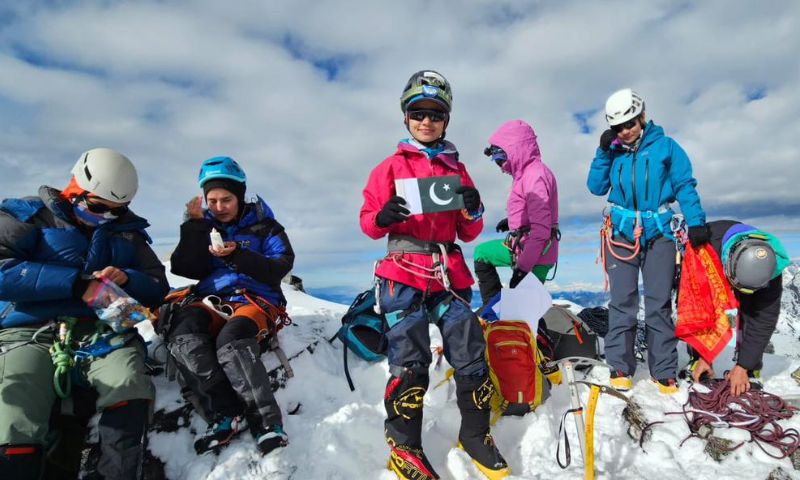
SKARDU, Pakistan: On the crisp morning of October 7, 2025, at exactly 7:40 a.m., the journey that began in the rugged valleys of Baltistan reached its zenith amid Nepal’s icy heights, where two sisters from Hushe village of Ghanche district—Amina Hanif, 21, and Sadiqa Hanif, 23—stood tall and triumphant atop the 5,630-meter Yalung Ree Peak, upholding their family’s storied legacy to new heights.
Legacy of Little Karim
They are the granddaughters of the late legendary mountaineer Muhammad Karim—fondly known as ‘Little Karim’—whose small frame belied his towering strength and indomitable spirit.
Nicknamed for his slight physique yet celebrated for his giant feats in the world of high-altitude climbing, Little Karim remains a household name in Pakistan’s mountaineering circles.
The climb was part of a 10-member international women’s expedition—bringing together climbers from Pakistan, India, Afghanistan, Tajikistan, and Nepal—led by American mountaineer Danika Gilbert.
Representing Pakistan, Amina and Siddiqa proudly hoisted the national flag at the summit, calling it “a moment that made our hearts swell with pride.”
“We successfully reached the top of Yalung Ree Peak yesterday [07 October 2025]. We are now safely back in Na Gaon and heading to Bading. Our whole team is fine,” they inform WE News English in a message from Nepal. Our success, they remark, is a proud moment not only for Pakistan and Gilgit-Baltistan, but also for all the women climbers. “This achievement is truly a dream come true—one our grandfather, Little Karim, had always envisioned.”
Gruelling training regimen
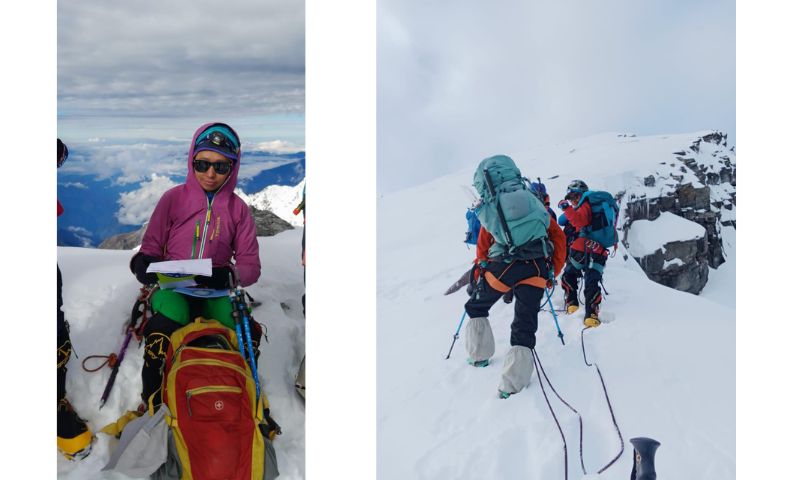
“Our training was no walk in the park,” Amina recalls. “We underwent gruelling preparations in Skardu, practicing ice climbing, rope work, endurance running, and carrying 20–25-kilogramme loads at altitude. We also trained at the Sadpara Mountaineering School to prepare for the technical sections.”
We successfully reached the top of Yalung Ree Peak yesterday [07 October 2025]. We are now safely back in Na Gaon and heading to Bading. Our whole team is fine. This achievement is truly a dream come true—one our grandfather, Little Karim, had always envisioned.” – Amina Hanif, Sadiqa Hanif.
Funding and logistics proved to be another uphill battle. “We had limited sponsorship and had to manage travel and gear expenses mostly through family support,” explains Sadiqa.
“Culturally, people in our area discouraged us, saying mountaineering wasn’t women’s domain. Some relatives even turned their backs on us. But our father stood his ground. He motivated us and advised us to keep our eyes on the prize and tune out the noise. In time, those same people turned their criticism into applause.”
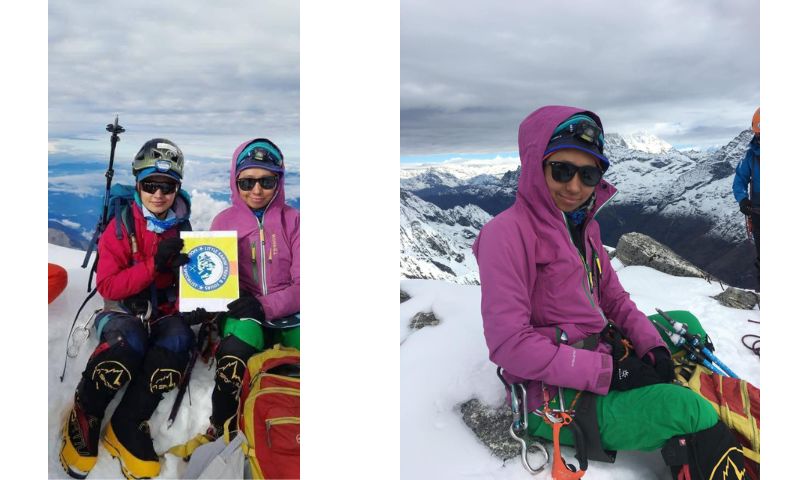
Explaining how they made it into the international expedition team, Amina shares that they applied through a rigorous global selection process managed by American climber Danika Gilbert.
“The criteria included previous climbing records above 6,000m, physical fitness, mountaineering certification, and team compatibility. We were selected based on our previous successful summits in Pakistan, Spain, and Iran.”
Our training was no walk in the park. We underwent gruelling preparations in Skardu, practicing ice climbing, rope work, endurance running, and carrying 20–25-kilogramme loads at altitude. We also trained at the Sadpara Mountaineering School to prepare for the technical sections.” – Amina
Challenges on the peak
When asked how challenging it was to be part of such a diverse team, Amina said that it was not smooth sailing.
“The team had members from five different countries, each with their own language and climbing style. At times, communication felt like climbing another mountain altogether. But we learned teamwork, patience, and leadership. The weather in Nepal, too, kept us on our toes—which made the ascent more difficult.”
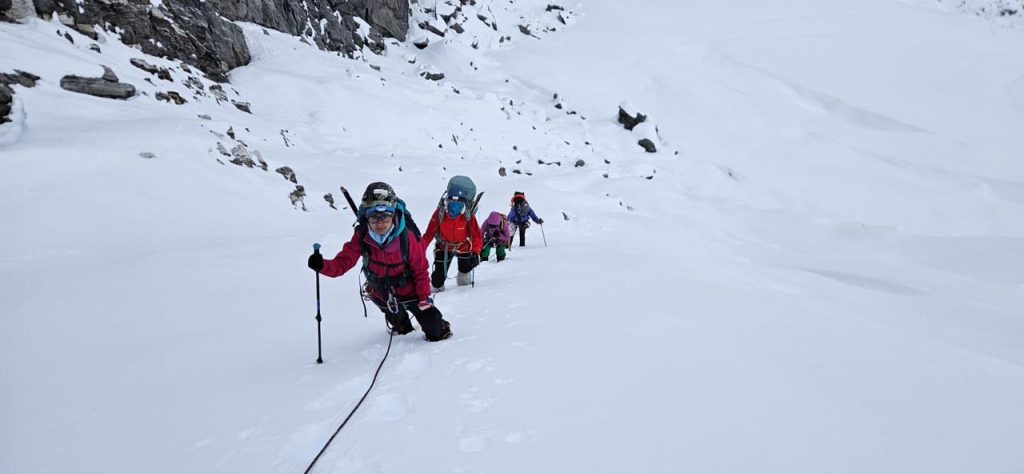
Their father, Hanif, speaks with quiet pride about the journey that began against all odds. “Many people criticised us, but today we hold our heads high knowing our daughters are raising Pakistan’s and Gilgit-Baltistan’s name on the world stage. It’s no small feat for girls from a conservative society like Baltistan to shatter glass ceilings in mountaineering—but they did it, through sheer grit and determination,” he reflects.
He continues that the girls had to weather both social and structural headwinds—from family and community criticism to the lack of proper training facilities for women of this region.
We had limited sponsorship and had to manage travel and gear expenses mostly through family support. Culturally, people in our area discouraged us, saying mountaineering wasn’t women’s domain. Some relatives even turned their backs on us. But our father stood his ground. He motivated us, and advised us to keep our eyes on the prize and tune out the noise. In time, those same people turned their criticism into applause.” – Sadiqa
Major General (Retd.) Irfan Arshad, president of the Islamabad-based Alpine Club of Pakistan—the country’s top mountaineering body, which provides training, climbing gear support, sponsorship opportunities, mentorship, and logistic support for climbers—praises their success.
Speaking to WE News English, he remarks, “It is a matter of immense pride that Amina and Sadiqa represented Pakistan in an international women’s expedition led by Danika Gilbert. Pakistani women are proving their mettle in every field, including the toughest of them all—mountaineering.”
He goes on to mention that during his recent visit to Skardu, he met and encouraged both climbers before their expedition. The Alpine Club initially supported them by registering them as members, by facilitating guidance, training, and logistics. Today, they have made the entire nation proud.”
Many people criticised us, but today we hold our heads high knowing our daughters are raising Pakistan’s and Gilgit-Baltistan’s name on the world stage. It’s no small feat for girls from a conservative society like Baltistan to shatter glass ceilings in mountaineering—but they did it, through sheer grit and determination.” – Muhamad Hanif, father of Amina and Sadiqa
Aspiring new generation
The sisters’ success, however, has rekindled a long-overdue conversation about women’s participation in adventure sports—and the urgent need for greater government and institutional support for aspiring female climbers in the country’s northern regions.
Their success story has lit a spark across Gilgit-Baltistan, becoming a powerful source of inspiration for countless young women—encouraging them to break free from social constraints and chase their dreams fearlessly.
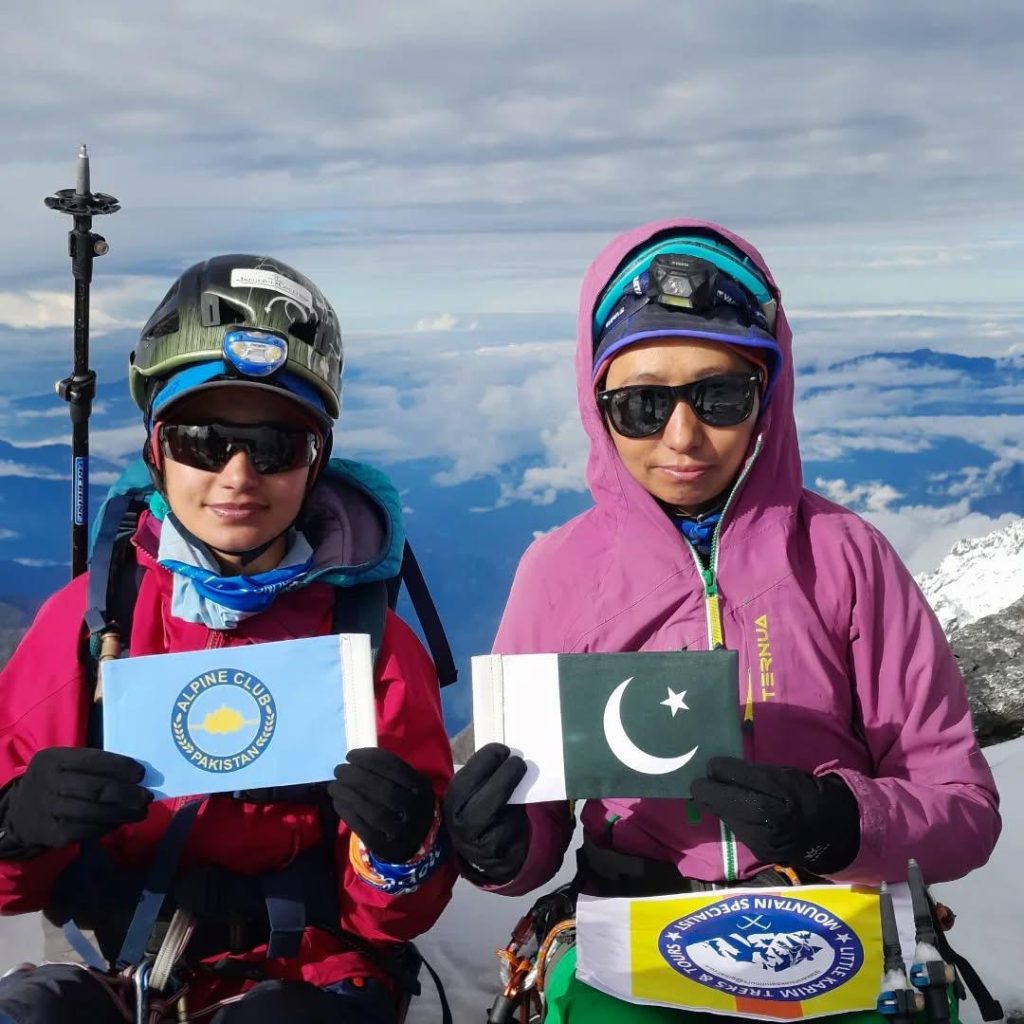
Sadia Fatima, a social worker from Skardu, says, “Amina and Sadiqa have inspired us all. They’ve shown that courage and discipline can break social barriers.”
Mehwish Husain, a student from Skardu, remarks, “They’ve opened the door for girls like me. Now our families take women climbers seriously.”
“Our message is simple,” affirm Amina and Sadiqa. “Don’t let anyone tell you that you can’t do something because you’re a girl. Work hard, stay focused, and believe in yourself. If girls from a remote valley like Hushe can climb international peaks, then any girl in Pakistan can achieve her dreams.”