
Key points
- Land subsidence accelerates urban flooding risks
- Jakarta, Bangkok, Miami face sinking futures
- Millions may become climate-displaced by 2050
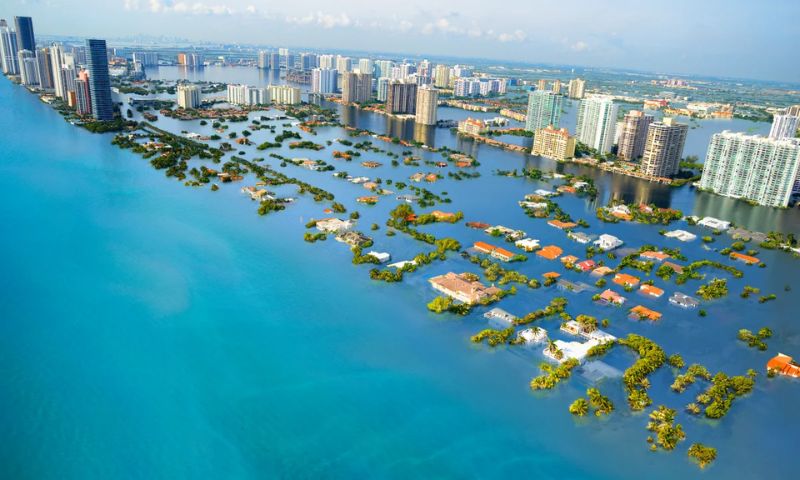
ISLAMABAD: From Jakarta to Miami, some of the world’s most vibrant cities are quietly sinking beneath the weight of rising seas and collapsing land.
As climate change accelerates, scientists warn that by 2050, up to 800 million people could be living in areas threatened by half a meter or more of sea-level rise. Behind every statistic are millions of lives — and the terrifying possibility that entire cities could disappear from the map within a generation.
Not wiped out by war or earthquake, but slowly drowned — submerged under rising tides, erased by the relentless advance of the sea. Climate change is no longer a distant threat; for many coastal cities, it is today’s quiet invasion.
Scientists warn that by 2050, around 800 million people could be living in cities where sea levels have risen by half a meter or more. Many of those communities may face repeated flooding, infrastructure collapse, or permanent submersion. But it is not just global averages — some cities are sinking faster than they can adapt. The question is no longer “if,” but “when.”
When land sinks, seas encroach
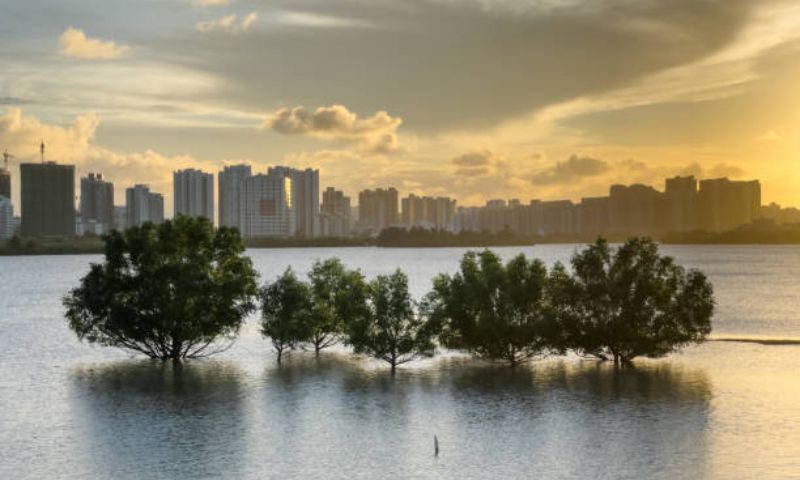
Sea level rise is only part of the problem. In many coastal cities, land subsidence — the sinking of the ground itself — makes the danger even worse. When you combine rising seas with sinking land, the effect is devastating: entire neighborhoods can vanish far sooner than expected.
Add to that the increasing frequency of storm surges, king tides, and coastal erosion, and you have a perfect storm for urban collapse. Models predicting sea level rise by 2050 already show that some low-lying areas could become permanently flooded, particularly in Asian delta cities and coastal zones that host millions of people.
Cities like Ho Chi Minh City, Jakarta, Bangkok, New Orleans, and Miami are already dealing with chronic flooding, sinking neighborhoods, and overwhelmed drainage systems. In Jakarta, some districts are sinking at a rate of five to ten centimeters per year, meaning parts of the city could be underwater long before 2050 unless drastic action is taken.
Cities at risk
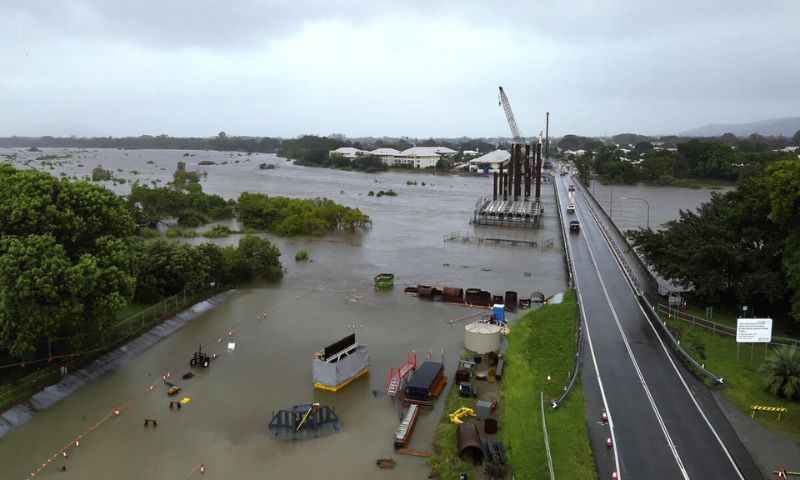
Several major coastal metropolises now stand on the edge — their futures uncertain, their residents caught between survival and retreat.
Jakarta, Indonesia, is perhaps the most famous example. Built on swampy land and crisscrossed by rivers, the city sits below sea level in many areas. To defend itself, the government has begun constructing a massive sea wall and even plans to relocate the capital to Borneo. But the scale of the challenge is enormous: millions could eventually need relocation.
Ho Chi Minh City, Vietnam, faces a similar threat. Much of its southern region lies on marshy delta land that is naturally prone to flooding. Urban sprawl, heavy groundwater extraction, and weak planning have made things worse. Large portions of the area could be submerged or uninhabitable by mid-century.
Bangkok, Thailand, standing barely 1.5 meters above sea level, is also sinking due to excessive groundwater use and soft soil foundations. Experts warn that more than 10% of Thailand’s land could be underwater by 2050.
In the United States, New Orleans and Miami are already living case studies. New Orleans has battled subsidence and hurricanes for decades. Miami experiences “sunny day floods,” where tides push water up through the streets even without rain. If emissions stay high, both cities could face chronic flooding or partial submersion by 2050.
Who lives on the frontline — and who pays the price?

This is not just a story about geography or climate science — it is about people. Millions of lives, homes, and livelihoods are tied to coastlines. And, as always, it is the poorest communities who are hit first and hardest.
In Egypt’s Alexandria, fishermen in neighborhoods like El Max already see the sea creeping closer each year. Shrinking beaches and eroding shores have turned daily life into a struggle against encroaching saltwater. Similar stories are unfolding across South Asia, where coastal residents in Bangladesh, India, and Vietnam watch their farmland turn brackish and their homes slowly crumble.
By 2050, Bangladesh alone could see up to two million people displaced by rising seas. Many will become climate migrants, moving inland to overcrowded cities, creating new social and economic pressures. The world’s coastal economies could face trillions of dollars in losses, as ports, industries, and transport systems are swallowed by water.
What can be done?

Faced with this existential threat, governments are taking two main approaches — defend or retreat.
Some are opting for “managed retreat”, the painful process of relocating people and infrastructure away from danger zones before disaster strikes. It is politically unpopular but may be unavoidable for certain low-lying regions.
Others are fighting back with engineering: dikes, sea walls, flood barriers, and pumping systems. Nature-based solutions are also gaining traction — restoring mangroves, wetlands, and coral reefs to act as natural defenses. These “green buffers” can reduce wave energy and absorb storm surges while supporting biodiversity.
But adaptation is uneven. Wealthier districts tend to get the most protection, while poorer areas — often the ones most exposed — are left vulnerable. Without inclusive planning, tomorrow’s cities could see new forms of segregation: safe, elevated enclaves for the rich and drowning districts for the poor.
What we all lose

The loss of a city is not just about disappearing buildings; it is about losing identity, history, and belonging. Cities like Jakarta, Alexandria, and New Orleans are living archives of culture and memory. Their disappearance would erase stories, heritage, and human connections that no seawall can replace.
Most of the world’s at-risk cities are in the Global South — regions that have contributed the least to climate change but face the worst consequences. The crisis is not just environmental; it is ethical. The fight to save these cities is also a fight for climate justice.
Yet hope remains. Scientists and urban planners agree that with aggressive climate action — reducing emissions, funding adaptation, and sharing technology — we can still prevent the worst outcomes. Cities can innovate, relocate, and reimagine what it means to live with water rather than against it.
By 2050, some of these cities might vanish — but if the world acts now, we could instead witness their rebirth: floating districts, elevated housing, restored mangroves, and resilient urban life built on adaptation and courage.