


KEY POINTS
- FATA merger in 2018 introduced formal courts.
- Rukhsana Mohmand studied English Literature; worked abroad before pursuing LLB.
- Handles inheritance, women’s rights, criminal, civil, and family cases.
- Mohmand’s female literacy around 15 per cent; overall literacy approximately 31 per cent.
GHALLANAI, Pakistan: As the morning sun stretches across the bustling courtyard of the District and Sessions Court in Ghallanai, long shadows trail behind lawyers, litigants, and clerks.
Casefiles lie piled up high on wooden benches, clerks weave through narrow corridors, and anxious petitioners wait their turn, hoping justice will not be long in coming.
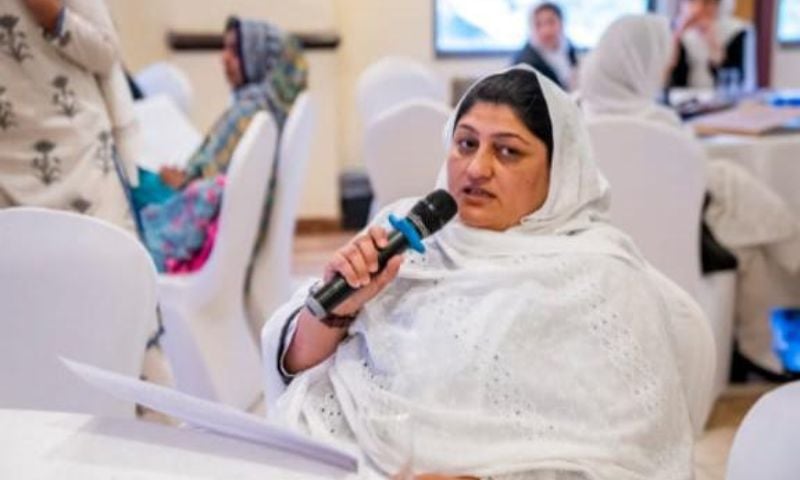
Against this backdrop of black coats and hurried footsteps, one figure quietly breaks the mould. Among nearly 50 male lawyers registered at the Mohmand Bar Association, 46-year-old Advocate Rukhsana Mohmand stands as the district’s first and only female lawyer.
Her name, Rukhsana — an Urdu word meaning “shining face” — seems almost prophetic, reflecting the light she brings into a justice system where women were long kept in the shadows.
Talking about inheritance or family matters with a male lawyer isn’t always easy for them — my presence helps lower the barrier to justice.” – Rukhsana Mohmand
Carrying her files with measured confidence and steady resolve, she navigates a legal system comprising three civil judges, one District and Sessions Judge, and two Additional District and Sessions Judges.
This institutional structure, born after the former Federally Administered Tribal Areas’ merger with Khyber Pakhtunkhwa in 2018, reflects both the formalisation of justice and the challenging professional terrain she must traverse.
From jirgas to courtrooms
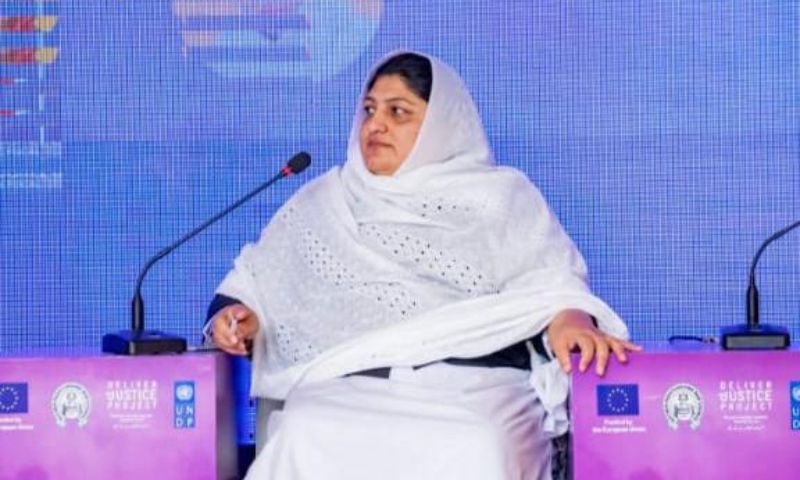
For decades, justice in Pakistan’s tribal belt followed an entirely different script.
Disputes were settled not in courtrooms but through jirgas and councils led by political agents — a post equivalent to a Deputy Commissioner, but with far broader administrative and judicial powers — where the word of male elders was law and women had no seat at the table.
That began to change after the 25th Constitutional Amendment in 2018, which merged the FATA into Khyber Pakhtunkhwa.
Formal courts, bar associations, and judicial institutions were introduced, gradually dismantling the parallel system and opening doors that had long remained shut to women.
Quiet revolution
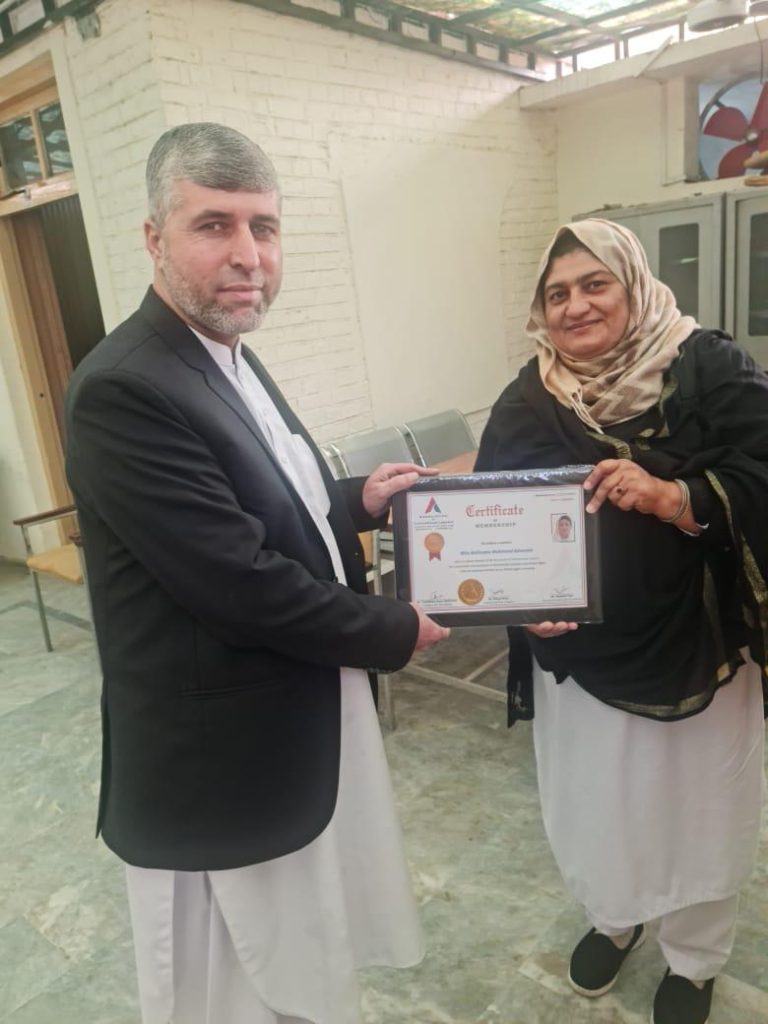
It was in this shifting landscape that Rukhsana Mohmand stepped forward, quietly but firmly rewriting the rules.
Hailing from Badmani village in Baizai tehsil of Mohmand district— just a stone’s throw from the Pak-Afghan border — she represents a quiet revolution in a deeply conservative society where change often moves at a snail’s pace.
Before donning the black coat, she studied English Literature and spent several years working in Saudi Arabia.
But the pull of home and a sense of duty drew her back. Between 2012 and 2015, she completed her law degree, determined, as she puts it, “to give back to my community rather than turn my back on it.”
Cases that matter
Rukhsana’s caseload spans a wide spectrum, cutting across social and legal boundaries.
“Most of my cases involve inheritance disputes and women’s rights. But I also handle criminal, civil, and family cases,” she tells WE News English.
She believes that many women come to her because they feel safer discussing sensitive issues with another woman.
“Talking about inheritance or family matters with a male lawyer isn’t always easy for them — my presence helps lower the barrier to justice.”
Girls come to me for guidance. They tell me that they want to become lawyers like me. Change here doesn’t happen overnight — customs and traditions are deeply rooted — but I can see the tide turning. Education is slowly opening doors that were once bolted shut.” – Rukhsana Mohmand
Within the Mohmand Bar Association, she says, support has gradually replaced scepticism.
“They guide me and treat me with respect. There was hesitation in the beginning, but with time, many realised that women belong in law just as much as men. Their encouragement helps me stay the course.”
She, however, acknowledges that the road has not been entirely smooth.
While she does not face major professional obstacles, some male clients still hesitate to place their trust in her, choosing not to assign cases because of lingering assumptions that a woman may not be able to handle complex legal matters.
Even basic facilities were once beyond reach. Until November 2025, she had no separate washroom or designated seating space inside the court premises.
Only after formally approaching higher judicial authorities, including the Peshawar High Court, was a separate seating area finally provided — a small but significant victory.
Change slowly unfolds
Rukhsana’s presence has begun to ripple beyond court walls. Parents now bring their daughters to meet her, urging them to dream bigger and aim higher.
“Girls come to me for guidance. They tell me that they want to become lawyers like me. Change here doesn’t happen overnight — customs and traditions are deeply rooted — but I can see the tide turning. Education is slowly opening doors that were once bolted shut.”
The numbers underline the challenge. According to 2023 Pakistan Census data, Mohmand district’s overall literacy rate stands at around 31 per cent.
Female literacy lags far behind at approximately 15 per cent, compared to about 47 per cent among males — a stark reminder of the uphill battle ahead.
Justice within reach
Her impact is already visible in the lives of women seeking justice.
“Many people tell me that since I started practising, women feel more comfortable discussing speaking up. Issues that were once swept under the carpet are now brought before the courts. Women speak freely, and legal remedies are finally within reach.”
I want parents to educate their daughters just as they educate their sons. Education is the key that unlocks progress. I dream of a Mohmand where every home shines with learning — where both boys and girls serve their district and the country with pride.” – Rukhsana Mohmand
The broader social context makes her role all the more significant. Mohmand, like much of the tribal belt, remains deeply conservative, with limited space for women in education, public life, or professions such as law.
Beyond the black coat
Her vision stretches well beyond the courtroom walls.
“I want parents to educate their daughters just as they educate their sons. Education is the key that unlocks progress. I dream of a Mohmand where every home shines with learning — where both boys and girls serve their district and the country with pride.”
From inheritance disputes among siblings to civil litigation for small businesses and sensitive family conflicts requiring careful mediation, Rukhsana’s cases may appear routine in urban courts. In Mohmand, however, they mark a historic shift.
Where women were once invisible, their voices are now heard. Through her work, justice is no longer just a promise on paper but a living, breathing reality — and the old barriers are slowly, but surely, beginning to crack.