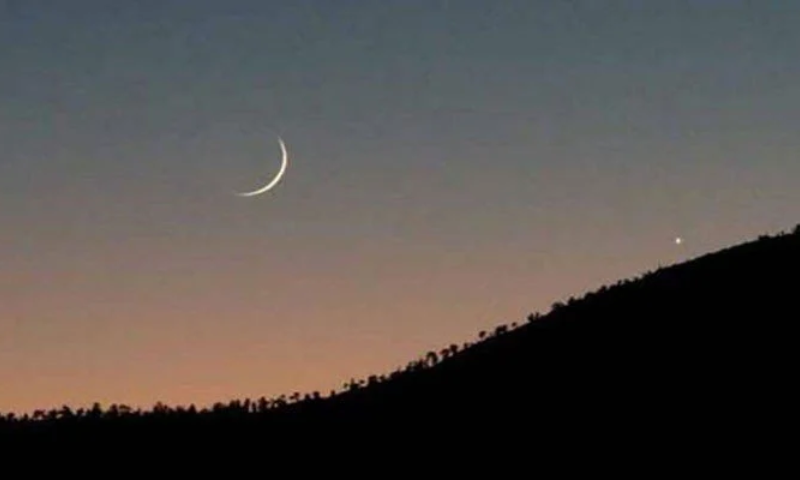



ISLAMABAD: The Pakistan Meteorological Department has predicted that the Shawwal 1447 AH moon is unlikely to be sighted on the evening of March 19, 2026.
The sighting of the Shawwal crescent signals the conclusion of the holy month of Ramadan. The beginning of Shawwal, the 10th month of the Islamic lunar calendar, begins with the moon sighting. The very next day is Eid al-Fitr, a major Islamic festival celebrated worldwide with prayers, charity, and gatherings.
According to the Met Office, the new moon will be born at 6:23 PM PST on March 19. However, the moon’s age at sunset will be only 12 to 13 hours across meteorological observatories in Pakistan—too young and thin to be visible.
“As per astronomical analysis, there is no chance of sighting the new moon of Shawwal 1447 AH on the evening of March 19, i.e., the 29th of Ramadan,” the department stated.
If no sighting occurs, Ramadan will complete 30 days, making Eid-ul-Fitr likely on Saturday, March 21. This would mean the last day of fasting will fall on Friday, March 20, with Eid festivities beginning the following morning.
The Met Office clarified that its prediction is based on astronomical data, but the final decision rests with the Central Ruet-e-Hilal Committee of Pakistan.
The committee, chaired by the prominent religious scholars, will convene on the evening of March 19 to evaluate sighting testimonies from across the country before making a formal announcement.
Islamic months last 29 or 30 days, with their start and end determined by the sighting of the crescent moon, so Ramadan does not fall on the same Gregorian date each year.
The combination of scientific calculation and traditional physical sighting has been the longstanding practice in Pakistan to ensure religious observances align with both lunar dynamics and local visibility conditions.
Citizens are advised to await the official announcement from the Ruet-e-Hilal Committee and avoid speculation based on sightings from other countries, as atmospheric conditions and sighting methodologies vary regionally.