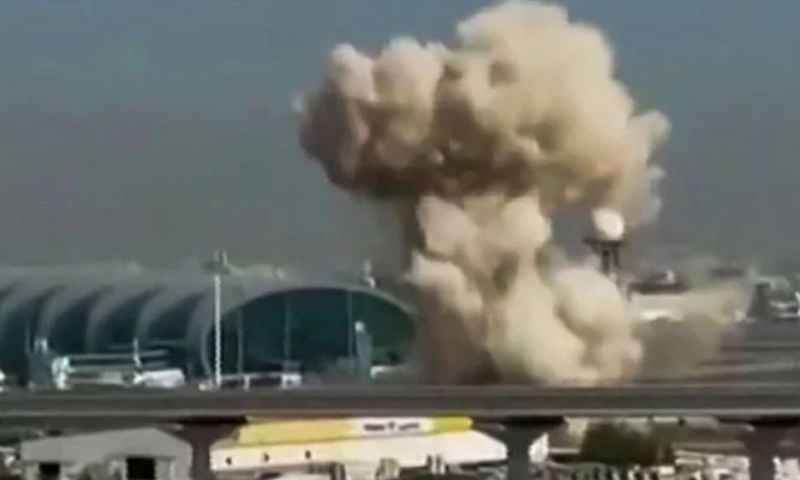



DUBAI: A Pakistani driver was killed in Dubai’s Al Barsha district on Saturday evening after debris from an aerial interception fell onto his vehicle, authorities confirmed.
The incident occurred shortly after Iftar near Sheikh Zayed Road, behind the Mall of the Emirates, one of the busiest commercial areas in the city, according to media reports.
Officials said the falling debris ignited a brief fire in the vehicle, resulting in the driver’s death. No additional injuries were reported.
Authorities have launched an investigation to determine whether the victim received the emergency alert issued during the aerial threat and whether safety instructions were followed.
The incident increases the death toll from recent attacks in the region to four people, including two Pakistani nationals.
Authorities confirm that debris from an aerial interception fell onto a vehicle in the Al Barsha area, resulting in the death of a Pakistani driver.
— Dubai Media Office (@DXBMediaOffice) March 7, 2026
Earlier, another Pakistani citizen, Murid Zaman, a resident of Khyber Pakhtunkhwa, was killed in Abu Dhabi’s Madinat Zayed area after fragments from an Iranian missile struck him during a strike targeting US-linked facilities.
Regional tensions intensify
The Middle East has been plunged into heightened conflict following joint US and Israeli strikes on Iran, which reportedly killed Iran’s Supreme Leader Ayatollah Ali Khamenei along with several senior military officials.
In retaliation, Iran launched missile and drone attacks targeting Israel and Gulf states hosting US military bases, further escalating regional tensions. Iran has also exchanged fire with Israel through its allies in Lebanon, where cross-border attacks involving Hezbollah have intensified.
Heavy casualties reported
According to Iran’s ambassador to the United Nations, Amir Saeid Iravani, the US-Israeli offensive has killed more than 1,300 Iranian civilians and injured thousands more. Meanwhile, Iranian retaliatory strikes have resulted in at least 10 deaths in Israel, while six US service members have also been reported killed.
US officials have indicated that American forces may have been responsible for a strike that hit an Iranian girls’ school, killing children, though the responsibility for the attack remains disputed.
Diplomatic and military fallout
Speaking to reporters aboard Air Force One, US President Donald Trump said the ongoing air campaign could potentially eliminate Iran’s leadership structure, which he suggested might render negotiations unnecessary.
“If the military and leadership are completely destroyed, there may be no one left to negotiate a surrender,” Trump stated. Meanwhile, Iranian media reported that fuel depots in Karaj, west of Tehran, were struck during the latest wave of attacks.
Iranian President Masoud Pezeshkian issued an apology to neighboring Gulf countries for Iranian strikes targeting US facilities in their territories, attempting to ease regional tensions. However, the remarks drew criticism from hardline factions within Iran.
Growing Gulf concerns
Saudi Arabia has reportedly warned Tehran that continued attacks on its territory or energy infrastructure could trigger a direct response, signaling the possibility of further escalation across the Gulf region.
As tensions intensify, civilians across the Middle East—including foreign nationals working in Gulf states—are increasingly exposed to the dangers of missile interceptions and falling debris from aerial defense systems.