


Key Points:
- Saudi Arabia warns Iran against further attacks on its territory and energy infrastructure.
- Riyadh says continued strikes could trigger retaliation and possible U.S. military involvement.
- Saudi and Iranian foreign ministers discuss de-escalation amid rising regional tensions.
- Iran’s president apologises to Gulf states and signals pause in attacks on neighbours.
- Drone and missile strikes reported across several Gulf countries in the past week.
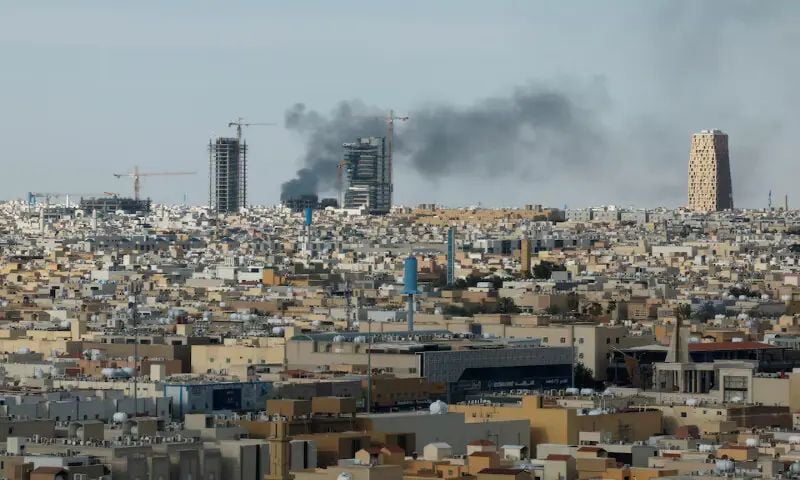
RIYADH: Saudi Arabia has issued a strong warning to Iran, cautioning that any further attacks on the kingdom or its vital energy infrastructure could provoke a direct response from Riyadh, according to Reuters quoting sources familiar with diplomatic exchanges between the two countries.
The warning comes amid rising tensions in the Middle East following recent Iranian strikes across the Gulf region. Despite emphasizing its preference for diplomacy and de-escalation, Saudi Arabia has made it clear that it will not tolerate repeated attacks on its territory.
According to four sources cited by Reuters, the message was delivered during recent diplomatic contacts between the two countries. Saudi Foreign Minister Prince Faisal bin Farhan reportedly conveyed the kingdom’s stance to Iranian Foreign Minister Abbas Araqchi during a phone call earlier this week.
During the conversation, Prince Faisal stressed that Saudi Arabia supports efforts aimed at mediation and a peaceful resolution to the ongoing conflict involving Iran, the United States, and regional actors. He also reiterated that Gulf countries, including Saudi Arabia, had not allowed the United States to use their airspace or territory to conduct strikes against Iran.
However, the Saudi minister warned that the situation could change if Iran continues targeting Saudi territory or its critical energy facilities. In such a scenario, Riyadh may permit U.S. forces stationed in the kingdom to use their bases for military operations, and Saudi Arabia itself would respond to protect its national interests.
Diplomatic communication between Riyadh and Tehran has reportedly continued throughout the ongoing crisis. Saudi officials have maintained contact with Iranian authorities through diplomatic channels, including the Saudi ambassador in Tehran, since the conflict intensified following the breakdown of nuclear negotiations and the start of military operations on February 28.
Meanwhile, Iranian President Masoud Pezeshkian attempted to ease regional tensions on Saturday by issuing an apology to neighboring Gulf countries affected by Iranian strikes. Speaking publicly, Pezeshkian acknowledged the impact of Iran’s actions on nearby states and expressed regret over the situation.
“I personally apologise to neighbouring countries that were affected by Iran’s actions,” he said, adding that Iran’s temporary leadership council had approved suspending attacks on nearby countries unless those nations initiated hostilities against Iran.
The apology appeared to be part of Tehran’s effort to calm growing anger among Gulf states after a series of drone and missile attacks targeted countries hosting U.S. military installations.
Over the past week, several Gulf nations — including Saudi Arabia, the United Arab Emirates, Kuwait, Qatar, and Bahrain — have reportedly faced missile and drone strikes attributed to Iran.
The conflict escalated dramatically after Iran’s Supreme Leader Ayatollah Ali Khamenei was killed on the first day of the war. In response, Iran launched strikes against Israel and Gulf states where U.S. military forces are present. Israel has also intensified attacks against Hezbollah, the Iran-backed armed group based in Lebanon.
Iranian Foreign Minister Araqchi stated in an interview that he remains in constant contact with Saudi officials. He also said Riyadh had assured Tehran that its territory, waters, and airspace would not be used for attacks against Iran.
However, signs of divisions within Iran’s leadership have emerged. Shortly after President Pezeshkian’s remarks about suspending attacks, Iran’s Khatam al-Anbiya Central Headquarters — the unified command of the Iranian armed forces – released a statement warning that U.S. and Israeli bases and interests across the region remain legitimate targets.
The military command emphasized that Iran respects the sovereignty of neighboring countries but warned that any U.S. or Israeli military installations in the region – whether on land, sea, or in the air – could face “powerful and heavy” strikes if the conflict continues.
The latest developments highlight the fragile security environment across the Gulf, where diplomatic efforts are ongoing but the risk of further escalation remains high.