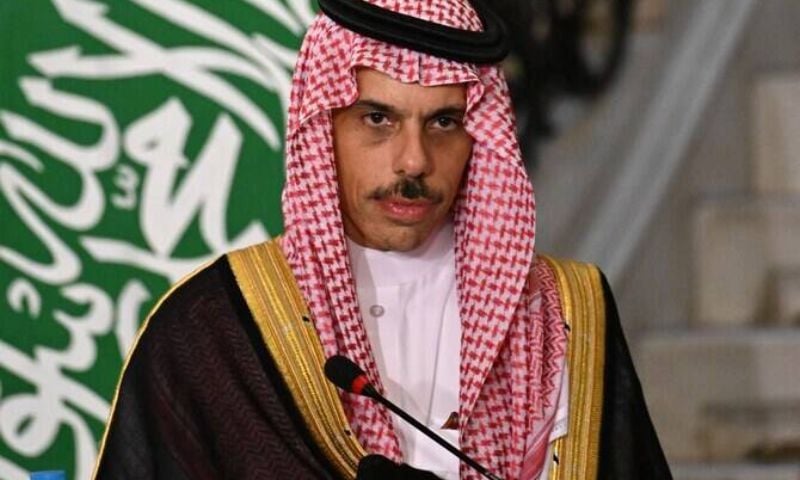



RIYADH: Saudi Arabia’s Foreign Minister, Prince Faisal bin Farhan Al Saud, on Thursday said the Kingdom “reserves the right” to take military action against Iran if attacks on its territory continue, warning that Riyadh will not hesitate to defend its sovereignty and economic interests.
“The kingdom is not going to succumb to pressure, and on the contrary, this pressure will backfire… and certainly, as we have stated quite clearly, we have reserved the right to take military actions if deemed necessary,” he said.
Speaking after an emergency meeting of Arab and Islamic foreign ministers in Riyadh, Prince Faisal said Gulf and Islamic nations are coordinating at the “highest level” to restore regional security, stabilize the situation, and protect their collective interests.
He urged Iran to “review its misjudgments” and immediately halt attacks on Gulf states, warning that continued escalation “will not bring any gains.”
Prince Faisal said the “little trust” Iran had rebuilt with its Arab neighbors through recent diplomatic outreach had now been “completely shattered” by the ongoing assaults, reports Arab News.
He further noted that the scale and coordination of the attacks suggested they had been “prepared in advance,” raising concerns of deliberate escalation across the region.
#الرياض | البيان المشترك الصادر عن الاجتماع الوزاري التشاوري لوزراء خارجية مجموعة من الدول العربية والإسلامية بشأن الاعتداءات الإيرانية.https://t.co/PlRisi0SVG pic.twitter.com/cp6CCHndHN
— وزارة الخارجية 🇸🇦 (@KSAMOFA) March 19, 2026
Since February 28, Iran has launched waves of missiles and armed drones targeting Saudi Arabia and other Gulf countries — including the United Arab Emirates, Kuwait, Bahrain, and Qatar. Tehran has described the strikes as retaliation for US-Israeli attacks on targets inside Iran.
“The Arab and Islamic countries are at the highest level of cooperation and coordination in order to restore the security of the region, stabilize it, preserve its interests, and elevate its peoples,” he said.
The minister said the meeting strongly condemned what he described as Iran’s “egregious attacks” on Saudi Arabia, Gulf Cooperation Council (GCC) countries, and other regional states, accusing Tehran of pursuing a deliberate strategy to destabilize the region in violation of international law.
He warned that Iran’s continued aggression would carry serious consequences.
“Iran needs to review its decisions. Its continued attacks against our countries would serve it no good, but rather would have adverse implications that would cost Iran a high political price and increase its isolation,” he said.
Prince Faisal added that the attacks appeared to have been pre-planned, calling them part of a long-standing pattern of Iranian support for armed groups and destabilizing activities across the region.
He stressed that targeting neighboring countries violates not only international conventions but also the principles of Islam, undermining any claims of regional solidarity.
“Iran continues to attack its neighbors while calling for Islamic unity. This does not serve unity, but rather undermines it,” he said.
The Saudi foreign minister also highlighted growing threats to global trade and energy security, particularly citing attacks on shipping routes and the closure of key waterways.
He warned that disruptions in maritime routes, including the Strait of Hormuz, and attacks on energy infrastructure could have severe consequences for global markets, especially for developing and vulnerable nations dependent on stable energy and food supplies.
Prince Faisal called for broader international action, including the implementation of United Nations resolutions demanding that Iran immediately cease its attacks and stop supporting proxy groups in the region.
Addressing questions on whether Saudi Arabia could be drawn further into the conflict, he said the Kingdom would not succumb to pressure or intimidation, even as missile strikes targeted Riyadh during the high-level diplomatic meeting.
“The Kingdom is not going to succumb to pressure. On the contrary, this pressure will backfire,” he said.
“We have reserved the right to take military actions if deemed necessary, and if the time comes, the leadership of the Kingdom will take the necessary decision.”
He emphasized that Saudi Arabia’s priority remains ending attacks on its territory and neighboring countries, adding that all options—political, diplomatic, economic, and otherwise—are being considered.
Prince Faisal also dismissed Iran’s claims that its strikes were aimed at US military assets in the region, saying the reality showed civilian infrastructure had been repeatedly targeted across Saudi Arabia, the United Arab Emirates, Qatar, Bahrain, and Kuwait.
“These are attempts to justify attacks that clearly target civilian facilities,” he said, accusing Tehran of using “contradictions and denials” to mask its actions.
He further accused Iran of attempting to pressure the international community through escalation, warning that such tactics would not succeed.
The minister noted that trust between Iran and its neighbors had been severely damaged, adding that any future diplomatic engagement would require significant time and effort to rebuild confidence.
“What little trust there was has been completely shattered,” he said.
Despite the escalation, Prince Faisal reiterated that Saudi Arabia seeks stability and an end to hostilities but warned that continued aggression would force a stronger response.
“The attacks on our country and our neighboring countries must stop. That is our primary objective,” he said.
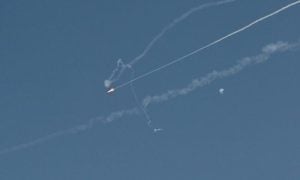
In the latest escalation on Wednesday, Saudi Arabia’s Ministry of Defense reported that four ballistic missiles fired toward Riyadh were successfully intercepted before causing any damage.
According to Arab News, Saudi air defenses have so far neutralized at least 457 hostile drones, 40 ballistic missiles, and seven cruise missiles targeting the Kingdom.
The United Arab Emirates has faced an even higher volume of attacks, while other Gulf states have also been impacted.
The developments mark a sharp deterioration in regional stability, with diplomatic efforts now under strain amid fears of a broader conflict.