
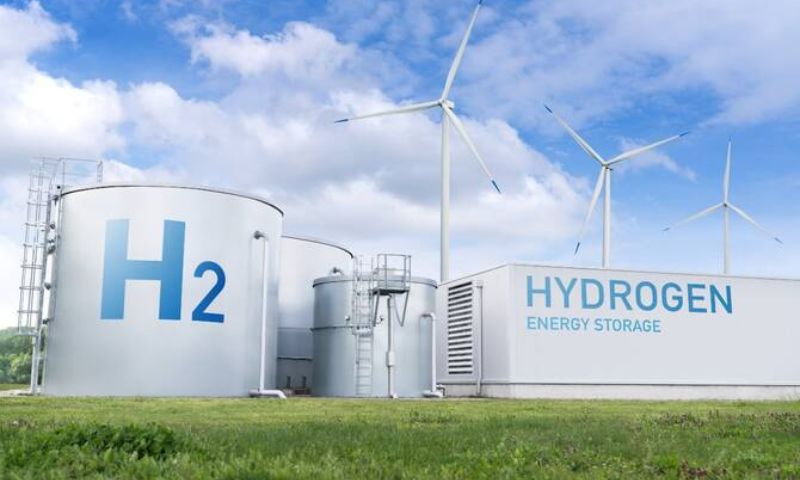



AL KHOBAR: Saudi Arabia is positioning itself as a major exporter of green hydrogen amid the global shift toward cleaner energy for industries such as shipping, power generation, and heavy manufacturing.
Central to this strategy is Neom Green Hydrogen Company, which is expected to be one of the world’s largest green hydrogen production facilities in NEOM along the Red Sea coast. The project will rely on renewable energy generated from solar and wind sources to produce hydrogen through electrolysis, which will then be converted into green ammonia for export.
Wesam Al-Ghamdi, CEO of Neom Green Hydrogen Co. told Arab News the initiative is structured around long-term export agreements aimed at supporting the growth of a global hydrogen market.
“NGHC’s green hydrogen output is fully committed under an exclusive 30-year off-take agreement with Air Products, which will take 100 percent of the production and export it to global markets in the form of green ammonia,” he said.
The agreement ensures that production is tied to long-term contracts, avoiding reliance on short-term spot market fluctuations.
“Air Products manages the downstream marketing and global distribution, providing long-term commercial certainty across the value chain.”
Hydrogen is increasingly viewed as a key component of the global energy transition, particularly in sectors that are difficult to electrify. These include steel making, chemicals, fertilizers, maritime transport, and certain types of power generation.
Al-Ghamdi noted that the fastest-growing demand for hydrogen is emerging in regions with strong climate policies and the infrastructure needed to support imports.
“From an export perspective, markets that are progressing fastest tend to be those with clear decarbonization policies, advanced port and shipping infrastructure, and near-term demand in hard-to-abate sectors such as heavy industry, chemicals, fertilizer, power generation, and maritime transport.”
Transporting hydrogen over long distances remains technically challenging due to its low density and storage constraints. To address this, the NEOM project will convert hydrogen into ammonia, making it easier to ship using existing global logistics systems.
“Ammonia allows hydrogen to be shipped using established global shipping practices, which is critical for enabling early international trade,” Al-Ghamdi said.
These developments will also allow time for workforce training, operational testing, and system validation ahead of full-scale production.
With abundant renewable resources and a strategic geographic location, Saudi Arabia is widely seen as well-positioned to scale up hydrogen production and play a central role in future global energy markets.