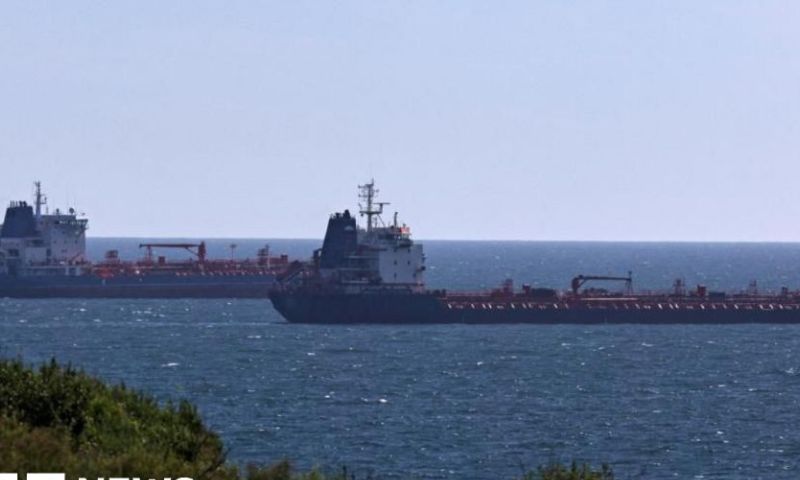



MOSCOW: Russia on Friday urged the United States to ease more sanctions on its oil exports, saying additional Russian supplies are necessary to stabilise global energy markets disrupted by the escalating war in the Middle East.
Global oil markets have been rattled after US and Israeli strikes on Iran and Tehran’s retaliatory attacks across the Gulf region disrupted shipping through the Strait of Hormuz, one of the world’s most critical energy transit routes.
The disruption has pushed oil prices above $100 per barrel and heightened fears of a broader energy crisis.
Washington has temporarily relaxed some restrictions on Russian oil sales, allowing the delivery and sale of Russian crude and petroleum products that were already loaded on vessels before March 12.
Russia calls for broader relief
Kremlin spokesman Dmitry Peskov said the partial easing of restrictions could help steady energy markets but argued that broader sanctions relief would be needed.
“Such actions by the United States will, to some extent, help stabilise the market,” Peskov told reporters at a briefing in Moscow.
However, he added that meaningful stabilisation would require larger supplies from Russia.
“Without significant volumes of Russian oil, market stabilisation is impossible,” Peskov said.
Russia is one of the world’s largest oil producers and exporters.
Its energy exports have faced extensive Western sanctions since the start of Russia-Ukraine war in 2022.
US issues limited licence
On Thursday, the US Treasury issued a licence permitting the delivery and sale of Russian oil cargoes that had been loaded onto vessels on or before 12:01 a.m. Eastern Time on March 12.
The authorisation will remain valid until 12:01 a.m. on April 11.
The move followed a separate decision by Washington last week allowing Russian oil that had been stranded at sea to be sold to India.
US Treasury Secretary Scott Bessent said the step was limited in scope.
In a statement, he described the India authorisation as a “narrowly tailored, short-term measure” that would not provide “significant financial benefit to the Russian government”.
Bessent said most of Russia’s energy revenue comes from taxes collected at the point of extraction, meaning the temporary allowance would have limited fiscal impact.
Moscow sees opportunity
Russian officials have suggested the worsening energy crisis could eventually force Washington to ease restrictions further.
Kirill Dmitriev, Russia’s economic envoy, said it was becoming “increasingly inevitable” that the United States would have to lift more sanctions on Russian energy exports.
“The United States is effectively acknowledging the obvious: without Russian oil, the global energy market cannot remain stable,” Dmitriev wrote on Telegram.
“Amid the growing energy crisis, further easing of restrictions on Russian energy sources appears increasingly inevitable, despite resistance from some in the Brussels bureaucracy,” he added.
Higher oil prices could also help Moscow narrow a widening budget deficit caused by the costly war in Ukraine and declining energy revenues.
Russia has posted budget deficits each year since the start of the Ukraine war, as President Vladimir Putin sharply increased military spending.
At the beginning of 2026, Russia’s oil and gas revenues had fallen to a five-year low due to sanctions, production difficulties and Ukrainian strikes on energy facilities.
European leaders push back
European leaders have rejected suggestions that the energy crisis should lead to sanctions relief for Moscow.
French President Emmanuel Macron, whose country currently holds the rotating presidency of the Group of Seven (G7), said the disruption of shipping in the Strait of Hormuz did not justify any change in the bloc’s stance on Russia.
“The consensus was that we should not change our position on Russia and should maintain our efforts on Ukraine,” Macron said after a video call with other G7 leaders to discuss the economic impact of the Middle East conflict.
Germany’s Economy Minister Katherina Reiche also expressed concern about easing restrictions on Russian oil exports.
Berlin was “concerned that we are further filling Putin’s war chest,” she said.
The European Union banned maritime imports of Russian crude oil in 2022 following the Ukraine war.
Pipeline exports through Ukraine to Hungary and Slovakia have also been effectively blocked since January, after Kyiv said the Druzhba pipeline supplying the two landlocked countries was damaged by Russian strikes.