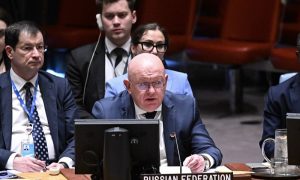
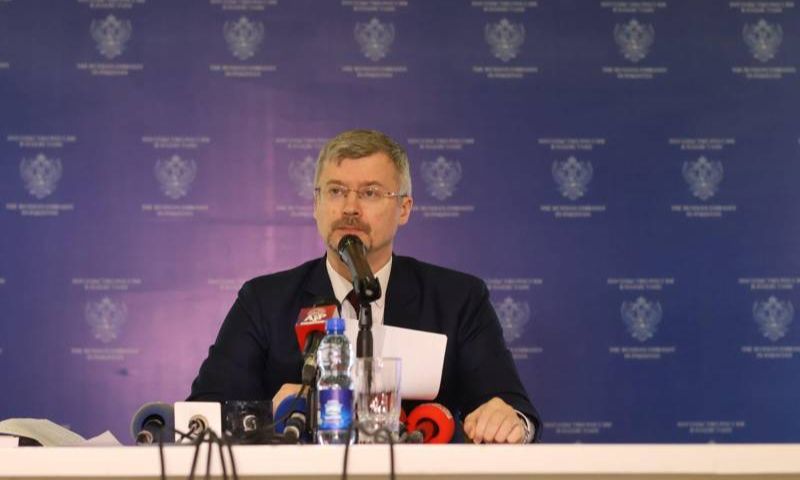
ISLAMABAD: Russian Ambassador to Pakistan, Albert Khorev, has reaffirmed Moscow’s support for Pakistan’s role as a mediator in the ongoing conflict between the United States and Iran.
“We support Pakistan’s mediation role in the US-Iran conflict,” the Russian Ambassador said during a news conference in Islamabad on Tuesday.
The Russian envoy added that Moscow also welcomed other diplomatic efforts aimed at achieving a peaceful resolution to the dispute.
He noted that Russian Foreign Minister Sergey Lavrov had also recently reiterated support for Pakistan’s role as a mediator.
On Tuesday, Qatar said that Pakistan-mediated negotiations between the US and Iran needed “more time” to reach a peace agreement.
“We are supportive of the diplomatic effort by Pakistan that has shown seriousness in bringing parties together and finding a solution, and we do believe it needs more time,” Qatari Foreign Ministry spokesman Majed Al-Ansari told a press conference in Doha.
Ansari said Qatar wanted to protect the Middle East region from further escalation.
“We want to protect the people of the region from being basically the main losers of any escalation in the region,” he said.
Earlier, US President Donald Trump said he would allow a “limited period of time” for negotiations with Iran to continue, saying Gulf leaders had informed him that progress was being made in Pakistan-brokered talks aimed at securing a peace agreement between Washington and Tehran.
Speaking to reporters at the White House, Trump said he had postponed a planned military attack on Iran and would allow negotiations to continue for “two or three days, maybe Friday, Saturday, Sunday, something, maybe early next week”.
Trump said several Gulf states had conveyed optimism regarding Pakistan-led diplomatic efforts to end the conflict between the United States and Iran.
Pakistan continues mediation efforts
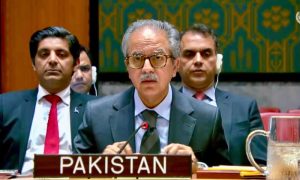
Meanwhile, Pakistan’s Deputy Prime Minister and Foreign Minister Ishaq Dar stressed the importance of sustained engagement for regional peace.
The Deputy PM was addressing the closing session of the Regional Envoys’ Conference held from May 14-18 in the Pakistani capital to review regional and global developments as well as its bilateral relations with brotherly countries, a Foreign Office statement said.
Ishaq Dar also highlighted Pakistan’s constructive and facilitative role in promoting regional peace and stability, and stressed the importance of sustained engagement.
Pakistan, as mediator, has continued diplomatic engagement with both Washington and Tehran in an effort to secure a permanent settlement to the conflict through dialogue and diplomacy.
Pakistan brokered the ceasefire on April 8 after weeks of escalating hostilities involving Iran, the United States and Israel.
Three days later, Islamabad hosted direct negotiations between American and Iranian negotiators on April 11 and 12.
Although the talks ended without a final agreement, however, the Islamabad Talks paved the way for further negotiations to permanently end the conflict.
US Vice President JD Vance, who led the American delegation during the Islamabad talks, said earlier this week that progress was being made.
“I think that we are making progress. The fundamental question is, do we make enough progress that we satisfy the president’s red line?” Vance told reporters at the White House.
The Iranian delegation was led by Mohammad Bagher Ghalibaf.
Pakistan’s Deputy Prime Minister and Foreign Minister Ishaq Dar has repeatedly reaffirmed Islamabad’s commitment to “proactive diplomacy and sustained regional engagement”.
Pakistani minister visits Tehran
Meanwhile, Pakistan’s Interior Minister Mohsin Naqvi met Iranian President Masoud Pezeshkian in Tehran on Sunday to discuss mediation efforts and regional security.
Iran’s state-run IRNA news agency reported that the meeting at the Presidential Palace lasted around 90 minutes and focused on bilateral ties and Pakistan’s diplomatic efforts to promote regional stability.
Iranian Foreign Minister Abbas Araghchi and Interior Minister Eskandar Momeni also attended the meeting, according to IRNA.