


WASHINGTON, United States: Gasoline prices in the United States are rising sharply as the war involving the United States, Israel and Iran pushes global oil prices higher, placing additional pressure on American consumers already struggling with inflation.
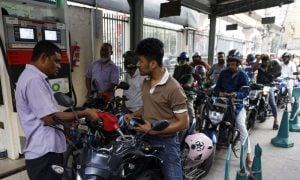
According to AFP, the surge in prices has begun to affect daily life across the country, with drivers noticing the increase at gas stations and warning it could further strain household budgets.
Sean Robinson, a 54-year-old schoolteacher in Washington, said he only realized how much prices had climbed when he stopped to fill up his car on Friday.
“That is a sizeable jump,” he told AFP, pointing to a sign showing $3.27 per gallon for regular gasoline.
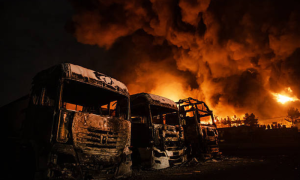
The rise in fuel costs follows a spike in global oil prices after Tehran effectively blocked the Strait of Hormuz following attacks by the United States and Israel.
Higher gasoline prices are emerging as a political challenge for US President Donald Trump as the country approaches midterm elections later this year.
According to AAA’s fuel price gauge, average domestic gasoline prices in the United States have risen about 11 percent since last week.
Robinson said the increase will force him to cut back on everyday activities.
“It just determines what I’m going to do on a day-to-day basis,” he said. “Pretty much start thinking about (watching) Netflix, staying in the house instead of burning gas.”
Other motorists expressed similar concerns.
“It impacts all areas of life,” said Toloria Washington, 39. “We are in a state of survival mode.”
Washington, who works in finance, said fuel expenses are unavoidable, forcing households to reduce spending in other areas.
“That’s the key thing, it’s tapping into everybody’s basics,” she said. “It’s the basics. Daily survival of food, water, housing.”
The rising costs come as Americans are still dealing with the aftermath of high inflation during the pandemic.
US inflation reached a peak of 9.1 percent during that period and, although it has since cooled, economists warn that higher energy prices could trigger another increase.
“Inflation showed signs of accelerating prior to the jump in energy prices,” KPMG chief economist Diane Swonk told AFP.
“That has left consumers in a sour mood,” she added.
Swonk also warned that higher gasoline prices would disproportionately affect lower-income Americans.
According to AFP, she said rising fuel costs add “insult to injury” for households already facing higher healthcare expenses and tighter welfare benefits.
Trump sought to calm concerns on Friday, telling CNN he expected fuel prices to fall soon.
However, the issue could have political consequences as his Republican Party currently holds only a narrow majority in both the House of Representatives and the Senate.
With midterm elections scheduled for November, rising household expenses could become a key issue for voters.
Economists also say the surge in fuel prices could complicate monetary policy decisions for the US Federal Reserve.
The central bank has a dual mandate to maintain stable prices while supporting maximum employment, primarily through adjustments to interest rates.
Higher energy costs could push inflation upward, potentially forcing the Fed to keep interest rates elevated for longer.
“This could not come at a worse time for the Federal Reserve,” Swonk said, according to AFP. “It now has a dueling mandate with the risk that inflation not only lingers but accelerates.”
Federal Reserve officials have signaled caution.
Speaking to Bloomberg TV on Friday, Fed Governor Christopher Waller said higher domestic energy prices were “unlikely to cause sustained inflation.”
But for many Americans, even temporary increases in fuel costs are already affecting daily life.
“One thing after another, it’s chaos, you know, every day,” Lucas Tamaren, 32, said at a gas station in Los Angeles.
“Living in America feels unpredictable and chaotic and it’s hard.”
Robinson said he will now closely monitor gasoline prices, adding that economic pressures may influence voters in the upcoming elections.
“The more you pay higher gas, higher groceries (costs),” he said, voters will “start to see” that the middle class is shrinking.