
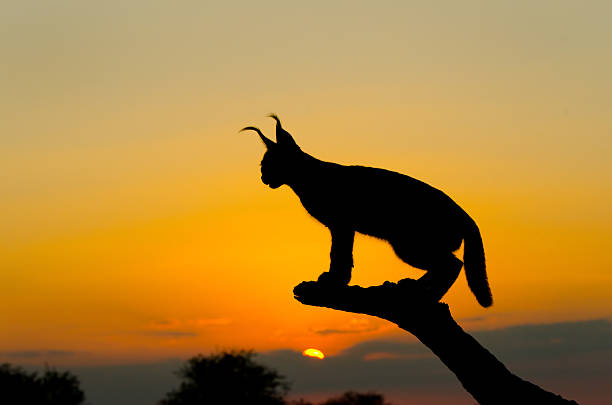



ISLAMABAD: A rare glimpse of a caracal prowling the rocky hills west of Karachi has sparked fresh hope among conservationists that one of Pakistan’s most elusive wild cats still survives in the wild.
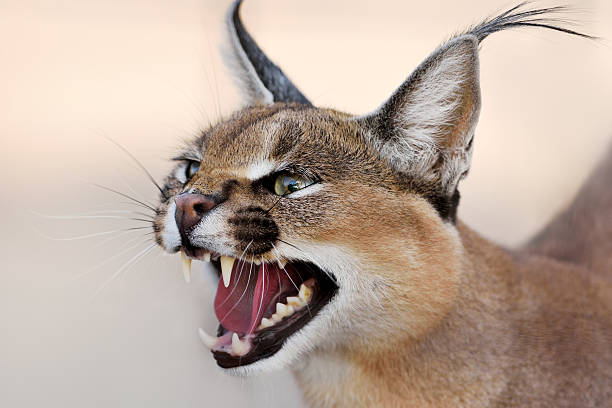
Hidden cameras recently captured the solitary cat — distinguished by its long legs, black-tufted ears and remarkable agility — moving stealthily through the rugged terrain near Kirthar National Park. The sighting, recorded by the Indus Fishing Cat Project (IFCP), marks the first camera-trap evidence of a caracal in years.
“We spent weeks trying to spot this rare species, which we thought no longer existed in this part of Pakistan,” said conservationist Zohaib Ahmad, who helped set up the cameras after reports of a caracal crossing a nearby road. “Out of about 400 clips collected over two weeks, only one showed a caracal — but that was enough to prove they’re still here.”

According to Anadolu Agency, the caracal, a medium-sized wild cat native to arid regions of Africa, the Middle East, Central Asia and South Asia, is now critically endangered in Pakistan. Experts estimate that only 100 to 200 individuals remain across the country.
“Local people either kill the cat to protect their sheep and goats, or in retaliation for preying on small livestock,” said wildlife expert Saeed-ul-Islam. “Hunting for the illegal pet trade has also devastated their numbers.”
According to Javed Mahar, Conservator at Sindh’s Wildlife Department, the caracal still inhabits parts of Sindh, Punjab’s Cholistan Desert and Balochistan’s highlands, though the absence of official data makes it difficult to assess its true population.
Habitat Loss and Human Pressures: WWF-Pakistan official Jamshed Chaudhry said caracals face increasing threats from habitat destruction, farmland expansion, overgrazing and urban encroachment — factors that have drastically reduced their prey base of rodents, birds and small mammals.
“Roads cutting through their habitats pose another danger,” he added. “The cats are most active at dawn and dusk, when drivers are least likely to spot them.”
Despite being protected under the Sindh Wildlife Act, weak enforcement and limited conservation attention have allowed the species’ decline to continue largely unnoticed.
An Ecological Necessity: Experts emphasize that protecting the caracal is vital for maintaining ecological balance.
“Their regulation of prey species is essential for sustaining biodiversity and the health of the ecosystem,” said Chaudhry. Mahar echoed this view, noting that caracals help control populations of rodents and small mammals — preventing overgrazing, crop loss and the spread of disease.
“Protecting caracals, therefore, not only conserves a unique and graceful predator but also ensures the stability of entire ecosystems they are part of,” Chaudhry added.
A Fragile Hope: While the rediscovery of a caracal near Karachi offers a glimmer of hope, conservationists warn that without stronger protection and public awareness, the species could soon vanish from Pakistan’s landscapes altogether.
For now, the fleeting image of a caracal moving through the Kirthar hills stands as both a symbol of survival — and a reminder of what’s at stake.