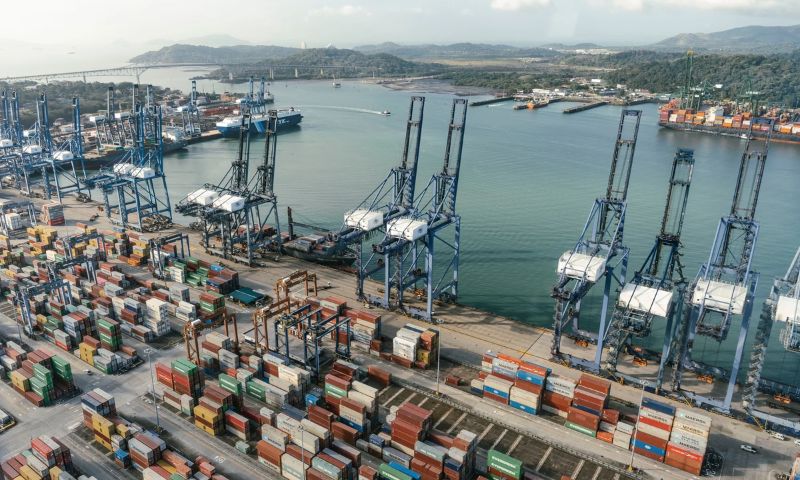



PANAMA CITY: Panamanian authorities have assumed control of two strategic ports along the Panama Canal after the country’s Supreme Court annulled the concession held by Hong Kong-based conglomerate CK Hutchison Holdings.
The court in January declared “unconstitutional” the 1997 contract that allowed Hutchison’s subsidiary, Panama Ports Company (PPC), to operate the ports of Balboa on the Pacific side and Cristobal on the Atlantic entrance of the canal.
Following publication of the ruling in the official gazette on Monday, the Panama Maritime Authority formally took possession of the facilities.
“The Panama Maritime Authority has taken possession of its ports and guarantees the continuity of operations,” an official statement said.
CK Hutchison objected to the move on Tuesday, describing it as “unlawful” and warning it posed “serious risks to the operations, health and safety” at the terminals.
The company said none of the state’s actions were coordinated with PPC and signaled potential legal proceedings against Panama and other parties, according to AFP.
Panamanian President Jose Raul Mulino said the decision did not amount to expropriation but was aimed at ensuring uninterrupted port operations while the assets’ value is assessed.
“This does not imply the expropriation of those assets, but rather their use to guarantee the operation of the ports until their real value is determined for the corresponding actions,” Mulino said.
Ports director Max Florez announced an 18-month transition period during which the terminals will be run by new operators before fresh contracts are awarded through an international tender process.

Panama said APM Terminals, a subsidiary of Danish shipping giant A.P. Moller-Maersk, will operate the Balboa port.
Terminal Investment Limited, owned by logistics heavyweight Mediterranean Shipping Company, will manage the Cristobal terminal.
Labor Minister Jackeline Munoz assured workers there would be “no layoffs” at the facilities, which employ around 1,200 people.
The legal battle over the ports has unfolded against a backdrop of escalating tensions between Washington and Beijing.
The canal handles roughly 40 percent of US container traffic and about five percent of global trade, making it one of the world’s most strategically vital waterways.
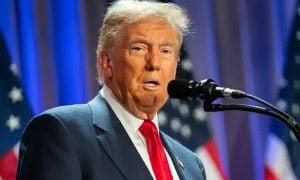
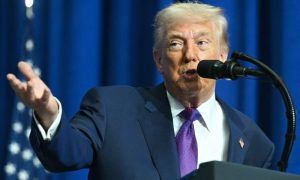
US President Donald Trump last year claimed, without presenting evidence, that China effectively controlled the canal — a charge Panama has repeatedly denied.
The Hong Kong and Macao Affairs Office in China previously warned that Panama would pay a “heavy price, both politically and economically” for stripping Hutchison of its concession.
Hutchison has indicated it will challenge Panama’s decision before the International Chamber of Commerce and has also warned of potential legal action against Maersk and others involved in the transition.
US Ambassador to Panama Kevin Cabrera defended the Panamanian authorities, saying they have the right “to have their judicial system make its own decisions” and described the Supreme Court’s ruling as “very good” for the people of Panama.
The Panama Canal, built and operated by the United States for a century, was handed over to Panama in 1999.
On his return to the White House last year, Trump threatened to retake control of the waterway, though he later softened his stance after Panama signaled it would review the Hutchison concession.
The transition of the two ports marks a significant shift in the governance of infrastructure linked to one of the world’s busiest maritime corridors, with broader geopolitical implications still unfolding.