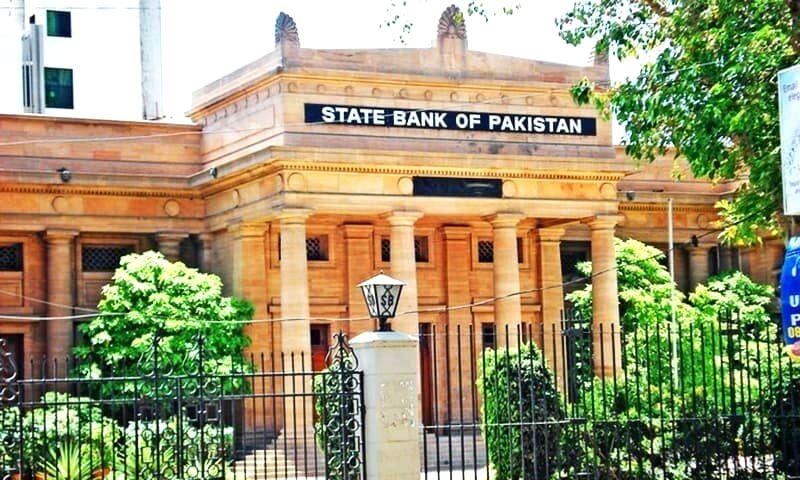



ISLAMABAD: Pakistan’s total liquid foreign exchange reserves stood at US$ 21.01 billion as of 26 December 2025, according to the State Bank of Pakistan (SBP), reflecting stability amid strong early-year economic performance.
The central bank reported on Thursday that SBP’s foreign exchange reserves rose slightly by US$ 13 million to US$ 15.92 billion during the week ended on 26 December.
Meanwhile, net reserves held by commercial banks declined by US$ 23 million to US$ 5.10 billion, Chief Spokesman of SBP said.
The previous week, total liquid reserves had been US$ 21.02 billion, with US$ 15.90 billion held by the central bank and US$ 5.12 billion by commercial banks.
Total liquid foreign #reserves held by the country stood at US$21.01 billion as of December 26, 2025.
For details: https://t.co/WpSgomnKT3
#SBPReserves pic.twitter.com/D22QAX3n8N— SBP (@StateBank_Pak) January 1, 2026
Economic growth sustains momentum
Pakistan’s economy maintained steady growth in the first quarter of fiscal year 2025–26, with GDP expanding 3.71 percent, driven by a recovery in industry, stable agricultural output, rising remittances, and disciplined fiscal management, the Ministry of Finance said in its latest Monthly Economic Outlook.
Agriculture grew 2.89 percent, industry 9.38 percent, and services 2.35 percent in Q1 FY2025-26.
Large-scale manufacturing rose 5.02 percent between July and October 2025, led by textiles, apparel, non-metallic minerals, food, electrical equipment, automobiles, and cement.
Notably, automobile production surged, with cars up 65.1 percent, trucks and buses 97 percent, and jeeps/pick-ups 38.8 percent.
Cement dispatches reached 21.4 million tonnes, up 11.5 percent year-on-year.
Inflation and fiscal discipline
Consumer inflation slightly eased to 6.1 percent year-on-year in November, down from 6.2 percent in October, while monthly prices rose 0.4 percent.
Major contributors included education (9.0%), health (8.3%), non-perishable food (7.3%), clothing (6.5%), and transport (6.1%).
Fiscal management remained disciplined, with a consolidated surplus of 1 percent of GDP during July–October FY2026.
Federal Board of Revenue (FBR) collections totalled Rs 4,734 billion, up 10.2 percent. Direct taxes grew 10.5 percent, while sales tax, federal excise duty, and customs rose 8.5, 18.2, and 10.1 percent, respectively.
Pakistan’s external sector showed resilience despite higher imports. Goods exports reached US$ 12.8 billion, down 3.2 percent, while imports rose 11.1 percent to US$ 25.6 billion, resulting in a trade deficit of US$ 12.8 billion.
Remittances increased 9.3 percent to US$ 16.1 billion, with Saudi Arabia (24.2%) and the UAE (20.8%) as leading sources.
IT exports rose 18.5 percent to US$ 1.8 billion, and net foreign direct investment totalled US$ 927.4 million.
Financial markets and monetary policy
The stock market rebounded strongly, with the KSE-100 Index gaining 5,046 points in November to close at 166,677.
Market capitalisation increased to Rs 18,866 billion. The SBP cut the policy rate to 10.5 percent on 15 December 2025, reflecting stable macroeconomic conditions.
Social programmes remained active. The Pakistan Poverty Alleviation Fund (PPAF) disbursed Rs 356 million in interest-free loans in November, while the Benazir Income Support Programme (BISP) spent Rs 143.5 billion during July–October FY2026.
Overseas employment registrations totalled 349,850 between July and November FY2026.