



Key Points
- Pakistan’s stock market delivered strong returns, with benchmarks and market capitalisation steadily rising.
- FBR tax collections and the active taxpayer base expanded, reflecting improved revenue mobilisation.
- Exports showed a weakening overall trend; however, IT and value-added sectors outperformed.
- Foreign exchange reserves climbed above $21 billion, underscoring external stability backed by remittances and financing inflows.
- Remittances remained a major pillar of the external account, supporting foreign exchange buffers.
ISLAMABAD: Pakistan’s calendar year 2025 tracked a distinctive economic trajectory with broad macroeconomic indicators such as capital markets, remittance inflows, and foreign exchange reserves pointing to greater resilience, but overall exports’ growth remained a concern. These mixed signals set the stage for policy priorities heading into 2026 with a strong stabilisation footing.
Best Performing Market
Pakistan’s equity markets posted a strong performance in 2025, anchoring investor confidence in broader economic stability.
The KSE 100 Index surged from roughly 115,000 points at the end of 2024 to about 173,896 by late December 2025, an approximate 51 per cent leap in benchmark value over the year.
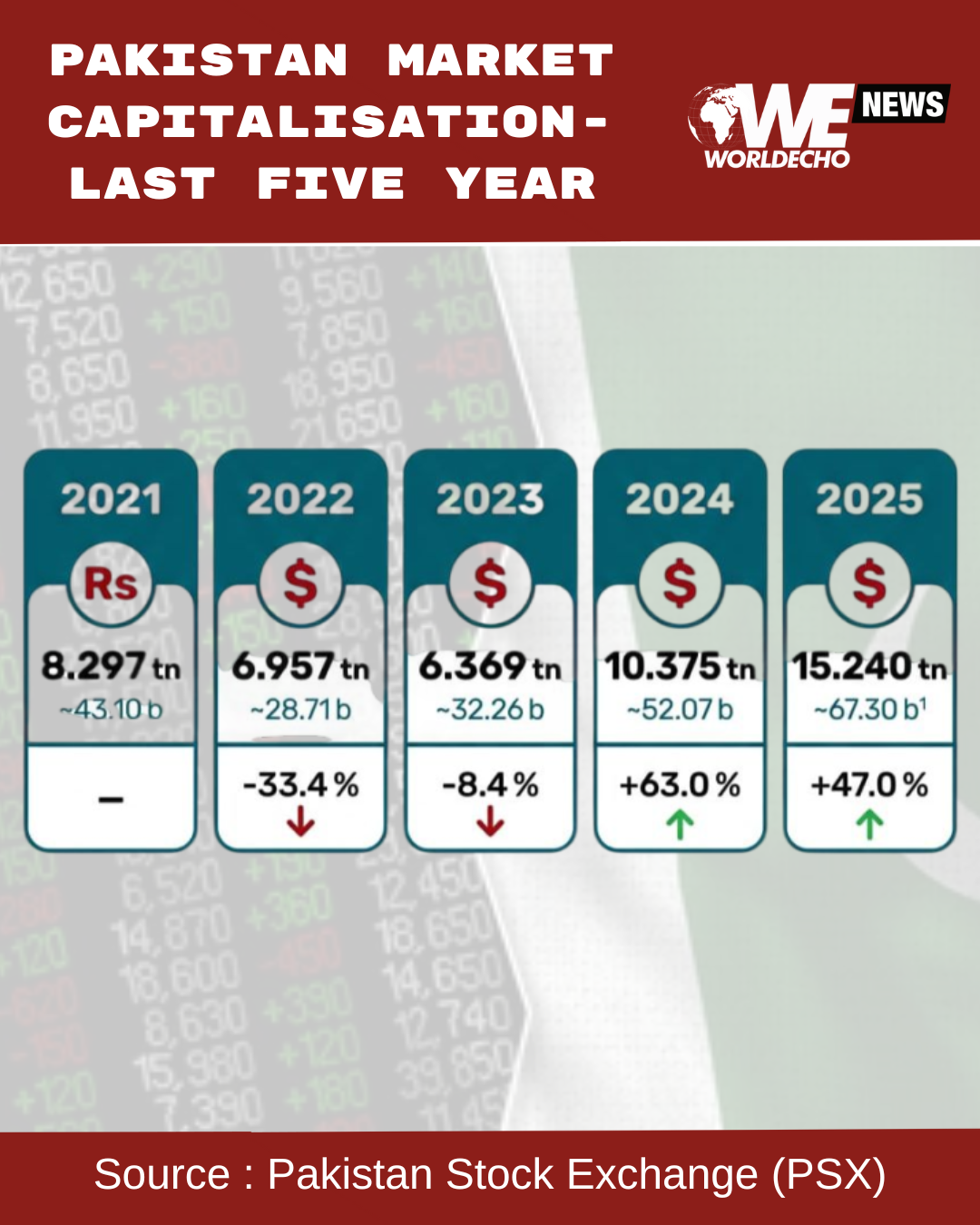
Equity market capitalisation expanded, pushing valuations toward $67.3 billion, reflecting renewed domestic and institutional appetite for Pakistani assets.
This rally derived from corporate earnings growth, valuation repricing, and improved risk sentiment among both retail and institutional investors.
Pakistan Market Capitalisation — Last Five Years
Tax Revenue and Taxpayer Base
Fiscal metrics in 2025 signalled continued progress in revenue mobilisation, supported by the International Monetary Fund-guided structural reforms towards the digitisation and automation of revenue collection.
Latest reports indicate FBR tax collections approaching Rs 14.13 trillion for FY 2025 26, up nearly 19 per cent from the prior cycle, suggesting more robust fiscal receipts across direct and indirect tax heads.
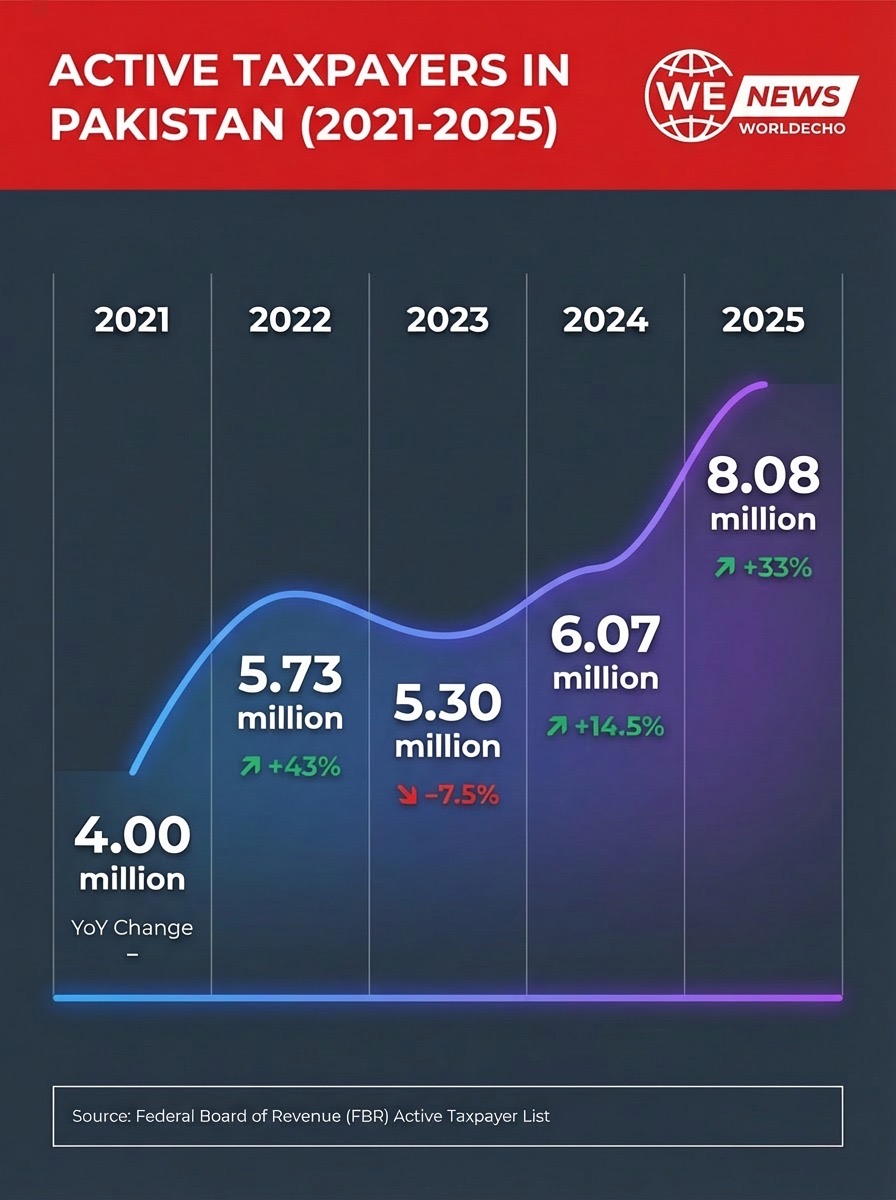
The number of active tax filers rose past 8 million in 2025 from 6.7 million, in 2024, an encouraging 19.4 per cent year-on-year increase for long-term tax base expansion.
This revenue momentum underpinned fiscal consolidation efforts and strengthened Pakistan’s standing with multilateral partners.
Pakistan’s Tax Filers—Last Five Years
Exports: Mixed Trends with Sectoral Strengths
Pakistan’s merchandise export performance weakened throughout 2025, despite the fact that certain sectors, such as IT, performed very well and exhibited notable resilience. According to the Pakistan Bureau of Statistics (PBS), imports in October totalled $6.1 billion. This was the highest level since March 2022, when the country was about to enter a period of severe economic crisis, followed by harsh stabilisation measures and currency controls. The international trade bulletin released by the PBS showed that the gap between imports and exports reached $12.6 billion during the July-October period. The deficit was $3.5 billion, or 38 per cent higher than the same period of the last fiscal year.
In contrast, the exports were valued at around $2.4 billion in November 2025, as compared to $2.83 billion recorded in November 2024, a decline of 15.4 per cent. Cumulative July–November 2025 trade data showed exports of ~$12.84 billion, down about 6.4 % year on year compared with the same period in 2024 when exports were around $13.72 billion.
Sectoral Outperformance
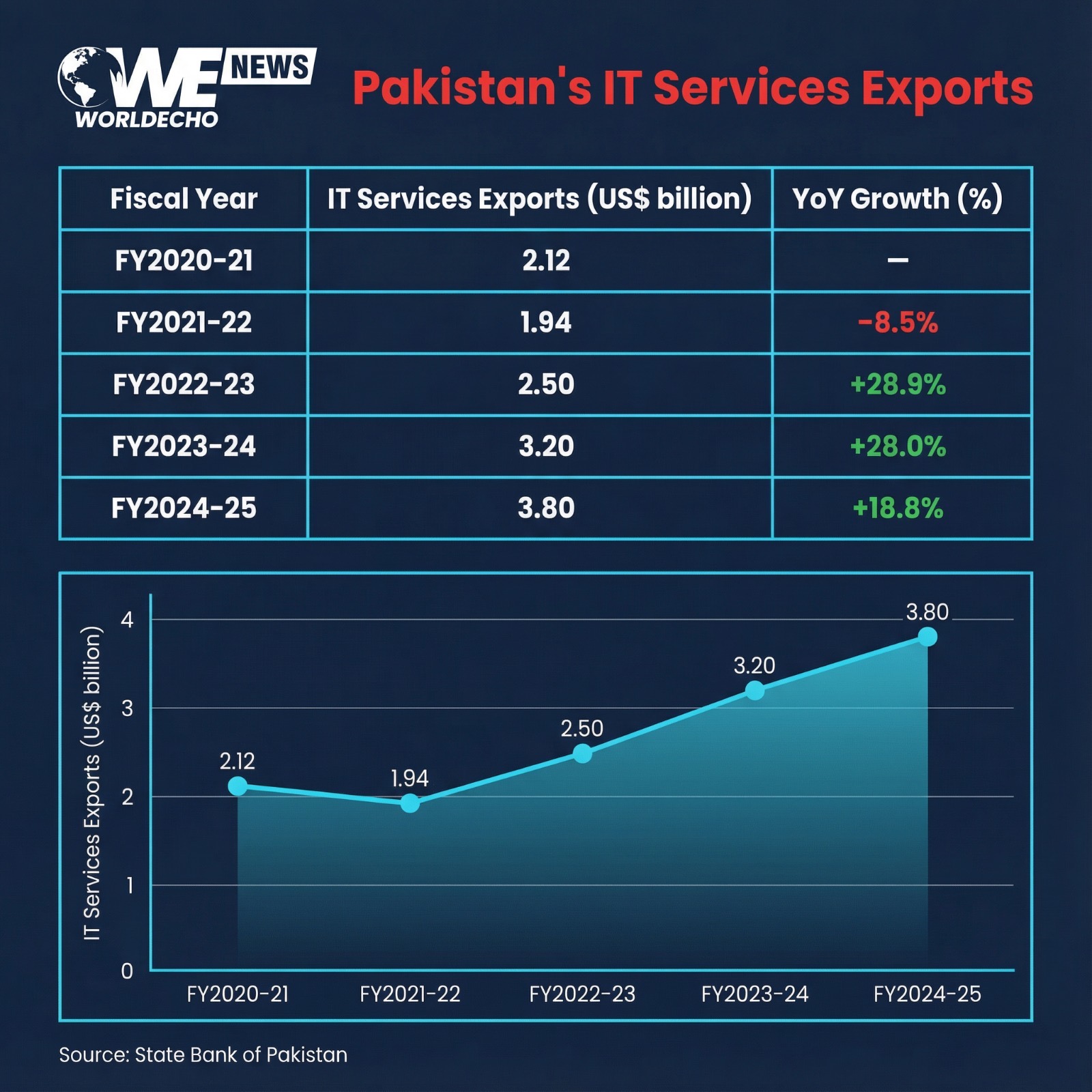
IT exports continued to post strong results, with digital services receipts remaining in the multi-billion dollar range for the fiscal period.
Among goods exports, value-added products such as specialised apparel and niche commodities reported double-digit growth, offsetting part of the merchandise downturn.
These sectoral dynamics underscored structural export potential even as global headwinds and competitiveness issues weighed on bulk merchandise trade.
Pakistan’s IT Services Exports — Last Five Years
Foreign Exchange Reserves & External Balances
Pakistan’s external liquidity position strengthened notably in 2025, with official central bank figures showing sustained accumulation.
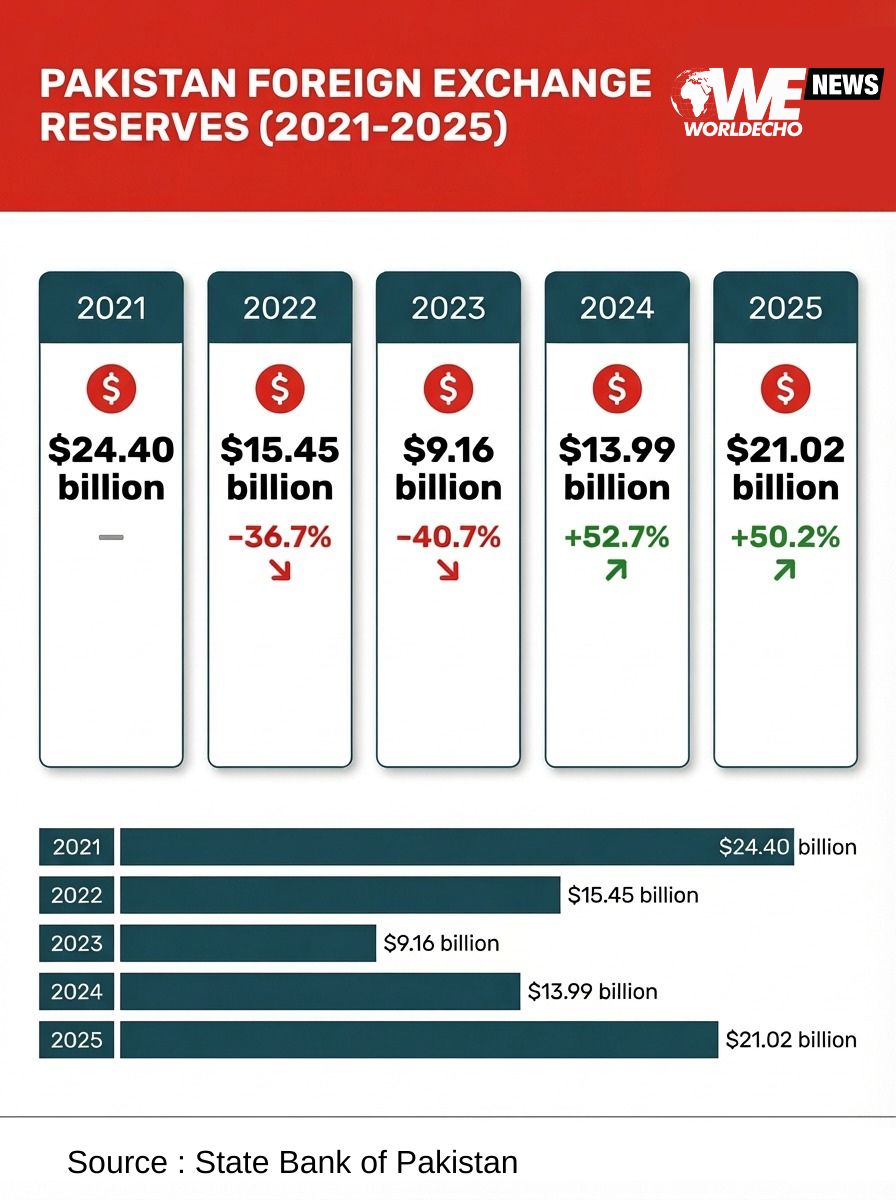
According to the State Bank of Pakistan, SBP held foreign exchange reserves rose to about $15.90 billion for the week ended December 19, 2025, up modestly week on week.
Total liquid foreign exchange reserves — combining SBP holdings and commercial bank reserves — stood at approximately $21.02 billion in mid-December 2025
This above $21 billion reserve base represents a material increase from levels below $16 billion in late 2024, reflecting a combination of remittance-driven inflows, bilateral and multilateral financing, and prudent reserve management.
These reserve buffers improved Pakistan’s capacity to manage import cover and external obligations, though structural external imbalances remain a policy priority.
Pakistan Foreign Exchange Reserves — Last Five Years
Remittances: A Pillar of External Flows
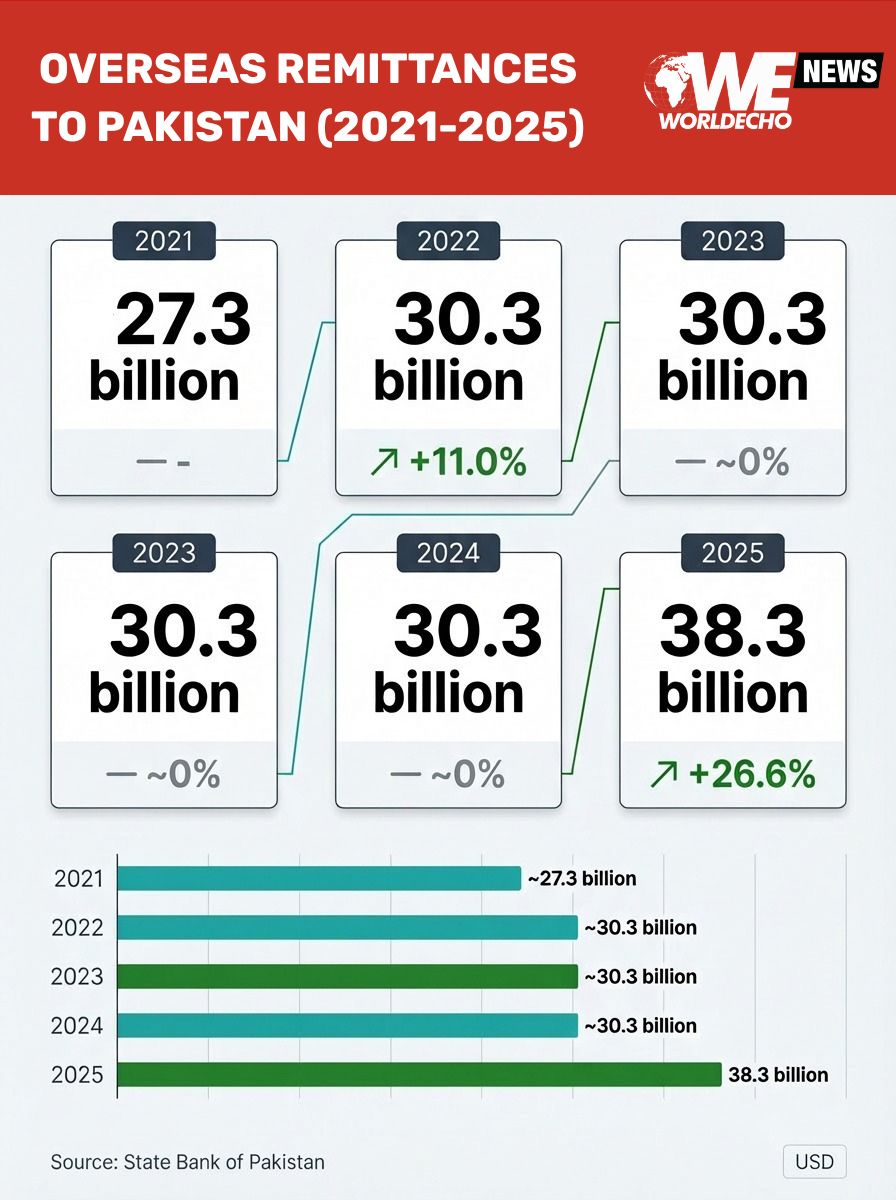
Workers’ remittances remained robust throughout 2025, consistently contributing to foreign exchange liquidity and cushioning current account pressures. Monthly flows repeatedly exceeded $3 billion, supporting both consumption and reserve accumulation, and played a critical role in external sector stability even as merchandise exports lagged.
Pakistan Workers’ Remittances — Last Five Years
In Short
Calendar year 2025 delivered a blend of encouraging macro indicators and persistent structural challenges:
Equity markets rallied and saw strong market capitalisation growth.
Tax revenue performance and taxpayer base expansion suggested improved fiscal traction.
Merchandise exports softened, while the IT and value-added sectors performed well.
Foreign exchange reserves climbed above $21 billion, strengthening external liquidity buffers.
Remittances remained a critical source of stability.
As Pakistan enters 2026, policymakers face the task of boosting export competitiveness, deepening structural reforms, and consolidating external and fiscal stability to translate the gains of 2025 into sustained long-term growth.