


KEY POINTS
- Investors from 16 countries backed 82 firms, signalling improving foreign interest
- Technology and e-commerce sectors drove business formation
- Most companies incorporated through a fully digital system
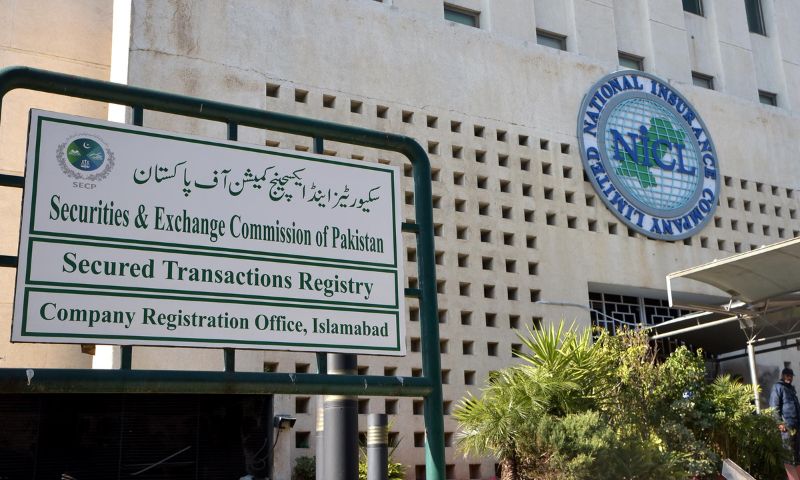
ISLAMABAD: Pakistan’s corporate watchdog registered 3,881 new companies in January 2026, highlighting strengthening business activity as the country pursues investment-driven, export-oriented economic growth.
The Securities and Exchange Commission of Pakistan (SECP) is the federal corporate regulator responsible for regulating corporate entities, capital markets, insurance companies and non-banking financial institutions in Pakistan.
It is broadly comparable to the U.S. Securities and Exchange Commission or the UK’s Financial Conduct Authority. The SECP is also the sole registry for all types of companies
The newly incorporated firms brought Rs 8.4 billion in paid-up capital, lifting the total number of registered companies nationwide to 283,540, according to the SECP.
Economists generally treat rising company formation as an early indicator of improving investor confidence, particularly in economies emerging from financial stress.
Foreign participation remained notable, with 82 new companies attracting investors from China, the United States, the United Kingdom, Germany, Turkey, Malaysia, South Korea, Australia and South Africa, among others.
Analysts say such inflows support Pakistan’s policy shift toward drawing overseas capital to expand industrial capacity and strengthen exports.
Almost all registrations, 99.9 per cent, were completed through the SECP’s eZfile platform. It is an online portal designed to streamline company incorporation and reduce administrative hurdles.
Authorities have accelerated digital reforms in recent years to improve the ease of doing business and make the market more accessible to global investors.
Private limited companies accounted for 59 per cent of the new registrations, followed by single-member firms at 38 per cent.
Public unlisted companies, not-for-profit organisations, and limited liability partnerships together made up the remaining 3 per cent.
Significant growth in the single-member company registration indicates that entrepreneurship is nourishing in the country at the level of fresh graduates, mainly in the information technology and allied businesses.
Punjab, Pakistan’s most populous province and manufacturing base, recorded the highest number of incorporations with 1,998 companies, or 52 per cent of the total.
The Islamabad Capital Territory followed with 747 registrations, ahead of Sindh, home to the commercial hub of Karachi, with 601. Khyber Pakhtunkhwa added 343 companies, Gilgit-Baltistan 127 and Balochistan 65.
Sectoral data showed strong momentum in technology-linked industries, with information technology and e-commerce leading at 729 new firms.
Trading accounted for 613 companies, services 494, and real estate development and construction 347, reflecting ongoing urbanisation and infrastructure demand.
Additional contributions came from tourism and transport, food and beverages, education, mining, pharmaceuticals, healthcare and engineering, pointing to a gradual diversification of the corporate landscape.
The expansion aligns with Islamabad’s medium-term strategy centred on export-led growth, productivity gains and higher private-sector investment.
After navigating high inflation, currency pressures and external financing challenges in recent years, policymakers are attempting to shift the economy away from consumption toward manufacturing and globally competitive sectors.
Recent measures, including regulatory digitisation, exporter incentives and facilitation for foreign investors, aim to position Pakistan as a regional production and services hub linking South Asia, Central Asia and the Middle East.
Economists caution that sustaining the momentum will depend on macroeconomic stability, policy continuity and structural reforms.
Even so, the latest data suggests investor appetite is gradually strengthening as Pakistan attempts to transition from stabilisation toward durable growth.