



Key Points
- KSE-100 Index ended the week down 2.9%, despite a weekend rebound.
- Mid-week sell-offs were offset by a one per cent rebound on Friday.
- Regional and global market trends influenced investor sentiment, with mixed Asia-Pacific markets and US equities showing gains.
ISLAMABAD: The Pakistan Stock Exchange experienced a turbulent trading week, ending at a sizable net loss as investors navigated domestic policy changes, corporate earnings, and regional and international market trends.
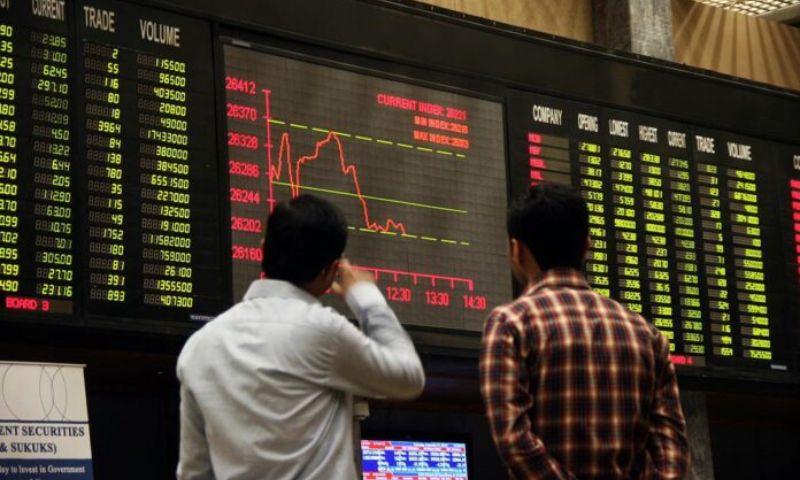
The KSE-100 Index closed at 184,174 points, down approximately 5,500 points or 2.9 per cent compared with the previous Friday.
The week’s trading highlighted a fragile investor sentiment, with market participants reacting strongly to both domestic announcements and global cues.
Regional and global markets
Investor sentiment was shaped by volatility in regional markets, including declines in major Indian and Chinese stock indices amid slowing export growth and monetary tightening.
The US and European equities posted modest gains over the week, reflecting steady economic data and corporate earnings.
Analysts noted that global market trends, particularly in the Asia-Pacific region, had a direct influence on Pakistan’s market, as foreign portfolio investors adjusted exposure to emerging markets.
Strong start and early gains
The week began on a positive note, with the KSE-100 Index rising nearly 1% on Monday, supported by gains in the banking and energy sectors.
Investors responded favourably to announcements of possible fiscal measures aimed at supporting liquidity and promoting export growth.
On Tuesday, the index extended gains, briefly, but momentum waned as profit-taking emerged ahead of mid-week corporate earnings releases.
Mid-week sell-offs
The middle of the week saw a sharp correction, with the KSE-100 Index falling over 6,000 points cumulatively on Wednesday and Thursday.
Weak earnings from major fertiliser and textile companies, combined with rising global commodity prices, triggered broad-based selling.
Market participants remained cautious as geopolitical tensions in the region, including ongoing developments related to India and water resource management, added to uncertainty.
This sell-off reflected heightened risk aversion, with many investors opting to stay on the sidelines.
Policy relief spurs recovery
Friday marked a partial recovery, with the KSE-100 Index rebounding approximately 1 per cent to close at 184,174 points.
The energy and banking sectors led the gains following government announcements of industrial policy relief, including reductions in power tariffs and the lowered rate of the export refinance facility.
These measures were viewed as supportive for corporate earnings and liquidity, boosting investor confidence for the short term.
Despite the rebound, the overall weekly performance remained negative.
Sectoral performance
Energy and banking sectors were the week’s standout performers, benefiting from domestic policy clarity and expectations of improved credit flows.
In contrast, the fertiliser and textile sectors remained under pressure, weighed down by poor earnings results and concerns over export competitiveness in global markets.
The mixed sectoral performance underscored the selective nature of the rally and the persistent sensitivity to both domestic policy and international developments.
Trading activity and investor sentiment
Trading volumes remained elevated in the final sessions of the week, reflecting active participation from both institutional and retail investors.
Analysts noted that market activity was concentrated in sectors likely to benefit from policy relief, while defensive stocks saw limited action.
Overall, investor sentiment remained cautious, with short-term volatility expected to persist due to ongoing macroeconomic challenges, regional developments, and global market fluctuations.
Outlook
Looking ahead, the market is likely to remain sensitive to domestic policy announcements, corporate earnings, and developments in regional and global markets.
Policy relief measures provided some support, but structural challenges in the economy, currency fluctuations, and geopolitical risks would continue to influence trading patterns.
Investors are expected to monitor fiscal updates, export data, and central bank actions as determinants of market direction.