Key Points
- Macroeconomic stability is being consolidated after three years of adjustment
- Pakistan targets export-led growth anchored in investment, productivity and private-sector activity
- 55 global investment funds hold meetings with Pakistani delegation in London
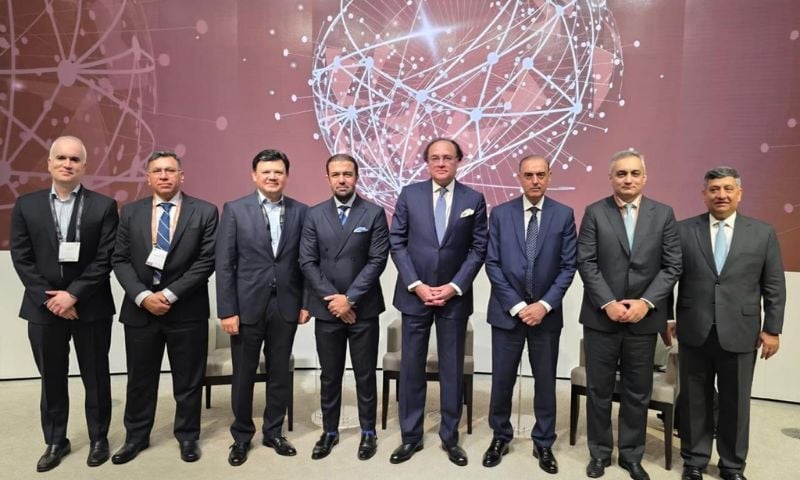
ISLAMABAD: Pakistan is advancing from recent macroeconomic stabilisation to investment, capital diversification, exports and private-sector-led growth, Finance Minister Muhammad Aurangzeb told global investors at a J.P. Morgan conference in London.
Speaking at the “Pakistan: External Shocks Remain Manageable” session of the J.P. Morgan Emerging and Frontier Markets Opportunities Conference, Aurangzeb said the government’s priority was to make economic stability sustainable and use it as a foundation for a new growth model.
The conference generated strong interest from international institutional investors. As many as 55 global investment funds participated in one-on-one meetings and a full investor session with the Pakistani delegation.
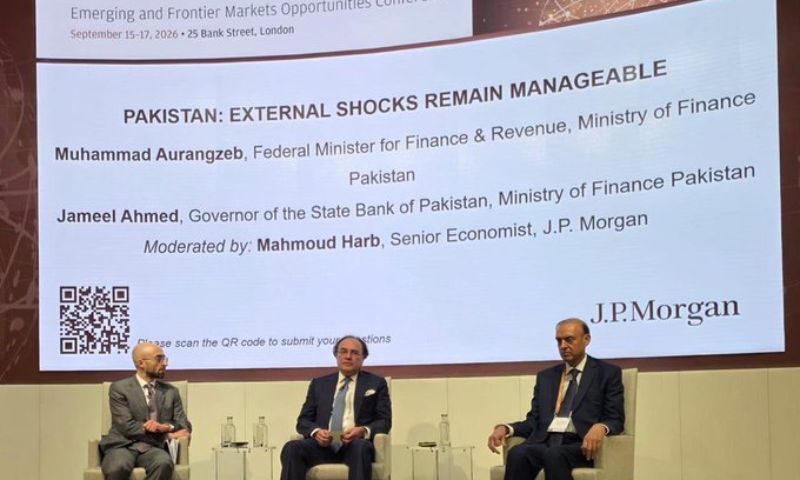
Pakistan’s economic agenda rested on six priorities: making macroeconomic stability durable, shifting towards productivity and export-led growth, continuing structural reforms, moving from aid towards trade and investment, expanding access to finance, and positioning the country for emerging areas of the digital economy.
The country had spent the past three years restoring macroeconomic stability and rebuilding international credibility, the minister said.
Fiscal consolidation, improvements in the external sector, lower inflation, debt management and renewed access to international capital markets had strengthened the economic foundation, he added.
The finance minister said GDP growth had recovered to 3.7 per cent in fiscal year 2025-26, while the fiscal deficit fell to 2.6 per cent of GDP, a multi-year low. Pakistan also recorded a primary surplus for the third consecutive year.
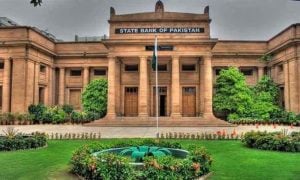
State Bank of Pakistan Governor Jameel Ahmad highlighted improvements in foreign exchange reserves, remittance inflows and external-sector fundamentals.
He also pointed to the contribution of Roshan Digital Accounts, external-sector reforms and stronger financial-sector fundamentals to the country’s improved economic position.
Pakistan’s debt management
The finance minister said the government had strengthened the sovereign balance sheet through active liability management, longer domestic debt maturities and measures to reduce refinancing risks.
Pakistan had also regained access to international capital markets through diversified instruments and investor groups. He referred to the country’s inaugural Panda Bond and subsequent $3 billion dual-tranche Eurobond issuance.
The objective, he added, was not merely to raise funds but to maintain regular market access, diversify the investor base, extend maturities and gradually improve financing conditions.
The government is also seeking deeper domestic capital formation by strengthening equity and corporate debt markets. He outlined plans to increase investor participation, encouraging initial public offerings and improving market infrastructure.
Pakistan’s privatisation and private capital
According to the finance minister, privatisation is, essentially, part of efforts to redefine the state’s role in commercial activity.
He mentioned the divestiture of Pakistan International Airlines, and the line-up of electricity distribution companies, financial institutions, other state-owned enterprises and airport operations.
READ ALSO: Pakistan, UK Pledge to Expand Trade and Business Ties
The government is also developing a National Private Equity Framework. It would mobilise institutional capital into businesses and projects and strengthen the country’s private equity and venture capital ecosystem.
Aurangzeb said Pakistan’s next phase of growth could not be financed by public balance sheets alone. Private capital participation would therefore be required to expand investment and productive capacity.
The government was also expanding access to finance for small and medium-sized enterprises, agriculture and housing. It was striving to translate macroeconomic stability into better credit and productive activity.
Getting ready for New Economy
The finance minister said Pakistan also needed to position itself for emerging technologies, particularly blockchain and Web 3.0.
He said the country’s young workforce and expanding digital ecosystem offer opportunities to participate in new segments of the global economy and attract investment into technology-driven businesses.