


KEY POINTS
- Urged restraint and negotiated regional solutions to Iran conflict.
- Welcomed international efforts easing South Asia nuclear tensions.
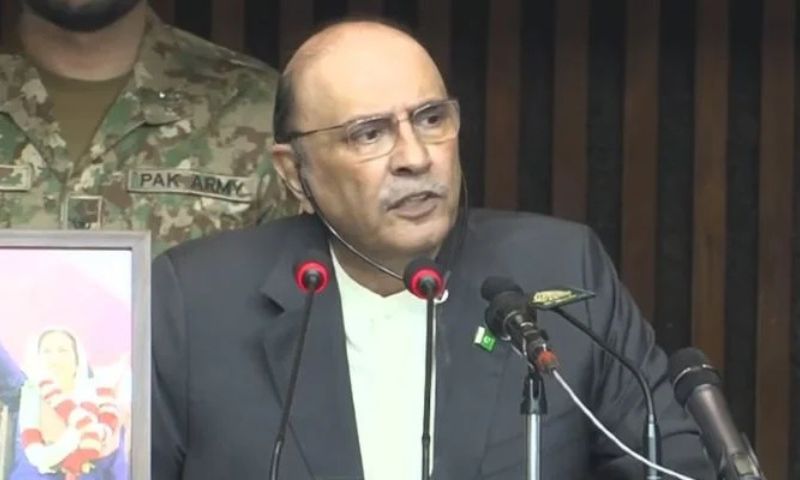
ISLAMABAD: Pakistan’s President Asif Ali Zardari on Monday said the Afghan Taliban regime allows its territory to be used for attacks against Pakistan and warned that Islamabad would respond decisively to any further incursions, placing Afghanistan at the centre of Pakistan’s security concerns in his annual address to a joint sitting of Parliament.
Saying Pakistan had exhausted diplomatic avenues, the President declared that no state could be expected to tolerate serial cross-border terrorism, stressing that recent military actions had clearly signalled the limits of Pakistan’s restraint.
“For us, war is always the last option. But no state accepts serial attacks on its soil. The soil of Pakistan is sacred, and we will not allow any entity — domestic or foreign — to use neighbouring territory to destabilise our peace.”
Terror safe havens
President Zardari said Pakistan had repeatedly engaged the Afghan de facto authorities and friendly regional countries to prevent escalation, but warned that the Taliban regime had failed to honour commitments made under the Doha process not to allow militant groups to operate from Afghan soil.
He accused Kabul of providing safe havens to groups, including the Tehreek-e-Taliban Pakistan (TTP) and the Balochistan Liberation Army (BLA), which he said were being backed and exploited by hostile external actors.
“Our action spelt out the limits to our tolerance for attacks from Afghanistan, particularly by Indian-sponsored TTP and BLA and their affiliates,” he said, adding that Pakistan’s response was grounded in its right to self-defence under Article 51 of the United Nations Charter.
This is plain and simple hydro-terrorism. The weaponisation of vital water flows to exert political leverage is a blatant disregard for international and humanitarian law.” – President Asif Ali Zardari
Referring to recent developments, the President said Pakistan had demonstrated “a fraction of its capabilities” after being pushed past clearly defined red lines, emphasising that the entire nation stood united with its armed forces against cross-border terrorism.
India warned firmly
Turning to the eastern front, President Zardari said Pakistan had responded with strategic restraint and firm resolve when its sovereignty was challenged, praising the armed forces for what he described as a decisive military and diplomatic outcome during Maarka-e-Haq.
“By the Grace of Allah, this was not just a military victory; it was an expression of our national resolve in crisis,” he said. “United as one proud nation, we bravely repulsed India’s aggression and emerged victorious, both militarily and diplomatically.”
Reaffirming Pakistan’s long-standing position on Kashmir, the President said peace in South Asia would remain unattainable until Kashmiris were granted their right to self-determination.
“Nobody in South Asia will be free and safe until Kashmiris win their freedom from Indian occupation,” he said, warning Indian leaders against what he called strategic short-sightedness and renewed war rhetoric.
“As a lifelong advocate for regional peace, I would not recommend it. At the same time, any aggressor should prepare for another humiliating defeat. Make no mistake. We are ready.”
India’s water aggression
President Zardari also raised alarm over India’s “water aggression”, accusing New Delhi of undermining the Indus Waters Treaty by manipulating river flows and placing the accord in abeyance.
Our salaried classes, pensioners, labourers and small traders have endured a long night of hardship. The next phase must focus on inclusive growth, jobs and direct relief.” – President Zardari
“This is plain and simple hydro-terrorism. The weaponisation of vital water flows to exert political leverage is a blatant disregard for international and humanitarian law.”
He warned that unilateral actions on transboundary rivers threatened not only Pakistan’s agricultural economy but also regional stability, stressing that international law did not permit the blocking of water resources.
“If one treaty is flouted, many others across other borders may also suffer the same fate,” he said, pledging that Pakistan would defend its water rights with unity, resolve and legal clarity.
Regional de-escalation call
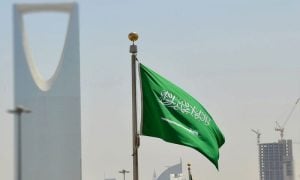
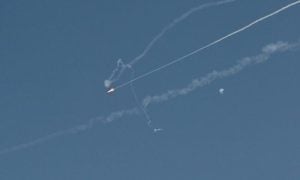
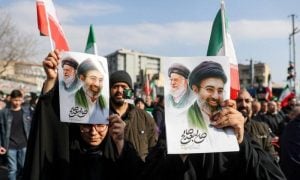
On wider regional tensions, the President condemned the war launched against Iran while negotiations were underway and expressed solidarity with Tehran, while also denouncing attacks on Gulf countries, including Saudi Arabia, the UAE, Qatar and Bahrain.
He urged restraint and negotiated solutions to prevent the Middle East from sliding into deeper instability and welcomed international efforts to de-escalate tensions between nuclear-armed neighbours in South Asia.
President Zardari said Pakistan’s relations with the United States had entered a new phase of strategic cooperation and economic partnership, while ties with China had reached new heights.
Our strategy is a hearts-and-minds campaign. The dividends of our mineral wealth and blue economy must reach the local population first.” – President Zardari
Describing Pakistan and China as “iron-clad brothers”, he said CPEC 2.0 would revolutionise Pakistan’s infrastructure and connectivity, and expressed gratitude to Beijing for its support during recent regional crises.
Reform, growth agenda
Linking security to economic stability, the President said the government had succeeded in pulling the economy back from the brink of collapse in 2022 but cautioned that stabilisation was only the first step.
“Our salaried classes, pensioners, labourers and small traders have endured a long night of hardship. The next phase must focus on inclusive growth, jobs and direct relief.”
He called for structural reforms, expansion of the tax base, transparency in expenditure and urgent reductions in energy costs, describing energy reform as a prerequisite for industrial revival.
President Zardari also stressed the need to invest in clean energy, climate-resilient agriculture and water management, saying climate justice must be reflected in domestic policy, not just international advocacy.
He urged expansion of the Benazir Income Support Programme to empower vulnerable segments of society and called for removing barriers to women’s economic and digital participation.
Federation through coordination
On constitutional governance, the President emphasised provincial autonomy and said a strong federation depended on coordination rather than centralisation. He called for the effective functioning of the Council of Common Interests and expressed hope for a fair National Finance Commission award.
Addressing Balochistan, he acknowledged decades of deprivation and said the state’s approach combined firm action against foreign-backed insurgency with development and inclusion.
“Our strategy is a hearts-and-minds campaign. “The dividends of our mineral wealth and blue economy must reach the local population first.”