


Key Points:
- Pakistan may launch more air strikes in Afghanistan if Kabul fails to act against militants.
- Deadly Islamabad bombing killed 36 and injured 169; attackers trained in Afghanistan.
- Defense Minister Asif warns India, Kabul, and militants are “on the same page” in proxy conflict.
- Pakistan sees war with India as possible under current conditions.
- UN report confirms rising TTP attacks from Afghan territory, supporting Pakistan’s concerns.
ISLAMABAD: Pakistan’s Defence Minister Khawaja Asif has said that the country would not hesitate to conduct further air strikes in Afghanistan if Kabul failed to take action against militant groups operating on its soil.
Speaking to FRANCE 24 on Wednesday, Asif emphasized that Pakistan’s consistent calls on international forums – including the United Nations Security Council – highlight the threat posed by terrorist sanctuaries in Afghanistan.
The remarks come in the wake of a recent deadly suicide bombing at Imambargah Khadijah al-Kubra in Islamabad during Friday prayers, which killed 36 people and injured around 169 others.
Following the attack, security raids in Nowshera and Peshawar resulted in the arrest of four facilitators, including the Daesh-linked mastermind, an Afghan national.
Interior Minister Mohsin Naqvi noted that the network responsible was trained in Afghanistan and that Pakistani authorities had prior intelligence on the suspects.
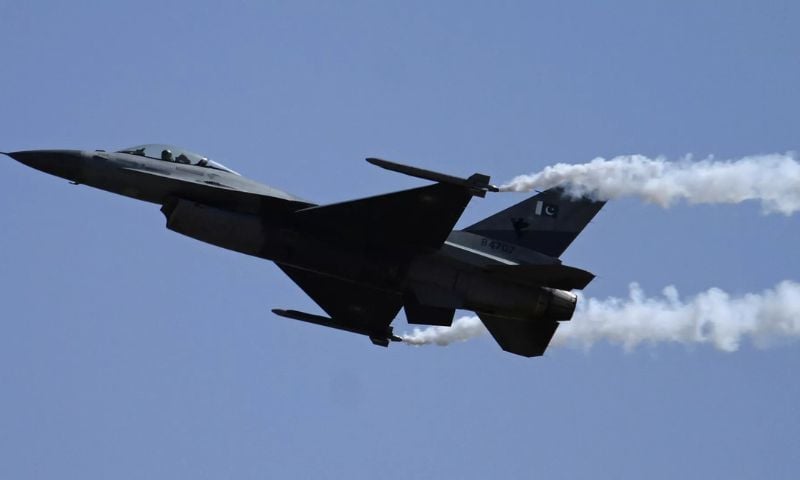
Asif said, “Any attack in Pakistan, it has the blessings of the Afghan government.” He added that Pakistan retains the option of air strikes, stressing, “We always have that option and we can exercise that option.
There is absolutely, we won’t hesitate … If these outfits are operating from their soil, they have the responsibility. They cannot deny the responsibility.”
In 2025, Afghan officials claimed two drone strikes hit a house in Nangarhar province, prompting formal protests to Pakistan.
Later in November, the Afghan Taliban accused Pakistan of bombing Khost, Kunar, and Paktika provinces—a charge Islamabad denied, insisting no cross-border operations targeted civilians.
Asif highlighted the presence of multiple terrorist factions in Afghanistan – including the East Turkestan Islamic Movement (ETIM), Tehreek-e-Taliban Pakistan (TTP) Pakistan, TTP Afghanistan, Islamic State, and Daesh – as a direct consequence of Kabul’s inaction.
“They have actually provided them safe havens on their soil,” he said.
Addressing India’s alleged role, Asif said, “After the four-day conflict in May last year, India was badly beaten… Our air force practically decimated their attempts to invade Pakistan.
As a result, India is now waging a proxy war against Pakistan,” adding that India, Kabul, and terrorist outfits in Afghanistan are “on the same page.”
On the potential for conflict with India, Asif noted, “War with India remains a possibility under these conditions,” emphasizing Pakistan’s engagement with friendly countries to mediate.
He pointed out failed attempts in Istanbul, Doha, and Kabul to address the TTP threat, with Afghan authorities indirectly acknowledging they could not control the group.
Beyond regional security, Asif discussed Pakistan’s possible contribution to a Gaza Peace Board, referencing Pakistan’s longstanding participation in UN peacekeeping missions in Africa, East Timor, Somalia, and Congo.
He stressed that Pakistan’s commitment to Palestine remains steadfast, and that normalization with Israel is unlikely without a two-state solution.
Reflecting on domestic governance, Asif acknowledged the historical military role in politics but stressed that Pakistan now operates a “hybrid arrangement” where national institutions, including the military, cooperate with the elected government.
“There is absolutely no military rule. My boss is the prime minister,” he said.
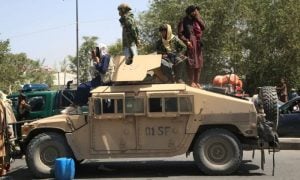
Pakistan has repeatedly highlighted an Afghanistan–India nexus behind terrorism within its borders. Pakistan military’s spokesperson Lt Gen Ahmed Sharif Chaudhry previously warned of the Afghan regime’s threat to the region and the world, citing abandoned US military equipment and safe havens for non-state actors.
Following May 2025’s conflict with India, Pakistan’s Chief of Defence Forces Field Marshal Syed Asim Munir affirmed that Pakistan would comprehensively defeat attempts to derail counterterrorism efforts.
Security authorities, including Interior Minister Mohsin Naqvi, continue to attribute major terror incidents to Indian support for anti-Pakistan groups.
A UN report in mid-2023 documented TTP establishing new bases in Khyber-Pakhtunkhwa, highlighting close ties with the Afghan Taliban, anti-Pakistani groups, and al Qaeda.
Some Taliban members reportedly joined TTP activities, and Afghan nationals increasingly appear among TTP ranks.
The latest UNSC Analytical Support and Sanctions Monitoring Team report (Feb 4, 2026) corroborates Islamabad’s concerns about militant sanctuaries in Afghanistan amid rising violence in Pakistan.