


Key Points
- Statement delivered during World Water Day high-level commemorative session.
- Pakistan expresses concern over India placing Indus Waters Treaty in abeyance.
- Water described as essential to civilisation, economy and agriculture.
- Agriculture contributes 25–30 per cent to Pakistan’s GDP and employment.
- Over 61 per cent of women’s employment linked to agriculture sector.
ISLAMABAD: Pakistan has warned that the politicisation and weaponisation of water resources pose a serious threat to civilisation, livelihoods and regional stability, while expressing concern over India’s reported move to place the Indus Waters Treaty in abeyance.
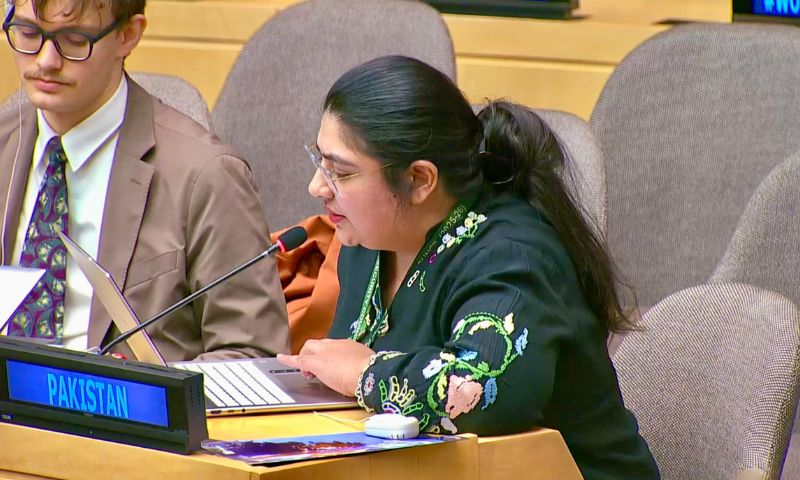
The remarks were made by Federal Minister for Climate Change and Environmental Coordination Dr. Musadik Malik in a video message to a high-level event held at the United Nations headquarters to mark World Water Day.
The event, themed “Water and Gender Equality,” was organised by the Permanent Mission of Tajikistan to the United Nations and co-hosted by Pakistan along with other countries.
India treaty concerns
In his address, Malik cautioned that unilateral actions affecting transboundary water agreements risk undermining decades of cooperation. Without naming India directly, he said that placing a long-standing treaty into abeyance was “deeply concerning,” calling it unjustified and illegal amid evolving geopolitical tensions in the region.
“For us, water is nature. Water is humanity. Water is our civilisation,” he said, stressing that Pakistan’s economy and society are deeply tied to water through agriculture.
The minister noted that agriculture contributes roughly 25 to 30 per cent to Pakistan’s gross domestic product and employs nearly half of the workforce, making water security central to the country’s economic stability and food security.
Women, water, livelihoods
Highlighting the gender dimension, Malik said over 61 per cent of women’s employment in Pakistan is linked to agriculture, underscoring how water access directly affects women’s empowerment and economic wellbeing.
“As in many parts of the world, women remain among the most vulnerable during such crises. When we fight for water rights, we are also fighting for women’s rights.”
He also pointed to the devastating human toll of climate-induced disasters in recent years, stating that nearly 6,000 people have died, around 20,000 have been injured or disabled, and about 40 million displaced in the past four major floods. Among those affected were nearly 20 million school-going children, resulting in an estimated 1.8 billion lost school days.
“As in many parts of the world, women remain among the most vulnerable during such crises. When we fight for water rights, we are also fighting for women’s rights.”
Malik outlined Pakistan’s policy measures, including the integration of gender inclusion and community participation in climate strategies, as reflected in the country’s updated Nationally Determined Contributions.
Green revolution push
Dr. Musadik Malik said the government was pursuing a broader “Green Revolution” agenda, with water management as a key pillar, while promoting youth-led innovation and climate-related business opportunities. Efforts are also underway to mobilise financing for such initiatives, with a target of ensuring at least 50 per cent participation from women.
The minister further announced plans for a joint research framework on agriculture, water and climate issues, to be advanced through a proposed “Green Virtual University” platform.
Concluding his remarks, Malik said that for Pakistan, World Water Day is as not only a moment to celebrate water but also to reaffirm fundamental rights, including those of vulnerable communities.
“Today, we celebrate our humanity, our civilisation, and, above all, our shared hope for peace,” he said.