


KEY POINTS
- Pakistan and Uzbekistan reviewed their strategic partnership during high-level talks.
- Officials assessed cooperation across political, economic, cultural and humanitarian sectors.
- Both sides stressed sustaining momentum through future visits and engagements.
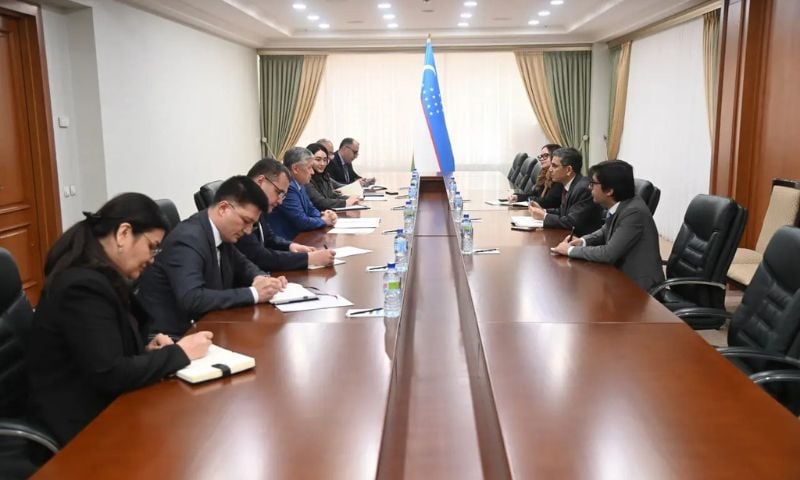
ISLAMABAD: Uzbekistan and Pakistan have reviewed the state of their strategic partnership and identified priority areas for further cooperation during high-level diplomatic talks in Tashkent, according to Uzbekistan’s Ministry of Foreign Affairs.
The discussions took place during a meeting between Uzbekistan’s First Deputy Minister of Foreign Affairs Bakhromjon Aloyev and Pakistan’s Ambassador to Uzbekistan Ahmed Farooq.
The two sides assessed bilateral cooperation across political, trade, economic, cultural, and humanitarian sectors.
Both officials underscored the importance of maintaining momentum in bilateral engagement and placed special emphasis on planning upcoming joint visits and events at various levels to deepen cooperation.
Growing trade ties
Economic ties between the two countries have shown steady growth. Bilateral trade reached nearly $450 million between January and October 2025, with Uzbekistan’s exports accounting for approximately $320 million, reflecting expanding commercial exchanges and strengthening economic relations.
The meeting reaffirmed the commitment of both countries to further enhance cooperation through sustained diplomatic engagement and expanded sectoral collaboration.
Historical ties
Pakistan and Uzbekistan share close historical, cultural, and civilisational ties and have in recent years worked to deepen cooperation in trade, connectivity, energy, security, and people-to-people exchanges.
Both countries are members of regional platforms such as the Shanghai Cooperation Organisation (SCO) and have repeatedly emphasised the importance of regional connectivity linking Central Asia with South Asia.
Islamabad and Tashkent have also explored cooperation on transport corridors, including rail and road links aimed at improving access to regional markets, while political engagement has intensified through regular high-level exchanges.
Strengthening economic ties remains a key focus as both sides seek to expand bilateral trade and investment.