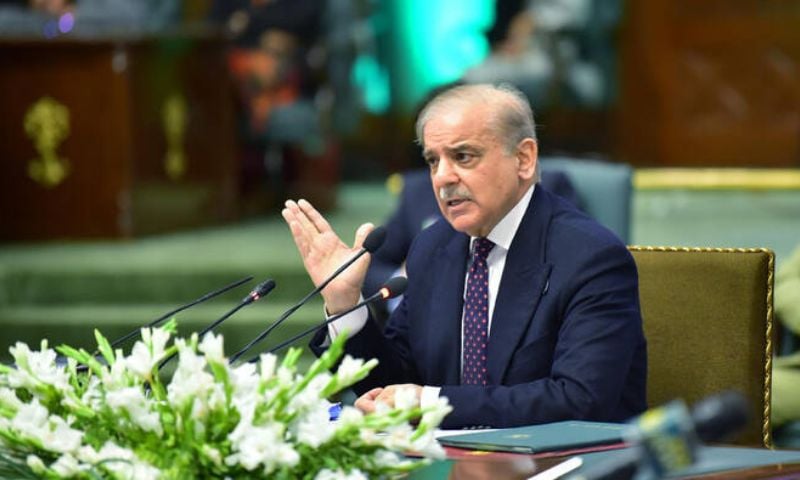



ISLAMABAD: Prime Minister Shehbaz Sharif on Friday urged the international community to step up pressure on Afghanistan’s interim Taliban government to meet its international obligations and prevent militant groups from using Afghan soil to launch attacks into Pakistan.
The Pakistani premier’s appeal came just two days after senior clerics and religious leaders in Kabul urged the interim Afghan government to prevent militant groups from using Afghan territory to stage attacks abroad, including cross-border assaults into Pakistan.
The gathering of more than 1,000 Afghan scholars called on the Taliban administration to curb the movement of fighters across borders and ensure that Afghan soil is not used to destabilise neighbouring states—remarks widely interpreted as indirectly addressing Pakistan’s concerns over TTP sanctuaries inside Afghanistan.
Addressing an international forum in Ashgabat marking the 30th anniversary of Turkmenistan’s permanent neutrality, the Pakistani premier described the “scourge of terrorism” as a shared regional threat and said Kabul must “rein in terrorists operating from its territory” in line with commitments given to neighbouring states.
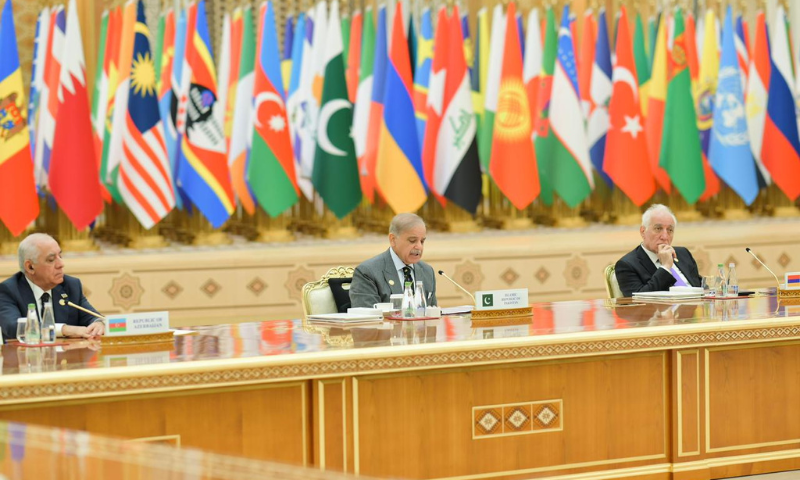
Shehbaz expressed gratitude to Qatar, Türkiye, Saudi Arabia, Iran, and the United Arab Emirates for helping broker a ceasefire between Islamabad and Kabul, but warned that the truce “remains fragile” amid persistent cross-border tensions. Islamabad has repeatedly accused the banned Tehreek-e-Taliban Pakistan (TTP) of operating out of Afghan sanctuaries—an allegation the Taliban deny.
“I appeal to all of you to let this forum serve as a genuine call to action and urgent action for a new paradigm of international relations, where we move from zero-sum mindsets to purposeful cooperation. Let us invest in connectivity, not just as conduits for transportation of… pic.twitter.com/j9EkKAb5sa
— Government of Pakistan (@GovtofPakistan) December 12, 2025
Reaffirming Pakistan’s commitment to peaceful dispute resolution, the prime minister cited the UN Security Council’s unanimous adoption of Resolution 2788—sponsored by Pakistan—as a strong endorsement of dialogue-based mechanisms to settle international conflicts.
Turning to the Middle East, Shehbaz urged global actors to secure protection for civilians in Gaza and ensure an uninterrupted flow of humanitarian assistance. He reiterated Pakistan’s long-standing support for the rights of Palestinians and Kashmiris, describing them as “inalienable struggles for justice and self-determination.”
The Pakistani leader also linked peace to economic development, noting his government’s efforts to expand financial inclusion, empower women and marginalised groups, and advance climate-resilient growth. However, he cautioned that developing countries like Pakistan face “the headwinds of climate-induced disasters and inequities in international economic relations.”
Pleased to meet again with Foreign Minister of Kyrgyzstan, Zheenbek Kulubaev, today in #Ashgabat on the sidelines of the International Conference on Peace & Trust.
Following the recent visit of the President of Kyrgyzstan to Pakistan, we reviewed the progress of our bilateral… pic.twitter.com/wCXkxwHVJz
— Ishaq Dar (@MIshaqDar50) December 12, 2025
In a broader appeal for cooperative global politics, the prime minister urged states to abandon “zero-sum mindsets” in favour of constructive engagement. He called for greater investment in regional connectivity as a means to link people and ideas, not just goods, and emphasised the need to settle disputes through dialogue rather than confrontation. “Let this forum be a call to urgent action,” he said, urging governments to reaffirm their commitment to the UN Charter and work toward a future shaped by peace, mutual trust, and shared prosperity.
Earlier in the day, Shehbaz and other attending leaders—including Russian President Vladimir Putin and Turkish President Recep Tayyip Erdoğan—visited the Monument of Neutrality in Ashgabat for a wreath-laying ceremony.