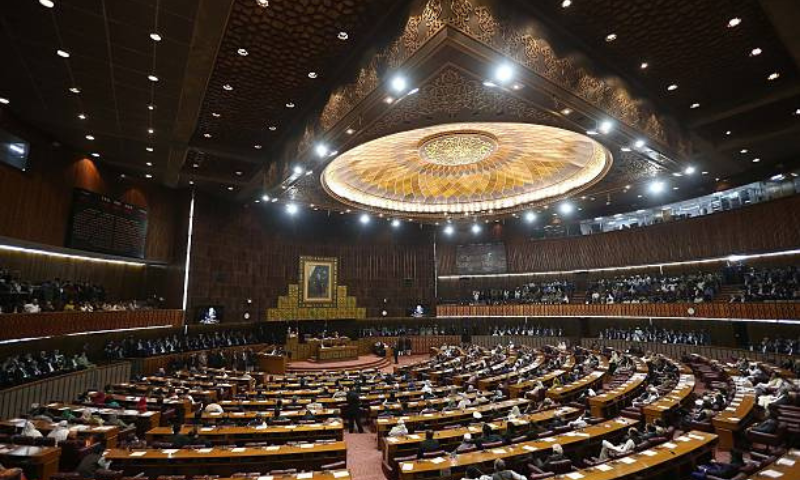



ISLAMABAD: Pakistan’s upper house of parliament has proposed tighter oversight of social media use by children under 18, amid growing concern over online safety, harassment, and exposure to harmful content.
The issue was raised in the Senate on Friday through a formal notice by several lawmakers, prompting a discussion on whether new safeguards — including age verification and parental controls — should be introduced for popular platforms such as TikTok and Instagram.
Presiding over the session, Senator Sherry Rehman said there was a need for “some checks” on children’s use of social media. She proposed the formation of a special committee to examine the issue. The committee, she suggested, should include representatives from the ministries of information technology, interior, education, and law, as well as provincial governments and parliamentary parties. Senate Chairman Yousaf Raza Gilani would take any final decision.

Speaking during the debate, Senator Falak Naz warned that most social media platforms were designed for adults and left children vulnerable to harassment, exploitation and dangerous online trends. She referred to the killing last year of Sana Yousaf, a 17-year-old TikTok creator, saying the case highlighted the risks of unmonitored social media use by minors.
She called for a comprehensive legal framework, including mandatory age verification, parental supervision and other protective measures, and urged restrictions on social media apps and the use of VPNs by children under 18. She also sought a briefing from the IT ministry on existing laws and future plans.
Other senators echoed the concerns. Senator Fawzia Arshad said social media had become a major source of anxiety for parents and required a collective response. She emphasised counselling in schools and colleges to guide teenagers and discourage harmful online behaviour, describing the 16–18 age group as particularly vulnerable. She also criticised the lack of focus on civics and moral development in the curriculum.
Minister for Parliamentary Affairs Tariq Fazal Chaudhry described the issue as a national — and international — challenge, saying it should be examined by the relevant standing committee. He stressed that responsibility did not lie with the IT ministry alone and called for coordination with the education and interior ministries, as well as law enforcement agencies such as the Federal Investigation Agency and the National Cyber Crime Investigation Agency.
Senator Rehman noted that countries such as Australia had introduced legislation to restrict social media use for children under 16, but said she was not in favour of blanket bans. Social media, she said, also had educational value, and lawmakers should proceed “judiciously” after considering all aspects.
Several countries are reassessing how social media should be regulated for teenagers, with Australia at the forefront of recent legislative action. In late 2024, Australia passed laws requiring social media platforms to prevent children under 16 from creating accounts, placing the legal onus on companies rather than parents to enforce age limits.
The government said the move was aimed at protecting young people from online harm, including bullying and exposure to inappropriate content, though critics warned of enforcement challenges and potential impacts on digital rights.
Elsewhere, the UK has stopped short of a ban, instead introducing the Online Safety Act, which requires platforms to apply stronger age checks, remove harmful content and design services with children’s safety in mind.
Similar approaches are being debated in parts of the European Union and the United States, where lawmakers are seeking tighter safeguards for teens without imposing blanket prohibitions on social media use.