


ISLAMABAD: Pakistan on Monday unveiled a long-term plan to develop the Port Qasim Industrial Complex, emphasizing climate resilience, environmental safeguards, and sustainable industrial growth.
The announcement was made by Federal Minister for Maritime Affairs Muhammad Junaid Anwar Chaudhry, who described the project as a cornerstone of Pakistan’s economic and industrial strategy.
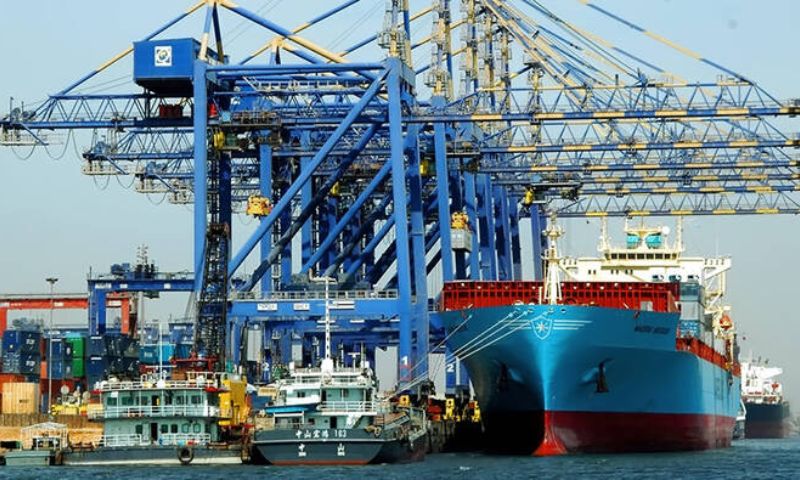
Speaking at a high-level meeting, Minister Chaudhry said the Port Qasim master plan, covering more than 14,590 acres, aims to transform the port into a globally competitive industrial and logistics hub, supporting the country’s goals for trade expansion, industrialization, and blue economy development.
“Its focus on sustainability and climate resilience will mitigate future environmental and economic risks, enhancing long-term investment confidence,” Chaudhry said, highlighting the economic potential of the complex, which could generate tens of billions of dollars over the next two decades, create hundreds of thousands of jobs, and strengthen Pakistan’s export base.
The industrial complex has been divided into three zones: The North Western Zone (3,061 acres) is earmarked for diversified industries, including value-added manufacturing and ancillary services linked to port operations.
The Eastern Zone (7,273 acres) will serve as the primary industrial backbone, accommodating heavy industries, export-oriented units, and logistics facilities.
The South Western Zone (2,258 acres) is dedicated to specialized industrial and commercial activities, while 1,997 acres of low-lying land will undergo phased development with environmental safeguards.
Minister Chaudhry noted that Port Qasim currently hosts 833 operational industrial units, with 40 additional units under construction, demonstrating strong investor interest and industrial growth. He emphasized government initiatives to streamline approvals, improve infrastructure, and enhance ease of doing business to support continued expansion.
“Port Qasim is not merely a maritime facility, but a living industrial ecosystem,” Chaudhry said, linking its development to national supply chains, energy security, and export growth.
The minister further outlined plans to modernize port infrastructure, improve connectivity with road and rail networks, and integrate digital systems to enhance operational efficiency and transparency.
Concluding the meeting, Chaudhry described the industrial complex as a long-term platform for investment, job creation, and sustainable economic growth, reinforcing the port’s role as a gateway to national prosperity.
Strategic Importance
Port Qasim is Pakistan’s second-largest port and handles a significant portion of the country’s maritime trade, including bulk cargo, liquid chemicals, energy imports, and industrial raw materials.
Its expansion as a climate-resilient industrial hub positions it as a critical node in regional supply chains, supporting both domestic economic growth and trade with South Asia, the Middle East, and East Africa.
Climate and Sustainability Focus
The emphasis on climate resilience and environmental safeguards is particularly significant given the region’s vulnerability to rising sea levels, cyclones, and flooding.
By integrating sustainable land use and phased development into the master plan, Pakistan aims to minimize environmental risks while boosting investor confidence, aligning with global best practices for port-industrial hubs.
Economic and Industrial Impact
Analysts predict that the Port Qasim Industrial Complex could become a major economic engine, supporting industrial diversification and export-oriented manufacturing.
The phased development across three zones—North Western, Eastern, and South Western—ensures a balanced mix of light, heavy, and specialized industries, potentially enhancing Pakistan’s competitiveness in regional and global markets.
Investment and Policy Implications
Minister Chaudhry stressed efforts to improve ease of doing business, streamline approvals, and modernize infrastructure, signaling Pakistan’s commitment to attracting foreign and domestic investment.
The integration of digital systems and improved road-rail connectivity further positions Port Qasim as a modern, efficient industrial and logistics hub capable of meeting international standards.
International Relevance
The development of climate-resilient industrial infrastructure in Pakistan may attract regional and global investors, particularly in sectors like manufacturing, logistics, and energy.
It also offers a model for climate-smart port expansion in emerging economies, combining economic growth with environmental sustainability.