Key Points
- Decision linked to volatility in global oil markets following renewed Iran-US hostilities.
- Daily prices will reflect changes in international oil markets.
- Ogra will also disclose the pricing formula and contributing factors.
- Petroleum minister acknowledges the policy may increase the burden on consumers.
- Minister says public will better understand the reasons behind price changes.
ISLAMABAD: The federal government has decided to introduce daily adjustments in petroleum prices, replacing the existing periodic review mechanism, as volatility in international oil markets intensifies amid renewed hostilities between Iran and the United States.
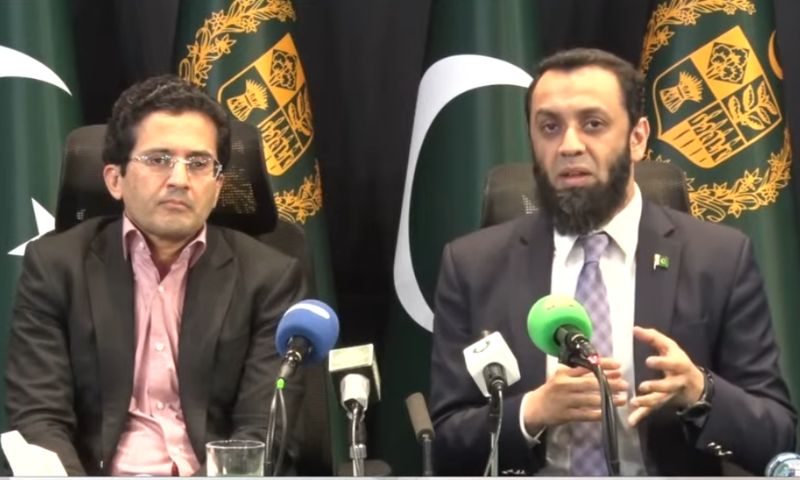
Announcing the decision on Friday, Federal Minister for Petroleum Ali Pervaiz Malik said the federal cabinet had authorised the Oil and Gas Regulatory Authority (Ogra) to determine fuel prices on a daily basis in line with fluctuations in global oil prices.
Before outlining the new policy, the minister thanked the public on behalf of the government for what he described as their patience in coping with the economic impact of the ongoing regional conflict.
He said the fighting between Iran and the United States appeared to be escalating despite diplomatic and security efforts led by Prime Minister Shehbaz Sharif and Chief of Army Staff Field Marshal Asim Munir.
Under the new mechanism, Ogra will not only announce revised petroleum prices each day but will also publish the pricing formula and the factors that contribute to the final rates charged at petrol stations.
International market movements affect domestic fuel prices
Malik said the government believed greater transparency would help consumers understand how international market movements affect domestic fuel prices.
He acknowledged that the new pricing system could increase the financial burden on the public during periods of rising global oil prices, but said the government considered the move necessary under prevailing market conditions and as part of broader efforts to make petroleum pricing more transparent.
Malik stated that although the decision would surely add a burden on citizens, they would see how it was necessary for the state. He said that the decision was part of the government’s decision to make the system more transparent, so that people could understand why increasing fuel prices were inevitable.
He also noted that there had been “a lot of discussion” on the imposition of petroleum and climate levies by the government, and the prime minister’s promise that any price reductions would directly benefit the nation.
“The government is still determined to deliver on its promise,” he said.
He said that the price of diesel dropped from Rs520 to the range of Rs300 today, and similarly a huge price reduction of Rs70-80 was seen for petrol when it happened in the international markets.
Also Read: PM Sharif Warns Middle East Tensions Could Impact Pakistan’s Economy
Discussing fuel levies, the minister said the petrol levy and carbon support levy imposed on petrol and diesel remained relatively low at present.
He added that the government was focusing on improving transparency and reducing reliance on indirect taxation.
The minister said daily fuel price adjustments would be based on a seven-day average of international market prices. He added that, as part of the move towards deregulation, domestic fuel prices would be aligned with global market trends without requiring approval from him, the information minister, or any other official.
“Over the next 15 to 20 days, we will finalise the post-war energy pricing framework and energy security strategy, which will determine how future generations view this government,” he said.
He also questioned Pakistan’s continued dependence on imported energy, saying a study commission had been established to assess, with the help of internationally recognised consultants, whether the country had the resources to maintain strategic petroleum reserves.
Increase in oil prices linked to worsening regional situation
Information Minister Attaullah Tarar also addressed the press conference, saying the rise in global oil prices was driven by escalating regional tensions. He said Pakistan’s efforts to help ease the situation had been “appreciated by the entire world.”
Referring to fuel supply challenges during the height of the crisis, Tarar said many developed countries experienced fuel shortages, with people forced to wait in long queues. He added that Prime Minister Shehbaz Sharif had taken advance measures by securing additional oil reserves.
“Many countries introduced rationing, but Pakistan faced neither rationing nor shortages,” Tarar said, adding that petroleum officials had repeatedly confirmed the country had fuel reserves sufficient for one and a half to two months.
He said that while fuel prices were rising globally, the federal government reduced its development spending to provide Rs129 billion in subsidies to help cushion consumers from the impact of higher prices. He described the move as a deliberate decision by the prime minister to prevent the burden from being passed on to the public.
Tarar said the Oil and Gas Regulatory Authority (OGRA) would formally publish the formula used for daily petrol price adjustments.
“We understand that this is not an easy matter,” he said, acknowledging that fuel price increases directly affect the public.
The minister added that targeted subsidies had been introduced for sectors including goods transport, agriculture and motorcycle users.
Additionally, he challenged the misconception that oil marketing companies had made “huge profits”, pointing out that PM Shehbaz had told investigative departments — including the Federal Investigation Agency (FIA) and regulators — that no one would be allowed to earn extra profits.