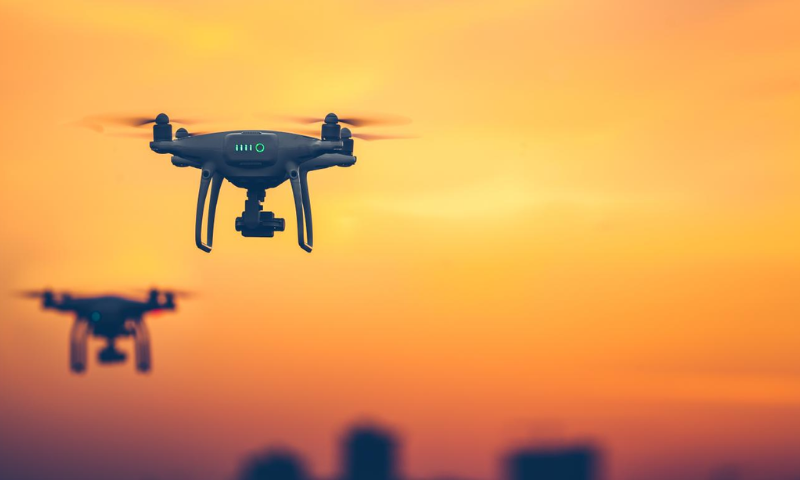



KARACHI: Pakistan is set to significantly strengthen maritime safety by deploying unmanned aerial vehicles (UAVs) for search-and-rescue operations along its coastline, a move aimed at reducing fatalities and improving emergency response in the often treacherous Arabian Sea, officials said.
Known for its strong winds, towering waves, and unpredictable conditions, the Arabian Sea has long posed serious risks to fishing launches and merchant vessels.
To better respond to maritime emergencies, the Pakistan Maritime Security Agency (PMSA) has decided to induct high-speed drones equipped with advanced cameras and sensor technology to support rescue efforts within a 200 nautical mile — approximately 360 kilometre — operational range.
According to a PMSA senior official, Commodore Syed Nauman Ali, the drones will play a central role in maritime accidents by swiftly identifying exact locations, guiding rescue teams, and transmitting live video feeds directly to command centres.
In critical situations, the UAVs will also be capable of dropping life jackets, flotation devices, and floating rescue bags to individuals struggling in the water, according to The Express Tribune.
Until now, early-stage rescue missions depended largely on low-capacity Defender aircraft. These operations were often delayed due to weather limitations, fuel requirements, and the need for air traffic control clearance — constraints that could cost valuable time during emergencies.
The upcoming drone fleet, expected to become operational by the end of this year, is designed to overcome these challenges and ensure faster, more flexible, and reliable responses.
According to Commodore Nauman Ali, all necessary preparations for the project have been completed, and the unmanned systems will soon be fully integrated into the maritime agency’s operational framework.
Once deployed, the UAVs will immediately reach accident zones, providing real-time audio and video updates while continuously guiding fast-response boats and helicopters equipped with winching systems for human extraction.
Their ability to remain airborne for extended periods will allow sustained monitoring and improved coordination between sea and air rescue teams.
The drones will also deliver emergency kits and flotation equipment directly to those in distress, offering immediate support while larger rescue assets are mobilised.
This capability is expected to significantly improve survival chances during the crucial early moments following maritime accidents.
Unmanned aerial vehicles operate without onboard pilots and are controlled remotely or through automated systems. Guided by satellite links and GPS, some models are capable of autonomous route planning.
Equipped with high-resolution and thermal cameras, the drones can detect heat signatures at night, while radar sensors allow effective operation in rain, darkness, and rough sea conditions.
With this initiative, Pakistan is embracing modern technology to strengthen maritime security and safeguard lives at sea — a move widely seen as a landmark upgrade in the country’s search and rescue capabilities.
Beyond emergency response, maritime experts believe the induction of UAVs will also contribute to preventive safety by improving routine surveillance of busy sea lanes.
Early detection of vessels in distress, mechanical failures or sudden weather-related hazards could allow authorities to intervene before situations escalate into full-scale emergencies.
The initiative is expected to bring particular relief to Pakistan’s fishing communities, hundreds of whom rely on small launches for their livelihoods and often venture into deep waters with limited safety equipment.
Faster rescue response times and real-time aerial monitoring could significantly reduce casualties and property losses during storms or unexpected accidents.
Officials say the use of drones will also enhance inter-agency coordination during large-scale incidents, such as cargo vessel accidents or oil spills, by providing a shared operational picture for naval units, coast guards and port authorities.
This integrated approach is likely to improve decision-making and resource deployment during complex maritime operations.
In addition, the UAV programme aligns Pakistan’s maritime rescue capabilities with international best practices, where drone-assisted search and rescue has already proven effective in reducing response times and saving lives.
The move reflects the country’s growing focus on technology-driven solutions to address environmental, security and humanitarian challenges at sea.
As climate change continues to intensify weather patterns and sea conditions, officials believe such innovations will become essential rather than optional.
The planned deployment of UAVs marks a forward-looking investment in resilience, preparedness and the protection of human life along Pakistan’s extensive coastline.