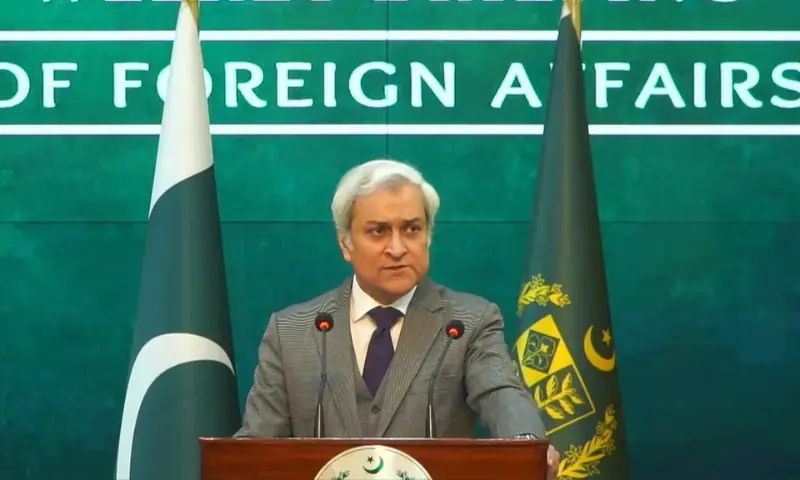



ISLAMABAD: Pakistan will continue to play a “principled and proactive” role in promoting de-escalation in the Middle East, the Foreign Office spokesperson said on Thursday, as Islamabad intensified diplomatic efforts to ease tensions in the region.
Pakistan’s Foreign Office spokesperson Tahir Andrabi said Islamabad remained actively engaged with regional and international stakeholders to push for an immediate ceasefire and a peaceful resolution.
“We remain actively and constructively engaged… consistently advocating for immediate de-escalation, cessation of hostilities and an irreversible path towards a peaceful resolution,” spokesperson Andrabi said during his weekly media briefing.
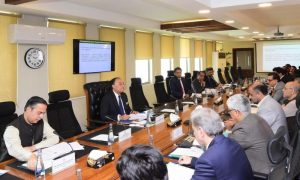
Andrabi said Prime Minister Shehbaz Sharif was leading Pakistan’s diplomatic outreach, engaging global and regional leaders to promote dialogue.
He said the prime minister’s efforts had received international recognition, including from the United States leadership.
According to the spokesperson, PM Sharif has recently held discussions with leaders from across the Muslim world and beyond, including Saudi Arabia, Iran, Turkiye, Egypt, Jordan and other countries, stressing the need for unity, dialogue and de-escalation.
Spokesperson Andrabi said that Pakistan’s Deputy Prime Minister and Foreign Minister Ishaq Dar has maintained “robust and continuous engagement” with his counterparts to support these diplomatic efforts.
Pakistan facilitating indirect US-Iran talks
Meanwhile, Deputy PM Dar said that indirect contacts between Washington and Tehran were ongoing through messages relayed by Pakistan, amid efforts to end the conflict.
“There has been unnecessary speculation in the media… In reality, US-Iran indirect talks are taking place through messages being relayed by Pakistan,” Dar said in a post on X.
He added that a 15-point proposal shared by the United States is under consideration by Iran, with countries including Turkiye and Egypt supporting the diplomatic initiative.
There has been unnecessary speculation in the media regarding peace talks to end ongoing conflict in the Middle East. In reality, US-Iran indirect talks are taking place through messages being relayed by Pakistan. In this context, the United States has shared 15 points, being…
— Ishaq Dar (@MIshaqDar50) March 26, 2026
The Foreign Office spokesperson urged caution in reporting developments, warning against speculation.
“Diplomacy in moments of heightened sensitivity requires discretion, patience and confidentiality,” Andrabi said, calling on media outlets to rely on official sources for accurate information.
He stressed that any details regarding potential talks, including venue and timing, would be shared once finalised.
Engagement with regional stakeholders
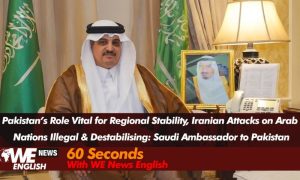
Andrabi said Pakistan’s diplomatic efforts were being carried out in close coordination with regional countries, including Saudi Arabia, which he described as a major party affected by the conflict.
He added that Pakistan had consistently advocated dialogue and peaceful engagement, while working with partners to reduce tensions in the Middle East and the Gulf region.
India remarks dismissed
Meanwhile, Andrabi rejected criticism from India over Pakistan’s response to the sentencing of Kashmiri leaders, calling New Delhi’s statements “undiplomatic rhetoric”.
He said India was conflating “legitimate political dissent” with terrorism and raised concerns over the impartiality of its judicial processes.
Pakistan has strongly condemned the sentencing of Kashmiri leaders, including Asiya Andrabi, describing the verdicts as politically motivated.
Afghanistan counter terrorism operation continues
Responding to questions on Afghanistan, Andrabi said Pakistan’s counter terrorism operation “Ghazab-ul-Haq” would continue as long as terrorist groups operate from Afghan territory.
He said the operation had led to a reduction in cross-border attacks, though Pakistan remained open to dialogue with Afghan Taliban regime.